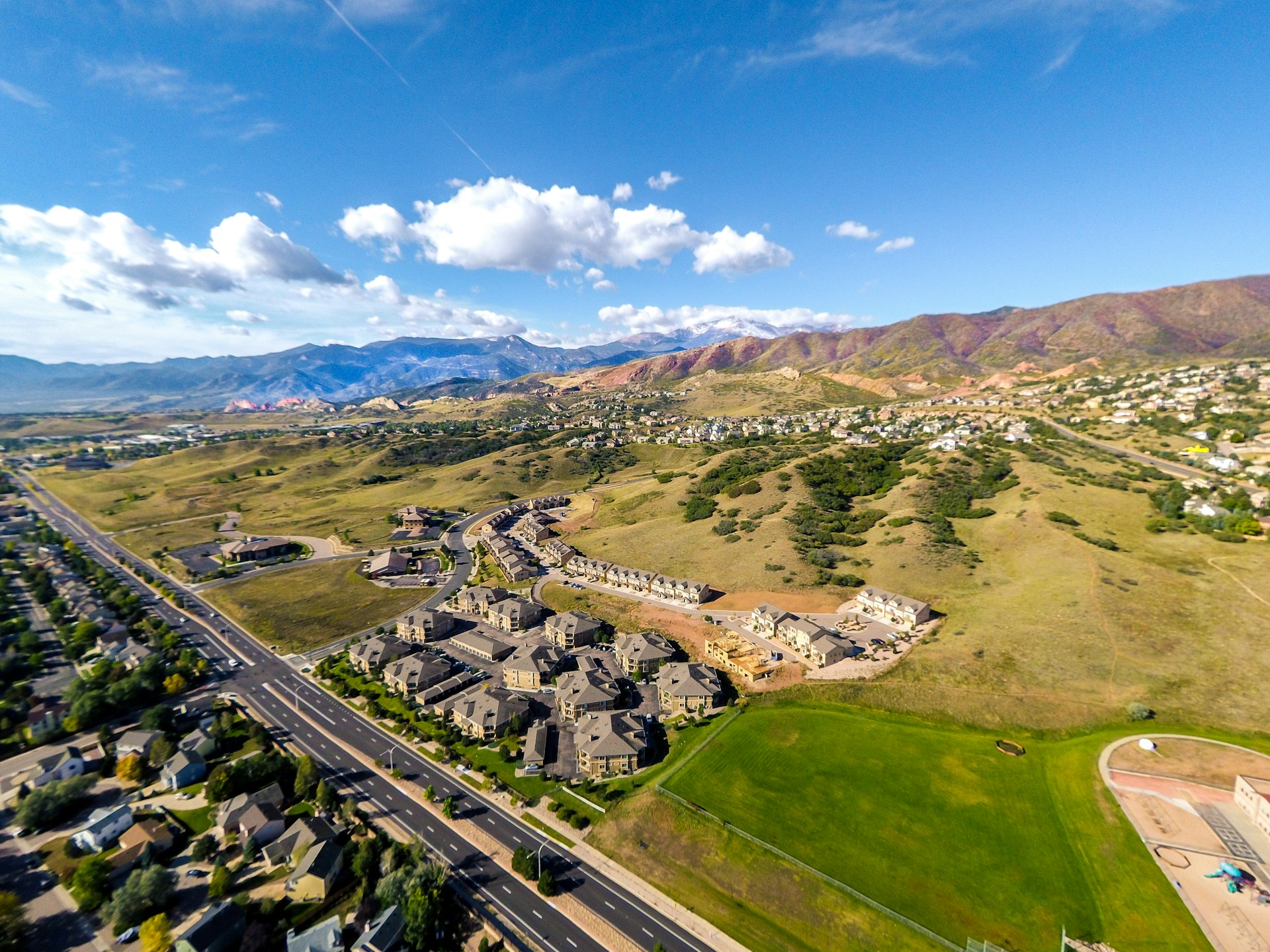
Thornton sits just north of Denver along the I-25 corridor and has been one of the fastest-growing cities in Colorado for the past decade. Population now north of 145,000. It offers Denver metro access at prices that central Denver and its immediate suburbs haven't seen in years. But Thornton is not one place — the neighborhoods vary significantly in character, age, price, and livability.
Here's an honest breakdown of where to look and what to expect — with the real data behind the pitch.
| Area | Median Home Price | Housing Era | Light Rail Access | Best For |
|---|---|---|---|---|
| South Thornton (Original) | $370K–$430K | 1950s–1980s | Yes (N Line) | First-time buyers, commuters |
| Eastlake | $400K–$480K | 2000s–2010s | Yes (N Line) | Commuters, outdoor enthusiasts |
| North Thornton / Partridge | $420K–$520K | 1990s–2010s | Drive to station | Families, balanced buyers |
| Anthem / North End | $530K–$700K | 2000s–present | No | Families, master-planned lifestyle |
Original Thornton / South Thornton
The oldest part of the city sits closest to Denver along the southern edge. Housing here skews older — ranch homes and split-levels from the 1950s through 1980s on established lots with mature trees. Prices are the lowest in the city, which attracts first-time buyers and investors in roughly equal measure.
The tradeoff is condition. A lot of the housing stock in south Thornton needs updating and the neighborhood feel is more mixed than the newer developments further north. Access to the light rail at Thornton Crossroads and 104th Avenue stations makes this part of the city the most transit-connected in Thornton — a genuine advantage for commuters who want Denver access without driving every day. From the 104th Ave station, downtown Denver is about 35–40 minutes on the N Line.
Best for: First-time buyers, commuters who want light rail access, buyers who want the lowest entry price in the metro.
Eastlake
Eastlake sits in the central part of Thornton and has grown significantly around the Eastlake light rail station on the N line. The neighborhood has attracted new construction townhomes and condos that appeal to buyers who want lower maintenance living with transit access.
The area around Eastlake Reservoir gives the neighborhood a genuine outdoor amenity that most of Thornton lacks — walking trails, water views, and recreational access that adds quality of life in ways that raw square footage comparisons don't capture. The reservoir trail is a legitimate daily-use asset for residents within walking distance.
The school situation in this area feeds into Adams 12 Five Star Schools — the district that serves most of Thornton and has a solid reputation with several highly rated individual schools, including Stargate School (STEM magnet, rated 9/10) and Legacy High School.
Best for: Commuters, buyers who want new or newer construction at moderate prices, outdoor enthusiasts who want trail access built into their neighborhood.
North Thornton / Partridge
Moving north of 120th Avenue the character of Thornton shifts toward newer suburban development with larger lots, newer construction, and a more consistent neighborhood feel than the older southern sections. The Partridge neighborhood and surrounding areas in north Thornton offer the best balance of price, condition, and livability in the city for most buyers.
Housing here runs primarily from the 1990s through 2010s — newer than south Thornton but established enough to have some maturity. Prices run $420,000 to $520,000 for a typical single-family home depending on size and condition. Schools in this area include some of the higher-rated Adams 12 campuses, with several elementary schools rating 7–8/10.
The commute to downtown Denver from north Thornton runs 25 to 40 minutes by car depending on time of day and significantly varies with I-25 traffic conditions which have gotten meaningfully worse as the area has grown. Budget extra time for southbound I-25 between 7–9am — this stretch is consistently one of the most congested in the metro.
Best for: Families who want newer construction and good schools at prices below comparable Denver suburbs, buyers who want a quieter residential environment without sacrificing metro access.
Anthem / North End
The newest and most premium section of Thornton sits at the northern edge of the city approaching Highway 7. Anthem Colorado — a master-planned community that crosses into Broomfield and the unincorporated area — anchors this corridor with resort-style amenities: a community center with resort pool, fitness facilities, tennis courts, and over 48 miles of connected trails that give it a character distinct from the rest of Thornton.
Prices here run the highest in Thornton — $530,000 to $700,000 for most single-family homes — but still meaningfully below comparable new construction in Broomfield, Arvada, or Westminster proper. The commute to Denver is the longest in the city — plan on 35 to 50 minutes to downtown in normal traffic, and well over an hour during peak congestion.
The schools feeding this area include some of the highest-rated in the Adams 12 district, and Anthem's master-planned character means HOA-maintained common areas and a consistent neighborhood aesthetic that appeals to buyers coming from similar planned communities elsewhere.
Best for: Families who want the newest construction and best amenities in Thornton, buyers coming from master-planned communities elsewhere who want that aesthetic in the Denver metro.

Thornton vs. nearby suburbs — how it compares
| City | Median Home Price | School Rating (avg) | Light Rail | Drive to Denver Downtown |
|---|---|---|---|---|
| Thornton (south) | $370K–$430K | 7.2/10 | Yes (N Line) | 20–30 min |
| Thornton (north/Anthem) | $530K–$700K | 8.1/10 | Drive to station | 35–50 min |
| Westminster | $460K–$560K | 7.5/10 | Partial | 25–35 min |
| Broomfield | $520K–$640K | 8.0/10 | No | 30–45 min |
| Arvada | $480K–$590K | 7.8/10 | Yes (G Line) | 25–40 min |
| Brighton | $400K–$470K | 8.8/10 | No | 35–50 min |
The honest read: South Thornton is the best value play in the Denver northern metro for transit-dependent commuters. North Thornton / Anthem competes with Broomfield and Westminster on amenities and schools at similar or slightly lower prices. Brighton beats everything on school rating but adds commute distance.
What to know before you buy in Thornton
The commute. Every Thornton neighborhood requires a car for most daily tasks. The light rail helps in the southern sections but most of the city is I-25 dependent. Test your actual commute at your actual time before you commit — off-peak drives don't reveal what 7:30am southbound on I-25 looks like in October.
Hail. Colorado's Front Range gets significant hailstorms and Thornton is squarely in the impact zone. Roof and vehicle damage from hail is a recurring expense. Budget for it and verify your homeowners insurance deductible structure for hail specifically — many Front Range policies have separate, higher hail deductibles.
No mountains from your front door. Thornton sits on the plains. The mountain views are real on clear days. But the mountains are an hour away by car. If daily trail access or ski proximity is a priority, look at Arvada or Lakewood instead — both are closer to the foothills and have easier access to mountain recreation.
Adams 12 Five Star Schools variation. The district has a strong overall reputation but individual school ratings range from 6/10 to 9/10. Research the specific elementary and middle school assignments for any property you're considering — the district's reputation is built on its best schools, not its average ones.
The bottom line
Thornton is a legitimate option for buyers who want Denver metro access at prices that central Denver hasn't offered in years. The north end neighborhoods offer the best overall package of condition, schools, and livability. The southern sections offer the best transit access and lowest entry prices. Choose based on your actual commute pattern and life stage — and run the specific ZIP code through WYLT before you make an offer.
See the full WYLT report for Thornton, CO →