New York City is the most walkable major city in the United States by almost every measure. The average New Yorker walks more steps per day than residents of virtually any other American city. The transit system — imperfect, aging, occasionally maddening — still makes car-free living not just possible but genuinely preferable for millions of people.
But walkability within New York City is not uniform. The difference between a neighborhood with a Walk Score of 99 and one with a Walk Score of 78 is the difference between stepping outside your front door into a complete, self-sufficient daily environment and needing to plan around gaps.
What makes a neighborhood truly walkable

Destination density. How many of the things you actually need — grocery, pharmacy, coffee, restaurant, dry cleaner, park, subway — are within a genuine walking distance of fifteen minutes or less.
Walking environment quality. Are the sidewalks wide and maintained? Is there tree canopy? Is the street-level retail active and varied?
Transit integration. A neighborhood where you can walk to everything local and also access the subway easily for anything beyond the neighborhood is categorically more functional than one where you have to choose between the two.
Day and night walkability. Some neighborhoods walk well during the day and feel different at night. The best walkable neighborhoods in this guide maintain their character and comfort across the full day.
Manhattan
The West Village
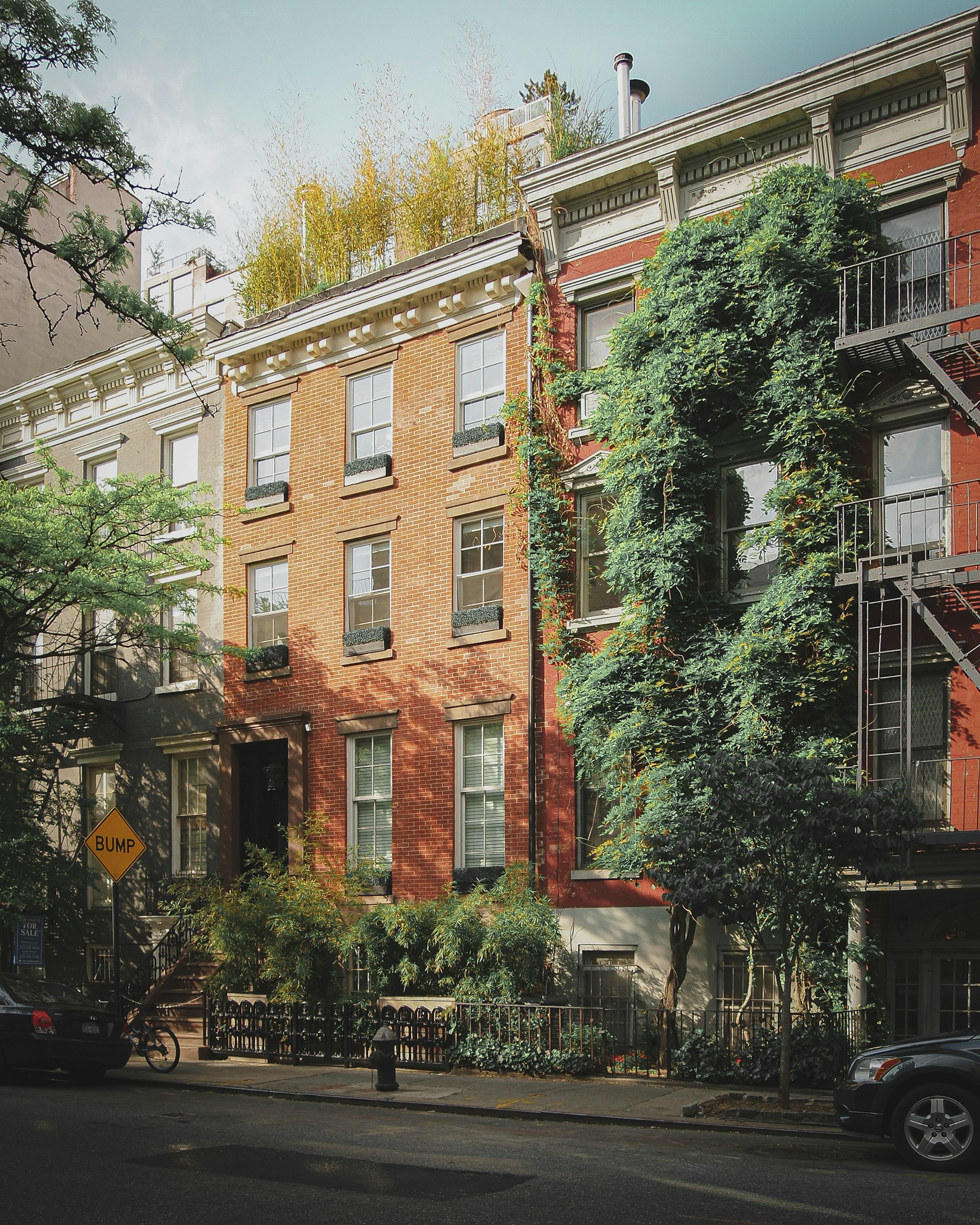
The West Village is the neighborhood that most people mean when they imagine the ideal New York walkable life. Irregular street grid, low-rise Federal and Greek Revival rowhouses, cobblestone streets in places that feel removed from the grid, and a concentration of independent restaurants and boutiques that is among the most celebrated in the city.
Walk Score: 100. Transit: A/C/E at 14th Street, 1/2/3 at Christopher Street, L at 8th Avenue — multiple options within ten minutes walk.
The honest tradeoffs: the West Village is among the most expensive neighborhoods in New York City. A one-bedroom apartment runs $3,500 to $5,500 per month. A co-op or condo purchase starts around $1.5 million for a small one-bedroom.
Best for: professionals without children or with older children, empty nesters who want maximum city life, buyers for whom price is not the primary constraint.
The Upper West Side
The Upper West Side offers a different walkability proposition than the Village and in many ways a more functional one for families. Broadway from 72nd to 96th Street is one of the great urban commercial corridors in New York — continuous, varied, and dense with the grocery stores, pharmacies, restaurants, and coffee shops that constitute a complete walkable daily environment.
Walk Score: 99. Transit: 1/2/3 on Broadway, B/C on Central Park West.
Central Park is the defining amenity — 843 acres of designed green space as your effective backyard. The American Museum of Natural History, Lincoln Center, and the New York Historical Society are within walking distance. PS 87, PS 166, and PS 9 are among the most sought-after elementary schools in the city.
One-bedroom rentals run $3,200 to $4,800. Purchases start around $1 million for a small one-bedroom co-op.
Best for: families with children, buyers who want the most functional walkable family neighborhood in Manhattan, people who use Central Park as a daily amenity.
Yorkville and Carnegie Hill
The stretch of the Upper East Side between approximately 79th and 96th Streets is one of the most genuinely livable and underpriced neighborhoods in Manhattan relative to its walkability and quality.
Walk Score: 98. Transit: 4/5/6 on Lexington Avenue, Q train providing a second line. Co-op purchases can be found starting under $800,000 — rare for Manhattan at this quality level.
Best for: families, professionals who want Manhattan walkability at a relative discount, buyers who prioritize access to museums and Central Park.
Harlem — South Harlem and Hamilton Heights
South Harlem — the blocks between 110th and 125th — and Hamilton Heights in the 140s along Convent Avenue are the areas worth calling out in 2026. Frederick Douglass Boulevard has transformed into one of the most interesting restaurant and bar streets in New York. Hamilton Heights offers landmarked blocks of Renaissance Revival townhouses that would cost three times as much in Brooklyn Heights or the West Village.
Walk Score: 97–98. Transit: 2/3 and A/B/C/D on 125th Street.
Best for: buyers who want Manhattan walkability and architectural character at prices below the established downtown neighborhoods, people who want to be part of a neighborhood in active positive transition.
Brooklyn
Park Slope
Park Slope is the benchmark Brooklyn walkable neighborhood. Seventh Avenue functions as a genuine town main street — independently owned businesses, local coffee shops that have been there for twenty years, restaurants at every price point. Prospect Park is the defining amenity: 585 acres with a lake, a bandshell, an ice skating rink, a farmers market, and miles of running paths. PS 321 on 7th Avenue is one of the most sought-after elementary schools in New York City.
Walk Score: 98. Transit: F/G at 4th Avenue and 9th Street, B/Q at 7th Avenue, 2/3 at Grand Army Plaza. One-bedroom rentals run $2,800 to $4,000. Co-op purchases start around $700,000.
Best for: families with children who want the best Brooklyn has to offer, buyers who want Prospect Park as their daily outdoor space.
Carroll Gardens and Cobble Hill
Immediately north of Park Slope, these two neighborhoods offer some of the most livable blocks in Brooklyn. Smith Street is the commercial anchor — a legitimate restaurant and bar strip. The housing stock includes wide brownstones with front gardens. One-bedroom rentals $2,600 to $3,800. Purchases start around $650,000.
Walk Score: 97. Transit: F/G at Carroll Street and Bergen Street.
Best for: young professionals and couples, families who want Park Slope's character at a modest discount.
Prospect Heights
Vanderbilt Avenue between Flatbush and Atlantic is one of the most compelling restaurant streets in Brooklyn. The Brooklyn Museum, the Brooklyn Botanic Garden, and Prospect Park are all within walking distance. The neighborhood is more diverse than Park Slope and has maintained more of its cultural mix through the appreciation of recent years.
Walk Score: 97. Transit: 2/3 at Grand Army Plaza, B/Q at 7th Avenue. One-bedroom rentals run $2,500 to $3,600. Purchases start around $600,000.
Best for: buyers who want Park Slope's amenity access with more neighborhood diversity and slightly lower prices, food enthusiasts who want to walk to exceptional restaurants daily.
Williamsburg — North Side
North Williamsburg along Bedford Avenue has been the defining Brooklyn destination for young professionals for fifteen years. The density of restaurants, bars, coffee shops, boutiques, and music venues along Bedford, Metropolitan, and Grand Avenues is exceptional. Domino Park provides green space with Manhattan skyline views.
Walk Score: 98. Transit: L at Bedford Avenue — direct to Union Square in 10 minutes. One-bedroom rentals run $3,000 to $4,500. Purchases start around $800,000.
Best for: young professionals, people who want maximum urban energy and nightlife access, buyers who value Manhattan commute speed above neighborhood quietness.
Brooklyn Heights
Brooklyn Heights is the oldest and in many respects the finest residential neighborhood in Brooklyn — a landmarked historic district on a bluff above the East River. The Brooklyn Promenade is one of the finest public spaces in the city — a mile-long esplanade with unobstructed views of lower Manhattan and New York Harbor.
Walk Score: 97. Transit: 2/3/4/5 at Borough Hall, A/C/F at Jay Street-MetroTech. One-bedroom rentals run $2,800 to $4,200. Co-op purchases start around $700,000.
Best for: professionals and families who want architectural significance and quiet residential character combined with strong transit access.
Queens
Astoria
Astoria is the best value walkable neighborhood in New York City in 2026 by most measures. Steinway Street and Ditmars Boulevard together constitute one of the most genuinely diverse restaurant environments in New York — Greek, Egyptian, Bangladeshi, Colombian, Brazilian, Italian, and a dozen other cuisines all within walking distance. Astoria Park provides green space with views of the Hell Gate Bridge and Manhattan skyline.
Walk Score: 94. Transit: N/W across five stations serving the neighborhood. Direct to Midtown in 20 to 25 minutes. One-bedroom rentals run $2,200 to $3,200. Purchases start around $500,000 — one of the best entry points to walkable New York still available in 2026.
Best for: buyers who want genuine New York walkability at the most accessible price point, food enthusiasts who want unrivaled neighborhood dining diversity.
Jackson Heights
Jackson Heights is the most diverse neighborhood in the most diverse borough of the most diverse large city in the United States. Roosevelt Avenue and 74th Street constitute one of the most extraordinary urban commercial environments in New York — South Asian, Latin American, and Southeast Asian businesses, restaurants, and food carts at a density that rivals any neighborhood in the city regardless of price point. The landmarked garden apartment blocks — built in the 1920s around interior courtyards — provide a housing typology genuinely unique in New York.
Walk Score: 96. Transit: 7 train at 74th Street-Broadway — direct to Grand Central in 25 minutes. E/F/M/R at the same station. One-bedroom rentals run $1,800 to $2,600. Co-op purchases start under $400,000.
Best for: buyers who want maximum walkability at minimum price, people who value cultural diversity as a daily feature of their neighborhood, anyone who takes food seriously.
Forest Hills
Austin Street is one of the best neighborhood commercial streets in Queens — a genuine main street with independent restaurants, coffee shops, and bookstores. Forest Hills Gardens — a planned community built in 1909 modeled on English garden cities — provides some of the most beautiful residential streetscapes in New York with landmarked Tudor Revival architecture.
Walk Score: 92. Transit: E/F/M/R at Forest Hills-71st Avenue — direct to Midtown in 25 to 30 minutes. LIRR provides an additional fast option. One-bedroom rentals run $2,000 to $3,000. Co-op purchases start around $400,000.
Best for: families who want Queens walkability at a mid-range price with strong schools, buyers who want architectural character and green space.
The Bronx — Riverdale
Riverdale sits at the northwest tip of the Bronx overlooking the Hudson River and the Palisades. Wave Hill — a 28-acre public garden with Hudson River views — is within walking distance of much of the neighborhood. Van Cortlandt Park provides 1,146 acres of green space including the oldest public golf course in America.
Walk Score: 84. Transit: 1 train at 231st Street and 238th Street — Manhattan commute runs 40 to 50 minutes to Midtown. One-bedroom rentals run $1,800 to $2,600. Co-op purchases start under $300,000.
Best for: families who prioritize green space and safety over urban energy, buyers who want Manhattan-connected walkability at the lowest price point in this guide.
How to choose
Your commute pattern. Map your actual commute from every neighborhood you're seriously considering — not just the transit time from the station but the walk to the station and the walk from the destination station to wherever you need to be.
Your life stage. The walkable neighborhood experience of a 28-year-old single professional in Williamsburg and a 38-year-old family in Park Slope are both genuine and both excellent — they are just different.
Your budget. The range in this guide runs from under $300,000 for a Riverdale co-op to $3 million and above for a West Village townhouse. The best value in 2026 is almost certainly Astoria or Jackson Heights for renters and buyers who want to maximize walkability per dollar.
The bottom line
New York City's walkability is real, remarkable, and remarkably varied. Do the neighborhood-level research. Visit at different times of day. Test your actual commute. Walk the specific blocks you're considering and pay attention to what the walking environment actually feels like — not just what the Walk Score says.
Research any New York City neighborhood on WYLT. Free data-driven reports on every NYC zip code — walkability scores, transit access, school ratings, safety data, price trends, and a plain-English verdict on whether it's actually right for you.