For people moving to the Mountain West, the comparison almost always ends up here: Denver or Salt Lake City. Both sit at the foot of world-class ski resorts. Both have young, active populations and growing tech economies. Both are mid-size cities with better outdoor access than anything on either coast. And both have gotten expensive in ways that require a serious look before you sign anything.
They're not the same city, though. Denver is a major metro — Colorado's undisputed center of gravity, increasingly expensive, with a broader job market and more urban density. Salt Lake City is smaller, more culturally distinct, faster-growing, and — based on WYLT's neighborhood data — often a better value on a per-dollar basis. Which one is right for you depends almost entirely on what you're optimizing for.
The 30-second version
Choose Denver if: You want a larger metro with a deeper job market, more neighborhood variety, greater cultural diversity, and you're okay paying a premium that's moved even higher since the pandemic. Denver's best neighborhoods still earn "Good for now" — but at prices that require a meaningful income.
Choose Salt Lake City if: You want comparable (or better) mountain access at lower cost, a faster-growing tech sector relative to its size, and neighborhoods that WYLT's data rates more favorably per dollar. SLC is more culturally homogeneous, but its downtown has transformed rapidly and the value proposition is real.
Cost of living
Both cities got expensive during the pandemic. Salt Lake City held its value proposition better.
In Denver, the reviewed neighborhoods tell a consistent story: walk score and urban character come at a significant price — and even then, the verdicts are mixed. Capitol Hill (80203) has a walk score of 89 and a median home price of $461,800 — but it earns "Think twice" due to elevated crime. Washington Park (80210) earns "Good for now" but clocks in at $812,600, a price that works for dual high-income earners and nobody else. The Highland neighborhood (80211) — one of Denver's most desirable — sits at $692,700 with a "Think twice" verdict. Denver has gotten expensive without a proportional improvement in livability metrics.
Salt Lake City shows a different pattern. Downtown SLC (84101) earns "Good for now" at $506,100 with a walk score of 77 — more walkable than most of Denver's reviewed neighborhoods, at a comparable or lower price. Sugar House (84105), SLC's most popular urban neighborhood, earns "Good for now" at $602,000 — similar to Denver's Highland but with a better verdict. The Murray/South Salt Lake corridor (84107) earns "Good for now" at $373,900 — a price that simply doesn't exist in Denver's comparable neighborhoods.
Property taxes add nuance. Utah's effective property tax rate is among the lowest in the Mountain West. Colorado's Gallagher Amendment was repealed in 2020, and property taxes have risen meaningfully since. For long-term buyers, SLC's total carrying cost advantage over Denver is larger than the headline prices suggest.
Safety
Neither city has a serious crime problem relative to national averages, but Denver's numbers have worsened in recent years in ways that show up in WYLT's data.
The majority of Denver's reviewed ZIP codes carry "Think twice" verdicts — not because of violent crime at Memphis or Baltimore levels, but because property crime, car theft, and quality-of-life issues have elevated the risk profile of neighborhoods that were considered solid choices five years ago. Denver's Capitol Hill corridor (80203) is the most striking example: a walk score of 89 in one of the city's most central and walkable neighborhoods, paired with a "Think twice" verdict because crime rates undermine daily quality of life.
Salt Lake City's reviewed neighborhoods earn "Good for now" across the board. This reflects both genuinely lower crime rates and the structural reality that SLC lacks the specific pockets of concentrated urban crime that have developed in Denver's close-in neighborhoods. The Avenues (84103) earns "Think twice" — the one exception — due to elevated property crime in the canyon corridor. Everything else comes in "Good for now."
Job market
Denver has the larger job market by total volume, but SLC has the faster-growing tech sector relative to its size.
Denver's economy is anchored by energy (oil, gas, and a growing renewables sector), aerospace (Lockheed Martin, Raytheon, Ball Corporation), healthcare (UCHealth, SCL Health, DaVita), and a technology corridor that has grown rapidly — Google, Twitter, and Palantir have significant Denver presences. The sheer size of the metro means more opportunities across more sectors, and the proximity to the federal government's mountain operations creates unique defense and aerospace demand.
Salt Lake City's tech sector — nicknamed "Silicon Slopes" — has grown faster, proportionally, than almost any tech corridor in America over the last decade. Adobe, Twitter/X, Qualtrics, Overstock, and dozens of venture-backed startups have made SLC a legitimate second-tier tech hub. The state's right-to-work environment, low corporate taxes, and young educated workforce have attracted employers in ways that surprised most observers five years ago. For tech workers specifically, SLC now offers a career trajectory that was unimaginable in 2015.
For remote workers, SLC wins on cost. Denver wins on social scene diversity and overall metro density.
Lifestyle and outdoor access
This is the axis where most people think Denver wins — and it doesn't, not clearly.
Denver's mountain proximity is real: I-70 into the ski resorts takes 60–90 minutes depending on weekend traffic, which is genuinely brutal. Summit County (Breckenridge, Keystone, Arapahoe Basin) and the Vail corridor are world-class. The city itself has excellent bike infrastructure, trail networks, and a culture built around outdoor activity.
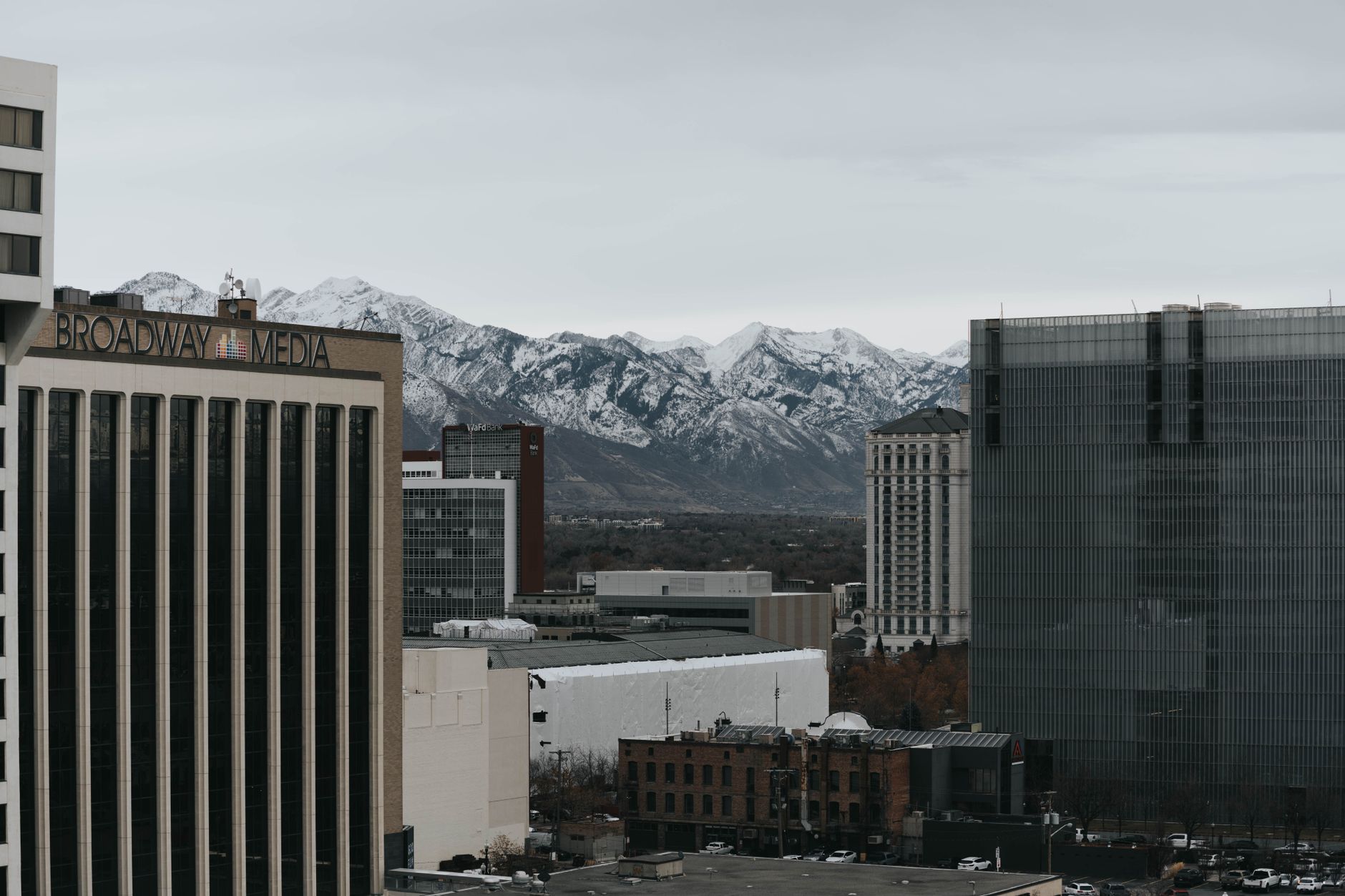
Salt Lake City's mountain access is less famous and arguably better. The Cottonwood Canyons (Big Cottonwood → Solitude and Brighton; Little Cottonwood → Alta and Snowbird) are 35–45 minutes from downtown SLC — significantly less traffic than Denver's I-70 corridor. Park City is 35 minutes via I-80. Utah's snow is famously drier than Colorado's, and the Wasatch Front averages more snowfall than Denver's nearby resorts. For skiers and snowboarders specifically, SLC is a genuine rival to Denver and wins on access time.
Denver wins on cultural diversity — it's a larger, more diverse city with more range in food, nightlife, and arts. SLC has improved dramatically on all three dimensions but remains more culturally homogeneous. The influence of the LDS Church on local culture is real and worth factoring in: alcohol purchasing requires state liquor stores, Sundays are quieter, and the social fabric has a specific character that some people find genuinely appealing and others find limiting.
What WYLT's data shows
Denver — selected neighborhoods
- Capitol Hill (80203) — Think twice: Walk score 89, schools 7.8, median home $461,800. Denver's most walkable neighborhood — but elevated crime rates knock it to "Think twice." Best for renters who want urban access; buyers should factor in quality-of-life issues.
- Washington Park (80210) — Good for now: Walk score 53, schools 8.1, median home $812,600. Denver's most coveted family neighborhood — earns a "Good for now" verdict but at a price that requires household income well above the city median.
- Highland (80211) — Think twice: Walk score 55, schools 8.0, median home $692,700. Denver's trendiest neighborhood and one of its most expensive — but crime rates earn it a "Think twice" verdict, which surprises most people who assume Highland is a safe choice.
Salt Lake City — selected neighborhoods
- Downtown SLC (84101) — Good for now: Walk score 77, schools 8.0, median home $506,100. The best urban entry point in SLC — walkable, transit-connected on TRAX light rail, and earning a "Good for now" verdict that Denver's comparable neighborhoods don't match at a similar price.
- Sugar House (84105) — Good for now: Walk score 42, schools 8.0, median home $602,000. SLC's most popular neighborhood among young professionals — a walkable commercial corridor, strong schools, and a verdict that outperforms Denver's Highland at a similar price.
- Murray/South SLC (84107) — Good for now: Walk score 30, schools 8.3, median home $373,900. The best value in the SLC metro for buyers wanting "Good for now" livability — higher school ratings than most Denver neighborhoods at $300K+ less.
The verdict
Salt Lake City wins on the numbers. WYLT's data shows consistently better verdicts-per-dollar in SLC than in Denver — the majority of SLC's reviewed neighborhoods earn "Good for now" while Denver's earn "Think twice," often at similar or higher prices. The crime trajectory in Denver has moved in the wrong direction; SLC's has held.
Denver wins on city scale. It's a bigger city with more jobs, more cultural diversity, and more neighborhood variety. If your career requires a major metro, if you value cultural diversity, or if the LDS cultural context of SLC doesn't appeal to you, Denver is worth the premium.
The outdoors question — the one everyone asks — is essentially a draw, with SLC having a slight edge on ski resort access time. This is not the differentiating factor most people think it is.
For most buyers in the $400K–$600K range, Salt Lake City delivers more livability per dollar than Denver in 2026. That's a statement WYLT's data supports, even if it surprises people who've been comparing these cities for the last decade based on reputation rather than metrics.