Phoenix is one of the most searched relocation destinations in America. It's also one of the most misunderstood. Every year tens of thousands of people move there expecting one thing and discover something meaningfully different. Some love it immediately. Others leave within two years wondering what they missed.
The honest answer to whether Phoenix is a good place to live is not yes or no. It's: for the right person, absolutely. For the wrong person, it's a genuinely difficult adjustment that no amount of financial optimization makes comfortable.
Here's everything you need to know before you decide.
Why Phoenix keeps showing up on relocation lists
The financial case is compelling and mostly accurate.
Arizona's flat income tax rate of 2.5% is among the lowest in the country. Property taxes run approximately 0.5% to 0.7% of assessed value — dramatically lower than New Jersey (2.2%), Illinois (2.0%), or Connecticut (1.8%). There is no estate tax. The overall tax burden for most households is meaningfully lower than what people are leaving behind in the Northeast, Midwest, and California.
Housing prices, while significantly higher than they were five years ago after a dramatic run-up from 2020 to 2022, remain below comparable coastal markets. A four-bedroom home in Gilbert or Chandler that would cost $1.2 million in Northern New Jersey or $1.5 million in the Bay Area typically runs $500,000 to $700,000. That gap — even after the appreciation of recent years — is real and meaningful for families doing the math on what their next chapter looks like.
The job market has diversified substantially from its historical base in real estate and construction. TSMC's massive semiconductor fab in north Phoenix has anchored a growing chip manufacturing ecosystem. JPMorgan Chase, Charles Schwab, and American Express have large and growing Phoenix operations. Banner Health and HonorHealth anchor a significant healthcare employment base. Intel has been in Chandler for decades and continues to expand.
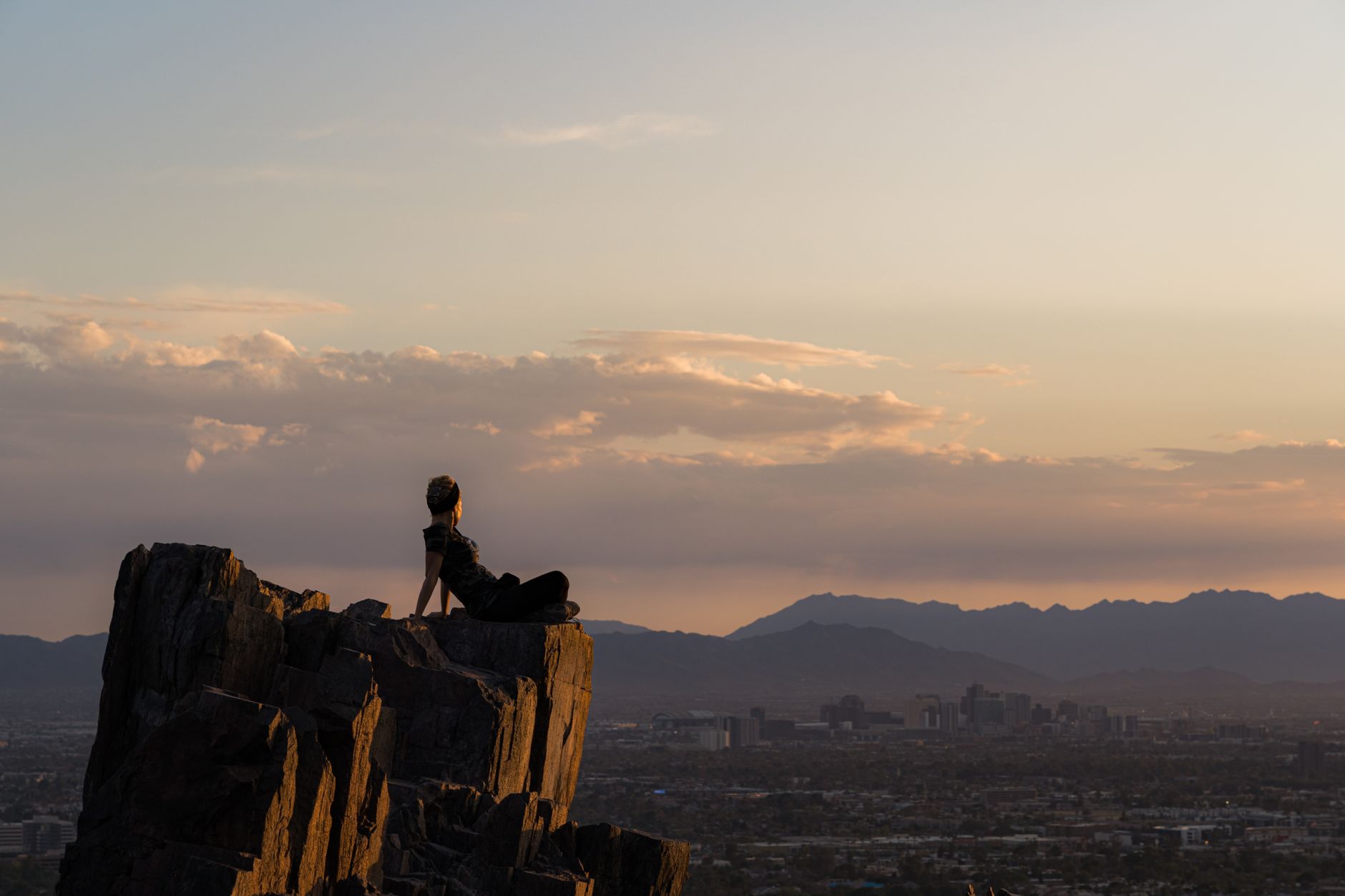
And the outdoor access from October through April is genuinely exceptional. Hiking in South Mountain, Camelback, and the McDowell Sonoran Preserve is world-class. Sedona is two hours. The Grand Canyon is three and a half. Flagstaff, with its ponderosa pines and genuine four-season mountain town feel, is ninety minutes north.
The pitch is real. Now for the full picture.
The heat — understood completely before anything else
If you take one thing from this guide let it be this: Phoenix summer heat is not like heat you have experienced elsewhere unless you have lived in a desert climate. It is categorically different and it shapes everything about daily life for five months of the year.
From approximately May 15 through October 1 daily high temperatures in Phoenix regularly exceed 110°F. The all-time record is 122°F. During the peak summer months the average high is above 104°F and overnight lows rarely drop below 85°F. The city issues heat emergency alerts routinely. Heat-related illness and death are documented public health concerns every summer — not edge cases.
What this means practically:
Outdoor activity before 7am and after 8pm. Morning runs need to begin by 5:30am to finish before temperatures make sustained exertion dangerous. Weekend hikes happen at dawn or not at all. Children cannot play outside in the middle of the day from June through September without meaningful heat risk.
Youth sports leagues restructure entirely around the heat. Summer baseball and soccer practices happen at 6am or are cancelled. School recess is limited or moved indoors. Playgrounds are unusable from 10am to 6pm because the equipment surface temperatures reach levels that cause burns on contact.
Pools become the primary outdoor amenity — but even pool time has a window. Afternoon sun at 112°F is punishing even in the water. Most Phoenix pool use happens in the morning and evening.
The flip side is real: Phoenix winters are genuinely spectacular. November through March brings temperatures in the 65°F to 80°F range with abundant sunshine. Christmas in Phoenix is often 72°F. Outdoor dining in January is not a novelty — it's the norm. The outdoor lifestyle that drew people to Phoenix is fully available for seven months of the year.
The question is whether the summer tradeoff works for your life. People who thrive in Phoenix have genuinely made peace with this arrangement. People who struggle consistently underestimated how much the summer constraint would affect their quality of life — especially families with active kids who need outdoor time and people with outdoor-focused lifestyles.
Visit in July before you decide. Not March.
Car dependency — total, structural, and permanent
Phoenix is one of the most car-dependent major metros in the United States. Walk scores in most Phoenix neighborhoods run between 15 and 40. The light rail exists — it serves a corridor through central Phoenix connecting Tempe, downtown, and parts of north Phoenix — but it covers a small fraction of the metro and most residents never use it for daily life.
You will drive everywhere. Every grocery run, every school drop-off, every dinner out, every visit to a friend's house. Two cars per adult household is the standard assumption. The cost of operating two vehicles — insurance, maintenance, fuel, registration — adds $8,000 to $15,000 per year to your cost of living that rarely makes it into the back-of-envelope tax comparison people run when considering a move.
People relocating from walkable northeastern cities consistently identify car dependency as the hardest adjustment — harder, often, than the heat. The loss of the ability to walk to a coffee shop, run a quick errand on foot, or exist in a neighborhood without getting in a car is a daily quality-of-life reduction that doesn't show up in the financial comparison but matters enormously in practice.
There are exceptions. Arcadia and parts of central Phoenix have genuine walkability by Phoenix standards. Old Town Scottsdale has a walkable district. Tempe near ASU has density and walkability that the outer suburbs lack entirely. But these are the exceptions in a metro that is fundamentally organized around the automobile.
The neighborhoods — honest breakdown
Phoenix is enormous. The city covers more than 500 square miles and the broader metro extends through Scottsdale, Tempe, Mesa, Gilbert, Chandler, Peoria, Glendale, Surprise, and beyond. These are not equivalent places.
Scottsdale
The premium address in the Phoenix metro and the destination that most people from expensive northeastern markets naturally gravitate toward because the infrastructure feels familiar. Old Town Scottsdale has a genuine walkable district with excellent restaurants, galleries, and nightlife that is unusual in the Phoenix metro. North Scottsdale offers newer construction, top-rated schools, and resort-level amenities at the highest price points in the metro. The tradeoff is that North Scottsdale is far from almost everything and the commute times to central Phoenix employment can be significant.
Best for: buyers with higher budgets who want the best lifestyle infrastructure the metro offers, retirees and pre-retirees who want resort amenities built into their neighborhood, families who prioritize school quality and are willing to pay for it.
Arcadia
The most coveted neighborhood in Phoenix proper. Mature citrus trees line the streets — genuinely unusual in Phoenix — and the neighborhood has a walkability and density that most of the metro lacks. Excellent restaurants and boutiques on Thomas and Camelback Roads, proximity to Camelback Mountain, and a strong community feel make it the neighborhood that most transplants from walkable cities end up wanting once they understand the Phoenix market. Supply is extremely constrained and prices reflect it.
Best for: buyers who want urban walkability within Phoenix proper, people coming from dense northeastern markets who want the closest Phoenix analog to what they're used to.
Gilbert
The suburb that has grown fastest and most successfully over the past decade. The Chandler Unified and Gilbert Unified school districts are consistently among the highest-rated in Arizona and Gilbert has built genuine community infrastructure — a Heritage District main street, excellent parks, strong HOA-maintained neighborhoods — that makes it feel more intentional than the typical Phoenix suburb. Among the most popular landing spots for northeastern families moving to Phoenix.
Best for: families with children who prioritize school quality and community feel at prices below Scottsdale.
Chandler
Similar profile to Gilbert — strong schools, newer construction, suburban infrastructure — with more corporate employment nearby anchored by Intel's fab and a growing semiconductor supply chain ecosystem. The commute to downtown Phoenix is longer than from Scottsdale or Arcadia but the price-to-quality ratio is strong.
Best for: tech workers, families who want Gilbert's lifestyle at a comparable or slightly lower price point with more employment nearby.
Tempe
The most urban of the Phoenix suburbs, anchored by Arizona State University. More walkable than anywhere else in the metro outside of Arcadia. Genuine nightlife and restaurant scene, light rail access to central Phoenix, more density and less suburban monoculture than the outer ring suburbs. Skews younger but has established residential neighborhoods beyond the university area.
Best for: younger professionals, ASU-connected buyers, people who want more urban density than the outer suburbs offer.
Mesa / Peoria / Surprise / Goodyear / Avondale
The affordability tier of the Phoenix metro. Significantly lower prices than Scottsdale, Gilbert, or Chandler. Car dependent. Newer construction throughout. Longer commutes to major employment centers. Schools vary significantly by specific district within these larger cities. The right answer for buyers who need maximum space for minimum price and don't require proximity to the urban core.
Schools — the full picture
Arizona's public school system has a mixed national reputation and the statewide averages don't tell the right story for Phoenix families making a specific decision.
The variation between districts is enormous. The Chandler Unified, Gilbert Unified, and Scottsdale Unified school districts consistently score among the best in the state and compare favorably with suburban districts in most northeastern markets. The Kyrene Elementary District in the south Tempe and Chandler area has an excellent reputation for elementary education.
The Arizona charter school system is one of the most robust in the country and provides genuine alternatives to traditional public school in almost every part of the metro. Basis Schools, Great Hearts Academies, and several other charter networks operate highly regarded campuses throughout Phoenix that are tuition-free and compete academically with private schools.
Private schools are widely available throughout the metro for families who prefer them.
The important thing: research the specific schools assigned to the specific address you're considering. The district average obscures enormous variation at the school level. An address on the wrong side of a district boundary can mean a meaningfully different school experience.
The water question
Phoenix sits in the Sonoran Desert and its long-term water supply is a real consideration that most relocation guides gloss over.
The metro relies on Colorado River water delivered via the Central Arizona Project canal, groundwater from aquifers, and Salt River water. The Colorado River has been at historically low levels and Arizona's allocation has been subject to reduction through federal negotiation.
The honest assessment: Phoenix has invested more seriously in water conservation and banking than almost any other western city. The city has been storing water in underground aquifers for decades specifically anticipating this scenario. The water situation is manageable for the foreseeable future.
But it is a real long-term uncertainty that is worth understanding before making a 30-year financial commitment in a desert environment. Follow it. It matters.
The cultural and social reality
Phoenix is a sprawling, car-dependent metro where building a social life requires more intentional effort than in denser cities. The spontaneous community that comes from living in a walkable neighborhood — bumping into neighbors, walking to a local bar, existing in shared public space — is largely absent in most parts of the metro.
This is not unique to Phoenix but it's more acute there than in most large American cities. Building friendships and community in Phoenix requires joining things — a gym, a running group, a sports league, a religious community, a neighborhood association — and doing so consistently over months before the social infrastructure starts to feel real.
The arts and culture scene, while less robust than comparable coastal metros, has grown significantly. The Phoenix Art Museum is legitimate. The Heard Museum for Native American art is world-class. The Valley's sports scene — Suns, Cardinals, Coyotes (relocated to Utah), Diamondbacks — gives the city genuine professional sports culture. The Scottsdale restaurant scene is better than its national profile suggests.
The people who thrive in Phoenix
After all of this the profile of someone who genuinely thrives in Phoenix is fairly clear:
They have made genuine peace with the summer heat and adjusted their lifestyle accordingly — or they actively enjoy hot weather and don't see it as a tradeoff at all.
They don't need or particularly want walkability. They are comfortable in a car-oriented environment and don't feel its absence as a daily deprivation.
They value the October through April outdoor access — hiking, biking, golf, outdoor dining — and take full advantage of it.
They benefit meaningfully from the tax environment. The financial relief is real and improves their monthly cash flow in ways that affect quality of life.
They or their family are settled enough in Phoenix to build genuine community — through schools, through sport, through work, through neighborhood.
The people who leave
The people who move to Phoenix and leave within two or three years almost always fall into predictable patterns:
They visited in the winter and didn't seriously reckon with what summer would mean for their daily life.
They moved from a walkable city and discovered that car dependency affected their quality of life more than they anticipated.
They underestimated how important proximity to family and their existing social network was to their daily wellbeing and found the distance to the northeast or California harder than expected.
They expected the financial savings to compensate for lifestyle tradeoffs that money doesn't actually fix.
The honest verdict
Phoenix is a genuinely good place to live for people who understand what they're choosing. The financial case is real. The October through April lifestyle is exceptional. The schools in the right districts are strong. The job market is growing. The outdoor access is world-class for desert and mountain enthusiasts.
It is not a good fit for people who underestimate the heat, overestimate the walkability, or are chasing tax savings without a genuine affinity for the desert lifestyle.
The single most reliable advice for anyone seriously considering Phoenix: visit in July. Spend a weekend. Go outside in the afternoon. Experience what summer actually feels like. If you can imagine building a life around that reality — and many people genuinely can — then Phoenix might be exactly right for you.
If that visit gives you pause, listen to the pause. The savings will still be there in a city that fits you better.
Search Phoenix neighborhoods on WYLT. Free data-driven reports on Scottsdale, Gilbert, Chandler, Tempe, Arcadia, and every Phoenix metro zip code — schools, commute, crime, price trends, and a plain-English verdict.