Ask ten people which Brooklyn neighborhood they'd pick — Park Slope or Williamsburg — and you'll get ten confident, completely different answers, usually based on which stage of life they're in. Both are among the most in-demand neighborhoods in New York City. Both currently carry a "Think twice" verdict in WYLT's data. And both are expensive — but not equally expensive, and the gap is bigger than most people realize.
Here's the honest, data-backed comparison: what each neighborhood actually costs, what you get for the difference, and which one fits which kind of life.
The 30-second version
Choose Park Slope if: You want tree-lined brownstone blocks, Prospect Park, top-rated schools, and a quieter, more family-oriented pace — and you can absorb a median home price nearly $460,000 higher than Williamsburg's.
Choose Williamsburg if: You want the fastest commute to Midtown in this comparison, the highest walk and transit scores, and a nightlife-and-restaurant-driven neighborhood — and you're willing to trade green space and quiet for energy and a lower (but still very high) price tag.
Cost of living
This is where the two neighborhoods diverge hardest. Park Slope's reviewed ZIP (11215) has a median home price of $1,597,400. Williamsburg (11211) comes in at $1,138,900 — a gap of $458,500. That's not a rounding difference; it's close to half a million dollars on a single home purchase.
Rent is closer but still notable: Park Slope's median rent is $2,673/month versus Williamsburg's $2,267/month, a $406 difference. The income data tells the more interesting story, though. Park Slope's median household income is $173,899 — Williamsburg's is $94,824, nearly half. That gap is much wider than the price gap, which suggests Williamsburg's housing costs are being driven less by who lives there now and more by demand from renters and buyers willing to pay a premium for the neighborhood's location and culture, even on lower household incomes.
Commute and getting around

Williamsburg wins clearly on commute: WYLT's data shows an average commute of 15 minutes to Midtown Manhattan, versus 21 minutes from Park Slope — a 6-minute edge driven largely by the L train's direct shot into Manhattan. Williamsburg also edges out Park Slope on walk score (100 vs. 98), transit score (82 vs. 75), and ties on bike score (80 vs. 80). On paper, Williamsburg is the more convenient neighborhood for getting around without a car — it's just also the cheaper one, which runs counter to the usual "convenience costs more" pattern.
Schools
This category is a flat tie: both neighborhoods carry a school rating of 7.4. Neither has an edge here, which removes one of the biggest typical reasons to pay a premium for one over the other. If schools were the deciding factor, the data doesn't give Park Slope's higher price any justification on this axis alone.
Safety and flood risk
Both neighborhoods sit in flood zone X (low flood risk) and carry "Moderate" ratings for both violent and property crime — another close-to-identical category. The one difference: Park Slope's air quality is rated "Good," while Williamsburg's is "Moderate," likely reflecting Williamsburg's higher density and industrial-adjacent pockets along the waterfront.
What WYLT's data shows
- 11215 (Park Slope) — Think twice: Median home $1,597,400, median rent $2,673, median household income $173,899, walk score 98, transit score 75, bike score 80, schools 7.4, commute 21 minutes to Midtown Manhattan. Low flood risk, moderate violent and property crime, good air quality.
- 11211 (Williamsburg) — Think twice: Median home $1,138,900, median rent $2,267, median household income $94,824, walk score 100 — the highest in this comparison — transit score 82, bike score 80, schools 7.4, commute 15 minutes to Midtown Manhattan, the fastest of the two. Low flood risk, moderate violent and property crime, moderate air quality.
Lifestyle and things to do
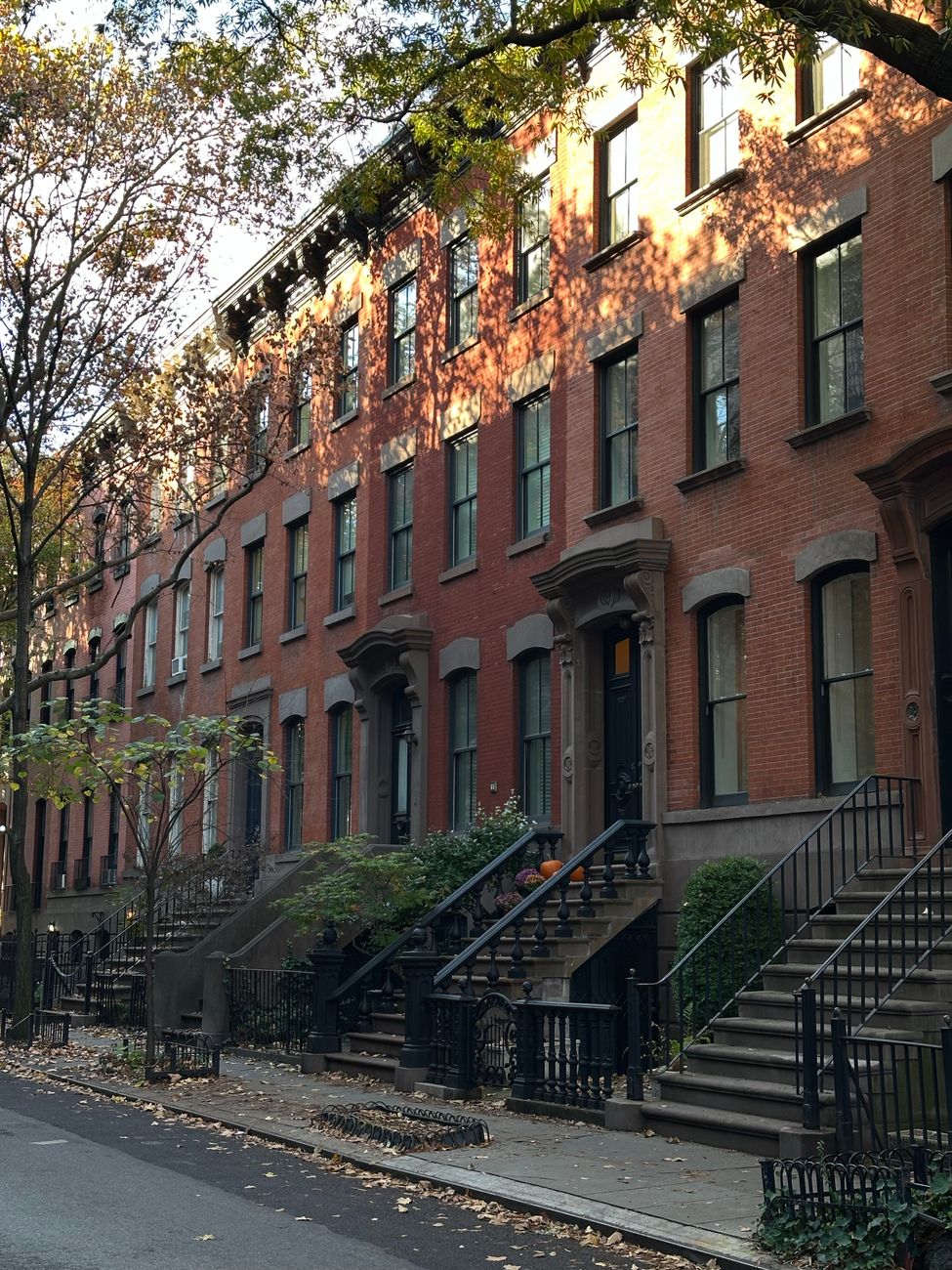
Park Slope's case rests on Prospect Park — one of Brooklyn's largest green spaces, with a zoo, a band shell, and miles of running and biking paths — plus blocks of landmarked brownstones, a reputation as one of NYC's most family-dense neighborhoods, and a calmer pace once you're off the main commercial strips (5th and 7th Avenues). It's the neighborhood people describe as "still the city, but quieter."
Williamsburg's case is built on density of a different kind: Bedford Avenue's restaurants, bars, and shops, the Smorgasburg food market in McCarren Park during warmer months, a thriving live music and gallery scene, and direct waterfront access with Manhattan skyline views from the East River State Park. It's a neighborhood built for people who want to walk out their door into something happening, every night of the week — at the cost of quiet.
The verdict
The data makes an unusual case here: Williamsburg beats Park Slope on commute time, walk score, and transit score — categories that typically command a premium — while costing $458,500 less on the median home and ties Park Slope on schools entirely. If you're optimizing purely on WYLT's numbers, Williamsburg is the better value for anyone whose daily life revolves around transit, walkability, and nightlife.
But Park Slope's premium isn't really about those numbers — it's about Prospect Park, brownstone-block quiet, and a family-oriented density that Williamsburg, for all its strengths, doesn't replicate. If green space and a slower residential pace are non-negotiable, Park Slope is worth the extra half-million to the people who value those things. If they're not, the data gives Williamsburg a real edge on almost everything else — at a meaningfully lower price.