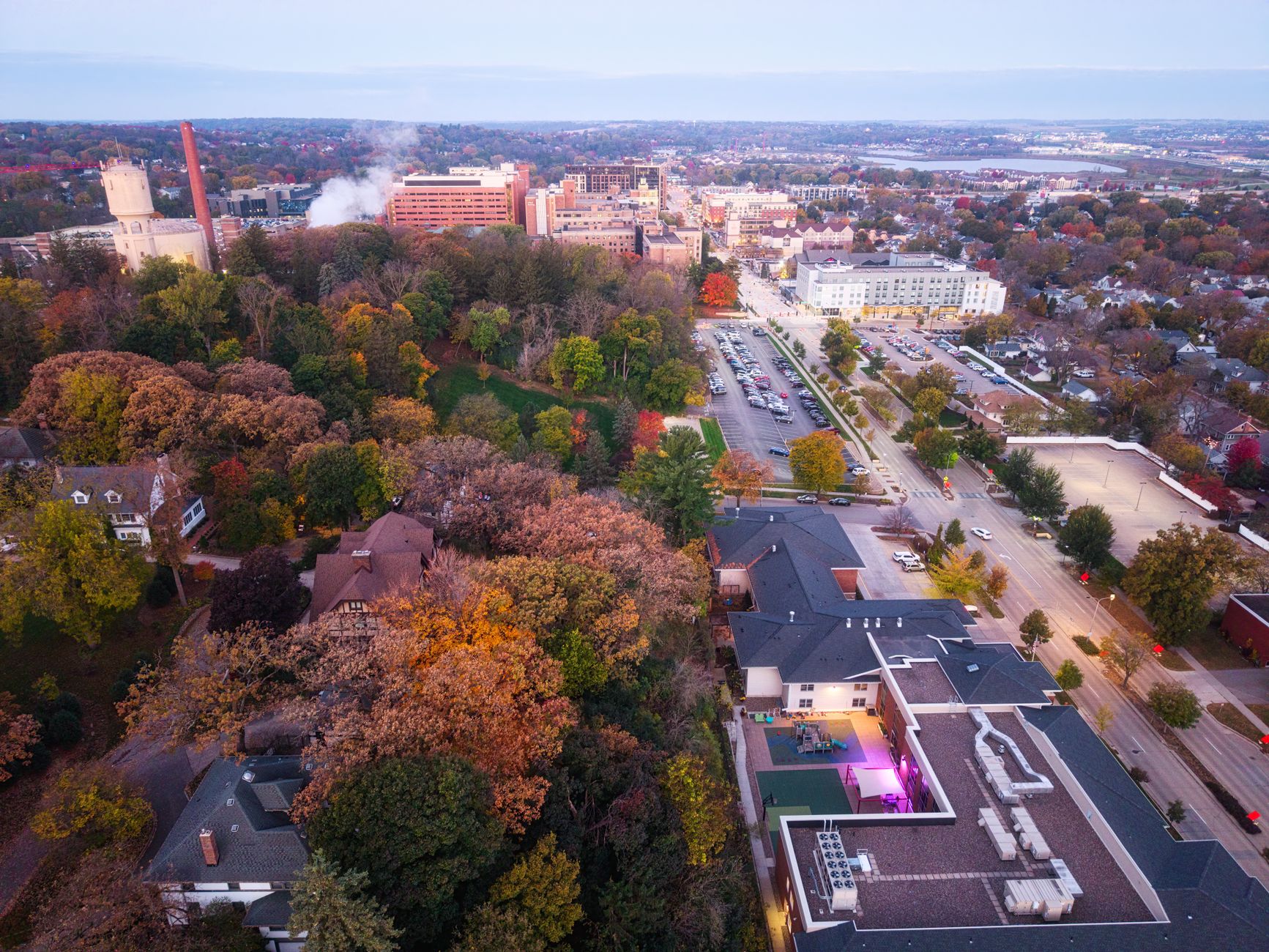
Madison, Wisconsin, has carved out a reputation as a consistently high-ranking place to live in the U.S., thanks to its thriving tech and healthcare sectors, the influence of the University of Wisconsin-Madison, and its unique setting on an isthmus between two major lakes. This desirability, however, comes with a predictable trade-off: housing costs have been on a steady climb. For anyone looking at Madison in 2026, the question of affordability isn't simple; it requires a hard look at the numbers.
This post is for prospective buyers, renters, and long-time residents wondering if their housing dollar still stretches in Dane County. We’ll cut through the hype to give you a data-driven breakdown of what to expect, from home prices and rent to job prospects and school quality. Our goal is to provide a candid assessment so you can make an informed decision about planting roots in Wisconsin's capital.
Cost of Living & Home Prices
As of early 2026 projections, Madison's median single-family home price is estimated to be around $455,000. This figure represents a significant increase over past years, driven by strong demand and limited inventory. For context, this is considerably higher than the statewide median home price in Wisconsin. Property taxes in Dane County hover around 1.9% of the assessed value, meaning a $455,000 home would incur roughly $8,645 annually in property taxes alone.
Renting offers some flexibility but isn't cheap either. A median 1-bedroom apartment typically ranges from $1,400 to $1,700 per month, while a 2-bedroom unit can cost anywhere from $1,800 to $2,200 per month, especially in desirable areas like the Isthmus or near the university. Utilities, including electricity, gas, internet, and water, can add another $200-$350 to monthly expenses. The median household income in Madison is projected to be around $80,000 in 2026, making the price-to-rent ratio approximately 20.5, which suggests that renting, while still expensive, might be more financially accessible for some compared to purchasing a home at current market values.
| Metric | 2026 Projection (Madison, WI) |
|---|---|
| Median Home Price | $455,000 |
| Median Monthly Rent (Overall) | $1,850 |
| Median Household Income | $80,000 |
| Price-to-Rent Ratio | 20.5 |
Best Neighborhoods
Madison offers diverse neighborhoods, each with distinct character and price points. The most sought-after areas are often the most expensive. The Near West Side, encompassing areas like University Heights and Shorewood Hills (ZIP code 53705), features historic homes, mature trees, and excellent proximity to UW-Madison and quality public schools. Home prices here typically range from $600,000 to over $1 million, with Walk Scores generally between 60-75. It's a quiet, established area popular with academics and professionals.
For those prioritizing walkability and a lively atmosphere, the Isthmus neighborhoods like Marquette and Willy Street (East Madison, ZIP code 53703) are prime choices. Known for their older, renovated homes, local businesses, and lake access, these areas boast high Walk Scores (80+) and vibrant community scenes. Median home prices here are often between $550,000 and $750,000, but smaller properties or condos can be found for less. Traffic can be a bottleneck during peak hours, and parking is often a challenge.
If your budget requires more flexibility, look to the Far East Side or areas bordering surrounding communities. Neighborhoods like Sherman Park (ZIP code 53704) offer more diverse housing stock, including mid-century ranches and some newer developments, with median home prices typically ranging from $350,000 to $480,000. While less walkable (Walk Scores 40-55), these areas provide better access to amenities like East Towne Mall and generally have shorter commutes to major employers like American Family Insurance. South-side neighborhoods like Bay Creek (ZIP code 53713) also offer more attainable price points, particularly for bungalows and smaller homes, often in the $300,000-$450,000 range, with decent access to the Monona Bay shore and downtown.

Schools
The Madison Metropolitan School District (MMSD) serves most of the city and is the second-largest district in Wisconsin. On a scale of 1 to 10, MMSD generally rates around a 6.5-7/10, reflecting a mix of high-performing schools and others facing more significant challenges, typical of a diverse urban district. Parental involvement and neighborhood resources often correlate with individual school performance.
Some of the top-performing public schools include Memorial High School (8/10), West High School (8/10), and Middleton High School (9/10), though Middleton is in the separate Middleton-Cross Plains Area School District. For elementary, schools like Shorewood Hills Elementary (9/10) and Van Hise Elementary (8/10) consistently receive high marks. Access to these top-tier schools often means living in their specific attendance zones, which are typically found in the more expensive western and near-west neighborhoods.
Safety
Madison is generally considered a safe city, especially when compared to other U.S. cities of similar size. The Madison Police Department (MPD) regularly publishes crime statistics. While violent crime rates remain relatively low, property crime, particularly vehicle theft and burglaries, can be an issue in certain areas, mirroring trends in many growing cities.
Areas requiring more caution include parts of the South Side (e.g., portions of the 53713 and 53711 ZIP codes) and, occasionally, late-night incidents around the State Street and downtown bar district. However, these are typically isolated incidents, and the city overall maintains a strong sense of community safety. Residents typically feel safe walking in most neighborhoods, especially during the day, though standard urban precautions are always advisable.
Job Market
Madison's job market is robust and diverse, anchored by several major sectors and employers. The University of Wisconsin-Madison and the State of Wisconsin government are two of the largest employers, providing stable job opportunities in education, research, healthcare, and public administration. Healthcare is a significant industry, with organizations like UW Health, SSM Health, and Meriter Hospital employing thousands.
The tech and biotech sectors are also booming. Epic Systems, a healthcare software giant headquartered in nearby Verona, employs over 10,000 people and continues to expand, though many roles require on-site work. Other notable tech and life science companies include Exact Sciences, Promega Corporation, and various startups emerging from UW-Madison's research. For those in insurance, American Family Insurance and WPS Health Solutions are major players. Remote work is highly viable in Madison, given the prevalence of professional and tech-oriented roles, excellent internet infrastructure, and a well-educated workforce, making it attractive for those with location-independent jobs.
The Verdict
Is Madison, WI affordable in 2026? The honest answer is: it's becoming increasingly challenging, but still attainable with strategic planning and realistic expectations. The days of finding a bargain in a prime Madison neighborhood are largely over. Its persistent ranking as a top city to live, work, and raise a family has solidified its desirability, driving prices north.
If you're a first-time buyer prioritizing excellent schools and a family-friendly environment, focus your search on the western outskirts of the city or in adjacent suburbs like Middleton or Verona, where you might find more home for your money, albeit with potentially longer commutes. Look for homes in the $450,000-$550,000 range on the Far West Side (e.g., Parkwood Hills) or even in the slightly more affordable areas of the Far East Side. If budget is tight, consider condos or townhomes as a gateway into homeownership, or explore neighborhoods further out like Sun Prairie or Cottage Grove, which offer more accessible price points in the $350,000-$450,000 range, though this means a 20-30 minute drive to downtown.
For those prioritizing walkability and a vibrant urban lifestyle near downtown or the university, be prepared for significantly higher prices, particularly if you're seeking a single-family home. Renting in the Isthmus or Near West Side might be your most viable option, with 2-bedroom apartments easily costing $1,800-$2,200 per month. Madison is worth the investment for many due to its quality of life, job market, and natural beauty, but it demands a higher entry cost than many other Midwestern cities. Affordability here means making trade-offs between location, size, and amenities, rather than expecting widespread low prices.
Explore neighborhood-by-neighborhood data on WYLT: Madison, WI (Madison).
Get the full data-driven report on any neighborhood at WYLT's neighborhood finder.