Houston has a reputation problem. Every year the FBI Uniform Crime Report ranks it near the top of violent crime among large American cities, and every year millions of people move there anyway — because the headline number is almost useless without a map.
Houston is the fourth-largest city in the United States and the largest with no zoning laws. That single fact matters more than any crime statistic when deciding where to live. A $180,000 starter home can sit three blocks from a $739,000 River Oaks mansion, which can sit across the street from a strip club, which can sit next to a children's preschool. The land-use chaos is real. So is the neighborhood variance — and that variance is enormous.
This post will tell you what WYLT's data actually shows for Houston's neighborhoods, which ZIP codes earned a "Settle here" and which ones didn't, and how to think about the city's genuine problems — crime, flooding, and heat — without letting the aggregate reputation make your decision for you.
The honest crime picture
Houston's violent crime rate runs roughly 70% above the national average. That number is real. It is also distributed extremely unevenly across the city.
The highest-crime corridors are concentrated in a band running through central and east Houston — parts of the Third Ward, Fifth Ward, Kashmere Gardens, and Sunnyside. These areas have homicide rates that are genuinely among the highest in any major American metro. If you move to those ZIP codes without understanding what you're getting into, the statistics will apply to you.
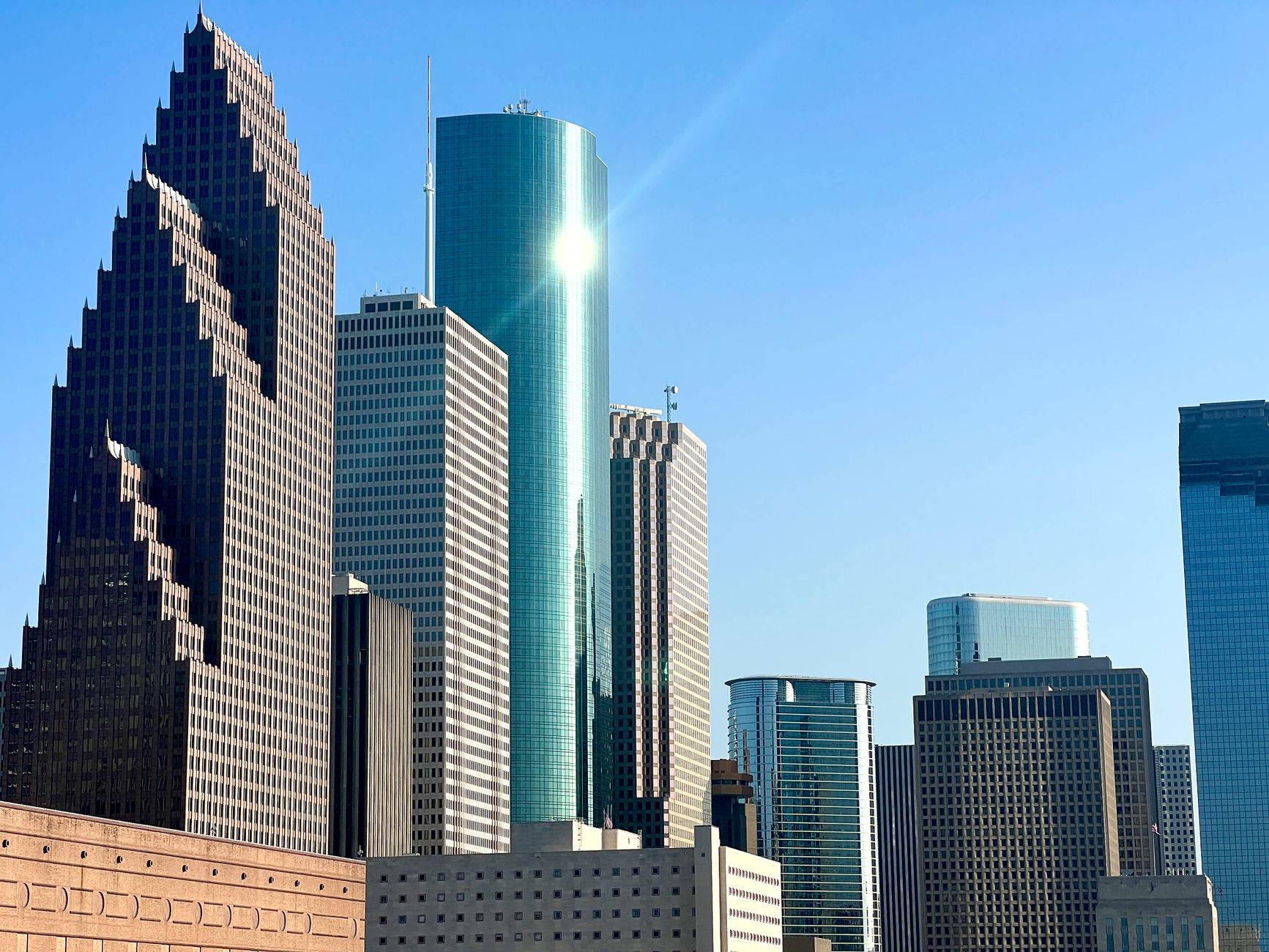
The neighborhoods that attract the people asking "is Houston safe?" — the Heights, Montrose, Midtown, River Oaks, the Museum District — have crime profiles that look more like Austin than like the citywide average. Property crime is still present (car break-ins in particular), but violent crime in these areas is a fraction of the aggregate number.
Houston also has a property crime problem that's separate from its violent crime reputation. Catalytic converter theft, vehicle theft, and package theft are widespread across the entire metro. Garages matter. Ring cameras are not optional.
Flooding: the other risk people underestimate
Crime is what Google surfaces first. Flooding is what longtime Houston residents will tell you to take more seriously.
Hurricane Harvey in 2017 flooded roughly 300,000 homes in the Houston metro. Not damaged — flooded. Many of those homes were outside the mapped 100-year floodplain. The city sits on flat coastal prairie with clay soil that doesn't absorb water, and 50 inches of annual rainfall to manage. Development has only increased impermeable surface area faster than drainage infrastructure can keep up.
Before you commit to any Houston address, run it through the Harris County Flood Education Mapping Tool. Not the FEMA map — the county's own tool, which uses more recent inundation data. Properties that flooded in Harvey and Imelda are frequently relisted without disclosure. Your REALTOR may not know. The county map will tell you.
If a home is in a high-risk flood zone, flood insurance is not cheap in Houston — plan for $2,000–$5,000/year on top of your homeowner's premium, assuming you can get coverage at all.
What WYLT's data shows by neighborhood
WYLT ran neighborhood-level analysis on eight Houston ZIP codes. Here's what the data shows, with verdicts ranging from "Settle here" to "Think twice":
77007 — The Heights / Washington Avenue: Settle here ✅
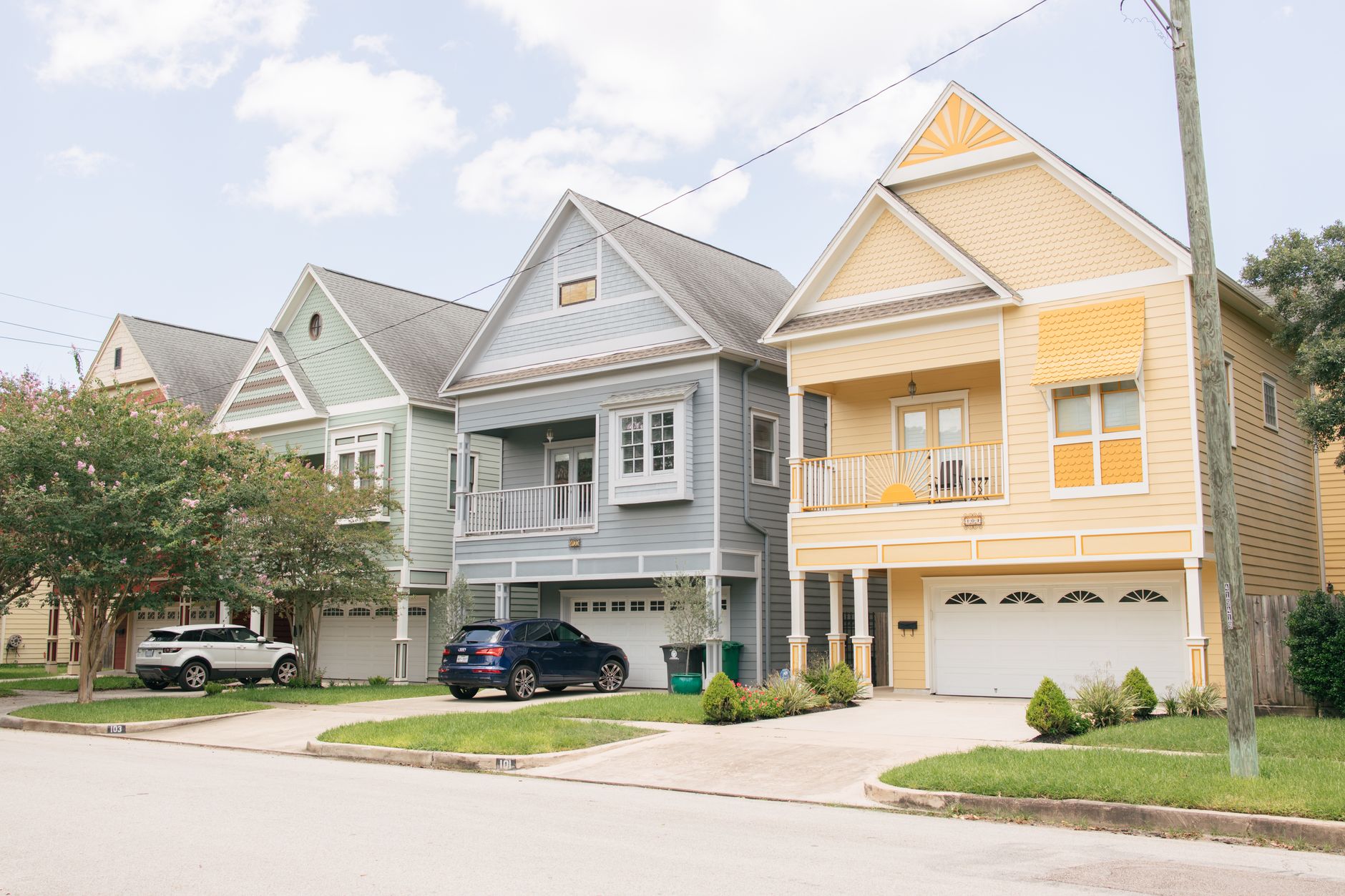
The Heights is Houston's most livable inner-loop neighborhood and the only one in WYLT's dataset to earn a "Settle here." Median home prices around $484,000 are high for Houston but justified by the walkability, the 19th Street dining and retail corridor, and the 7-minute downtown commute. The tree-lined streets of Woodland Heights and Norhill are as close as Houston gets to a traditional urban neighborhood with genuine character.
The Heights attracts young professionals and families precisely because it solves Houston's usual problems — sprawl, car dependence, social isolation — without requiring you to move to the suburbs. Flood risk is moderate; the higher-elevation parts of the Heights (north of 20th Street) fared better in Harvey than areas closer to the bayou.
77001 — South Downtown: Good for now ✅
At a $180,000 median home price, this is the most affordable ZIP code in WYLT's Houston dataset by a significant margin. The tradeoff is a neighborhood in active transition — downtown-adjacent, with good school ratings but the kind of block-by-block variance that requires local knowledge. Walkability scores are solid given the proximity to downtown. Crime remains elevated versus the Heights, but WYLT's composite rating lands it in "Good for now" territory.
This ZIP is worth watching. If you're a buyer who can tolerate uncertainty and wants to be in the urban core without a Heights price tag, 77001 is worth understanding on a street-by-street basis.
77003 — East End / Second Ward: Good for now ✅
The East End is one of Houston's most interesting in-progress stories. Median home around $345,000, a 6-minute drive to downtown, and a neighborhood experiencing real investment — the EADO (East of Downtown) arts district and new development along Navigation Boulevard are bringing foot traffic and restaurants to a historically industrial corridor. WYLT's data rates it "Good for now" — not quite there, but trending in a positive direction.
The Second Ward has a strong Latino cultural identity (Mercado del Sol, Ninfa's on Navigation) that gives it more character than most Houston neighborhoods at this price point. The flip side: parts of the East End still have crime patterns that require due diligence on the specific block you're considering.
77002 — Downtown / Discovery Green: Think twice ⚠️
On paper, 77002 should work — it's walkable by Houston standards, median home around $293,000, and it's downtown. In practice, downtown Houston has never solved the problem that plagues many American downtowns: it empties out after 5pm. Discovery Green is genuinely nice. The surrounding blocks are inconsistent, and the crime pattern for the area is not what you'd expect from a neighborhood that costs $300K to buy into.
77004 — Museum District / Midtown: Think twice ⚠️
The Museum District is one of Houston's better-known neighborhoods for good reason — the concentration of cultural institutions (Museum of Fine Arts, Natural History Museum, Hermann Park, the Medical Center nearby) is legitimately impressive. But WYLT's data puts 77004 in "Think twice" territory because the cost-to-quality ratio is off. At $375,000 median and crime rates that don't match the neighborhood's reputation, there are better options in the same price range.
77006 — Montrose: Think twice ⚠️
Montrose is beloved by Houstonians and has real appeal — the walkability, the Westheimer strip, the LGBTQ+ community, the density of restaurants and bars relative to any other Houston neighborhood. But the data is complicated. Property crime in Montrose is high even by Houston standards. The neighborhood's openness and nightlife come with elevated theft rates that affect residents more than tourists. WYLT's rating reflects the gap between Montrose's reputation and its actual livability metrics.
77008 — Garden Oaks / Oak Forest: Think twice ⚠️
At a $554,000 median, this is the Heights adjacent territory — and that's exactly the problem. You're paying Heights-adjacent prices for a neighborhood that is good but not great. The bungalows are appealing, the schools are solid, and the proximity to the Heights makes it tempting. But at that price point in Houston, you can do better. Flood risk varies significantly by specific street, so the due diligence requirement is higher than it should be for a $550K purchase.
77019 — River Oaks: Think twice ⚠️
This is the one that surprises people. River Oaks is Houston's most expensive neighborhood — $739,000 median, old money, the kind of streets where every house has a name. It's also in WYLT's "Think twice" because the cost-to-value equation doesn't clear the bar. At that price in Texas, you're paying for prestige more than fundamentals. The schools are good but not dramatically better than other Houston options. The flood risk in parts of River Oaks is real despite the wealth (money doesn't fix bayou geography). And you're still in Houston — still car-dependent, still dealing with city services that don't match the tax bill you're paying to live there.
Cost of living: Houston's real competitive advantage
Take everything above and add the fact that Houston has no state income tax and one of the lowest costs of living among major American metros. The median home price across WYLT's Houston dataset ranges from $180,000 to $739,000 — but the middle of that range, $350,000–$500,000, buys a genuinely nice inner-loop home that would cost $900,000–$1.4M in equivalent Seattle, Austin, or DC neighborhoods.
This is why Houston keeps growing. The energy sector, the Texas Medical Center (largest in the world by employment), and a diversifying tech scene are generating six-figure salaries — and those salaries go further in Houston than in almost any comparably-sized American city.
The hidden cost Houston residents will warn you about: electricity bills. Houston summers are brutal — sustained 95–105°F heat with high humidity from June through September. A house without excellent insulation and an efficient HVAC system will cost $350–$500/month to cool in summer. Check the utility bills before you buy, not after.
The commute reality
Houston has some of the worst traffic in America, and it has it because the city was designed around the car in a way that even other car-dependent cities weren't. The freeway system is constantly under expansion and constantly congested. The I-10 Katy Freeway is one of the widest roads in the world — 26 lanes at its peak — and it still has rush-hour gridlock.
The Metro rail system exists and is useful within a narrow corridor (Main Street light rail, the Green and Purple lines). If you live and work along those corridors, you can actually have a transit commute in Houston. Most people don't and can't. Budget 45–90 minutes each way if you're commuting from the suburbs.
The inner-loop ZIP codes in WYLT's dataset (77001, 77002, 77007) have commute times to downtown of 6–9 minutes by car. That advantage is real and a major reason inner-loop Houston has been appreciating faster than the suburbs.
The verdict
Houston is worth considering — specifically if you're relocating for work, want a major city with genuine economic opportunity, and are willing to do the neighborhood due diligence that other cities don't require to the same degree.
The aggregate safety number is not a reason to rule Houston out. It is a reason to be precise about where you live. The Heights (77007) is WYLT's clear recommendation for people wanting inner-loop Houston living at a price that still makes sense. The East End (77003) is the value play for buyers who want upside. Montrose and the Museum District have real appeal but don't perform as well on the fundamentals as their reputations suggest.
Do the flood research. Budget for electricity. Know that the lack of zoning means your neighborhood can change character faster than zoned cities can. And use the neighborhood-level reports below — citywide statistics will mislead you; ZIP code-level data will serve you much better.
Also in the WYLT moving guides: Moving to Houston, Dallas TX, San Antonio TX.