Most people think of a move as a stepping stone. Two years in this city, then somewhere better. A temporary base while the job shakes out. A trial run before they figure out where they really want to be. And then something happens: the coffee shop becomes their coffee shop. The neighborhood farmers market becomes Saturday morning. They find a street they love walking down in the rain. The two years become five, then ten, then they stop counting.
That's not an accident. Certain cities are built for it — the kind of places where livability is layered into the infrastructure, where the schools hold, where the parks are good and the commute is sane and the food gets better every year. WYLT calls these neighborhoods "Settle here." Not "it's fine," not "it could be worse." Settle here — the data says stay.
Here are seven of them.

1. Grapevine, Texas — the DFW town that doesn't feel like DFW
Grapevine 76051 sits between Dallas and Fort Worth, three miles from DFW Airport, and it should by all logic be an undifferentiated airport suburb with chain restaurants and chain hotels. Instead it has one of the most genuinely charming historic main streets in all of North Texas: a walkable brick-paved corridor with independent wine bars (Grapevine is the "Christmas Capital of Texas," but more importantly it's the center of the Cross Timbers wine trail with 50+ local wineries), live music venues, a Victorian architecture district, and Lake Grapevine on the city's northern edge with 8,000 acres of recreation area.
People move to Grapevine for DFW Airport access — airline employees, logistics professionals, corporate travelers who need to be on a flight at 6am. They stay because Grapevine is the rare suburb that actually has a there there. A school rating of 7.4/10, a "Settle here" verdict, and a median home price of $429,200 that represents real value given the lifestyle and location. Southlake and Colleyville next door cost hundreds of thousands more. Grapevine delivers most of the same quality for less.
→ Full Grapevine report: schools, crime, price trends, flood risk
2. Minneapolis, Minnesota — the city that converts skeptics
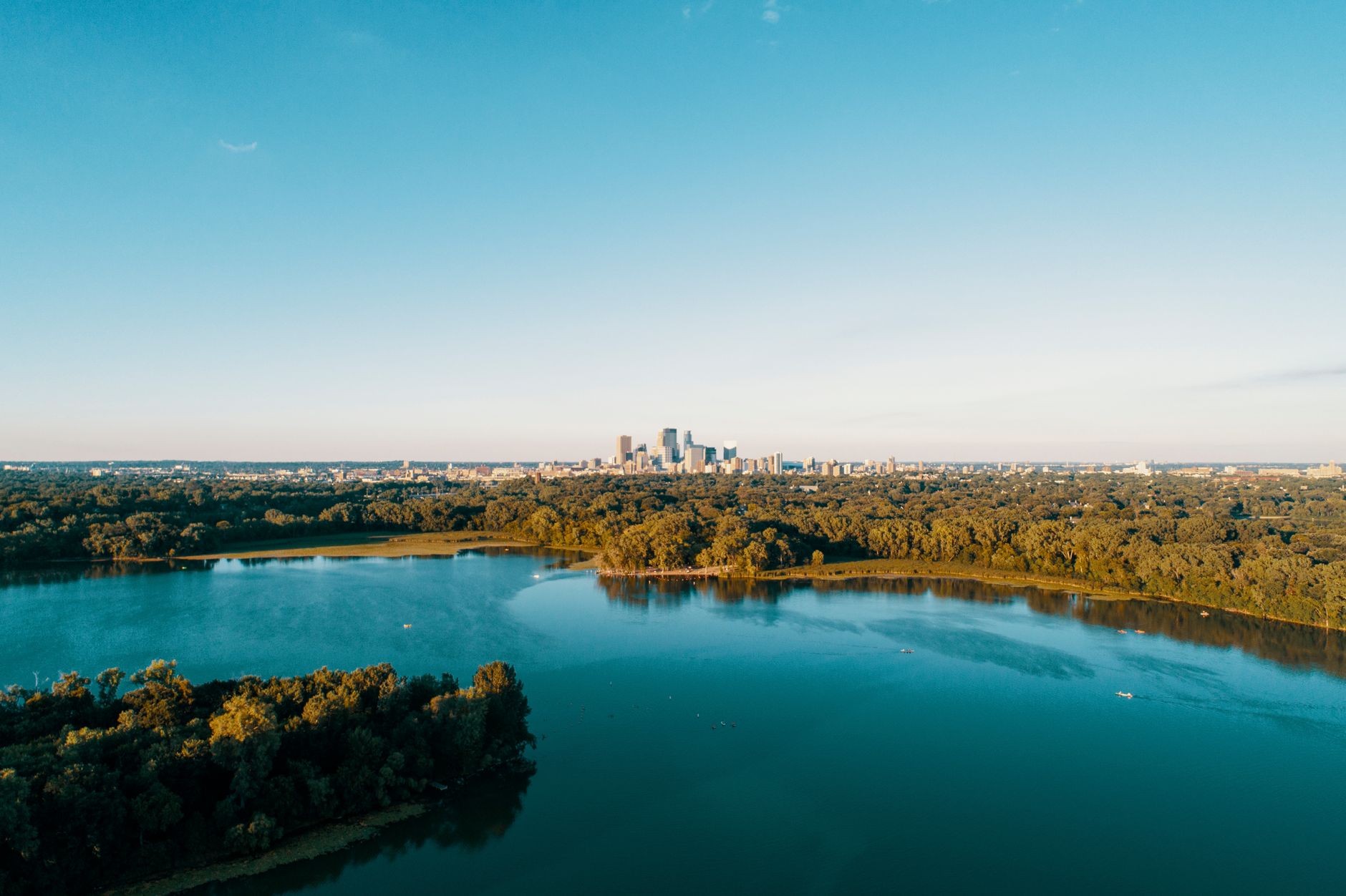
Minneapolis 55401 has a PR problem that has nothing to do with the city itself. People hear "Minnesota" and think cold, flat, and provincial. What they find when they actually move there is a city with 22 lakes within city limits, 200+ miles of protected bike lanes, a thriving arts scene (more theater seats per capita than any city in the country outside New York), and a food culture anchored by the Minneapolis Farmers Market and James Beard Award-winning restaurants that have no business being this good at this latitude.
The winter is real — don't let anyone tell you otherwise. But Minneapolis has adapted to it in a way that most cold-weather cities haven't: the Skyway system (eight miles of connected indoor walkways linking 80 blocks of downtown), a culture of year-round outdoor activity rather than hibernation, and the genuine psychological payoff of a Minnesota summer, which is one of the most beautiful seasonal experiences in the country. Walk Score of 93. Median home price of $389,600. "Settle here" verdict. The skeptics move, spend one summer by the lakes, and quietly stop mentioning they were skeptical.
→ Full Minneapolis report: schools, crime, price trends, flood risk
3. Decatur, Georgia — the Atlanta suburb that doesn't feel like a suburb
Decatur 30030 earns its "Settle here" verdict by doing something almost no Atlanta suburb manages: functioning like an actual city. A Walk Score of 75 in a sea of suburban 3s and 4s. A walkable downtown with independent restaurants, a beloved bookstore (Little Shop of Stories), craft breweries, a farmers market, and MARTA rail access that puts downtown Atlanta 15 minutes away without getting in a car. The school system is the City of Decatur's own — separate from DeKalb County — with a community investment in public education that is visible in the infrastructure and outcomes.
Decatur attracts Atlanta professionals who've decided they're done driving everywhere. It attracts writers and academics (Agnes Scott College anchors the east end of downtown). It attracts families who discovered, often by accident, that they could have an urban-feeling daily life in a city of 25,000 people. Median home price of $590,900 — the highest on this list — reflects the fact that this is a genuinely discovered market. People find it, love it, and tell their friends. Supply doesn't keep up with that word-of-mouth.
→ Full Decatur report: schools, crime, price trends, flood risk
4. Lincoln Park, Chicago — where Chicagoans go when they're done looking
Lincoln Park 60614 is the neighborhood that Chicago transplants land in provisionally — close enough to downtown, good enough for now — and then find themselves, five years later, with no reason to leave. The park itself (1,200 acres along the lakefront, with the free Lincoln Park Zoo, a conservatory, and lagoons for rowing) is reason enough. Add the Halsted Street dining and theater corridor, the DePaul University presence that keeps the neighborhood young without making it feel like a college town, and the lakefront trail access that puts you on a dedicated bike path to downtown and Wrigleyville.
Walk Score of 89. Median home price of $730,300, which is expensive — but Lincoln Park is expensive because it is legitimately one of the best-located, best-maintained, most livable urban neighborhoods in the middle of the country. "Settle here" verdict. The people who say they're leaving eventually and the people who actually leave are two very different groups in Lincoln Park.
→ Full Lincoln Park report: schools, crime, price trends, flood risk

5. Dupont Circle, Washington D.C. — the neighborhood that holds people
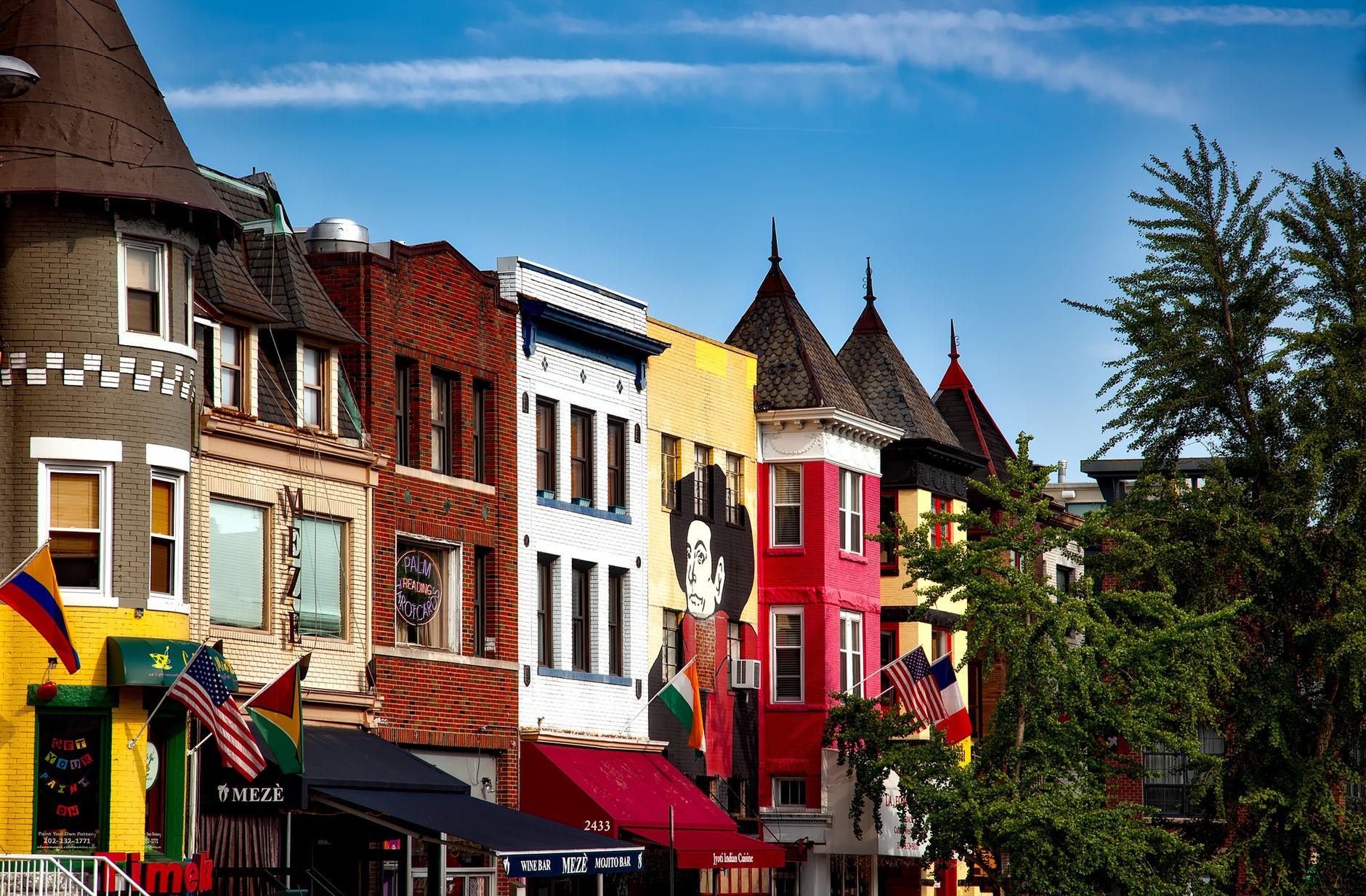
Dupont Circle 20036 has one of the highest Walk Scores in the country — 96 — in a city that attracts people from everywhere and keeps more of them than it should. Young professionals arrive for government jobs, think tank positions, policy work at nonprofits, and the general gravity of being near the center of things. The ones who end up in Dupont Circle start calculating whether they can afford to stay rather than planning when they'll leave.
The circle itself — the actual traffic circle with its fountain and chess tables — is one of the best people-watching spots in the city. The surrounding blocks have the highest density of independent bookshops, wine bars, and restaurants of any DC neighborhood. The Red Line puts you in Bethesda in eight minutes and Union Station in ten. Median home price of $453,200 and a "Settle here" verdict reflect a neighborhood where the case for staying compounds over time. Every year you know more neighbors, more spots, more of the city's rhythms. Washington keeps more transplants than people expect. Dupont Circle keeps more than most Washington neighborhoods.
→ Full Dupont Circle report: schools, crime, price trends, flood risk
6. Sunnyside, Queens, New York — the NYC neighborhood that feels like a neighborhood
Sunnyside 11104 is the answer to the question people ask when they move to New York and discover that the city is enormous and often anonymous: where do you go to feel like you actually live somewhere? Sunnyside is a low-rise, tree-lined Queens neighborhood with a main commercial strip (Greenpoint Avenue and Queens Boulevard) dense with independent restaurants reflecting the neighborhood's Irish, Korean, Romanian, Mexican, and South Asian communities, a genuine sense of residential permanence — people have been here for generations — and a Walk Score of 90.
The 7 train runs to Midtown in under 15 minutes. The median home price of $678,900 is high by national standards and low by Manhattan standards, which is the exact sentence that describes every compelling New York value proposition. "Settle here" verdict. Sunnyside is the neighborhood that people move to because they can't afford Astoria or Park Slope and end up preferring it — quieter, more genuinely neighborly, less performatively hip, and with better food per block than most of the neighborhoods people talk about more.
→ Full Sunnyside report: schools, crime, price trends, flood risk
7. Houston Heights (77007) — Texas with a front porch
Houston 77007 — the Heights and Montrose corridor — is what people who've written off Houston as a sprawling, car-dependent megalopolis don't know about. The Heights is a historic bungalow neighborhood with a Hike-and-Bike trail along the old White Oak Bayou, a genuine commercial strip along 19th Street with independent restaurants and boutiques, and a sense of neighborhood character that is stubbornly preserved despite the surrounding city's relentless development pressure. Houses here have front porches. People use them. Neighbors know each other by name.
Walk Score of 57 — not a walking city, but better than 90% of Houston — and a median home price of $483,700 in a city where you can still park for free and your property taxes fund some of the best infrastructure in Texas. "Settle here" verdict. The people who move to Houston for the job market, the no state income tax, and the cost of living, and who end up in the Heights, tend to stop looking. There are worse problems to have.
→ Full Houston Heights report: schools, crime, price trends, flood risk
What these cities have in common
None of these cities are the most obvious choice. Grapevine isn't where people say they want to move when they imagine Texas. Minneapolis isn't where people picture themselves when they imagine escaping their current city. Sunnyside isn't on the neighborhood lists that get passed around on Reddit. That's exactly the point.
The cities people never leave aren't the ones with the best marketing. They're the ones with the best daily life — the specific texture of a Tuesday afternoon when nothing special is happening and everything still feels right. That's what WYLT's "Settle here" verdict is trying to measure. Not the city as it appears on a list. The city as it actually feels to live in.
If one of these cities is already yours, you probably didn't need this list to tell you. If it isn't yet — now you know where to look.
Check the full WYLT data for every city on this list — crime, school ratings, walkability, flood risk, and price trends.
Grapevine, TX → | Minneapolis, MN → | Decatur, GA → | Lincoln Park, Chicago → | Dupont Circle, DC → | Sunnyside, NYC → | Houston Heights →