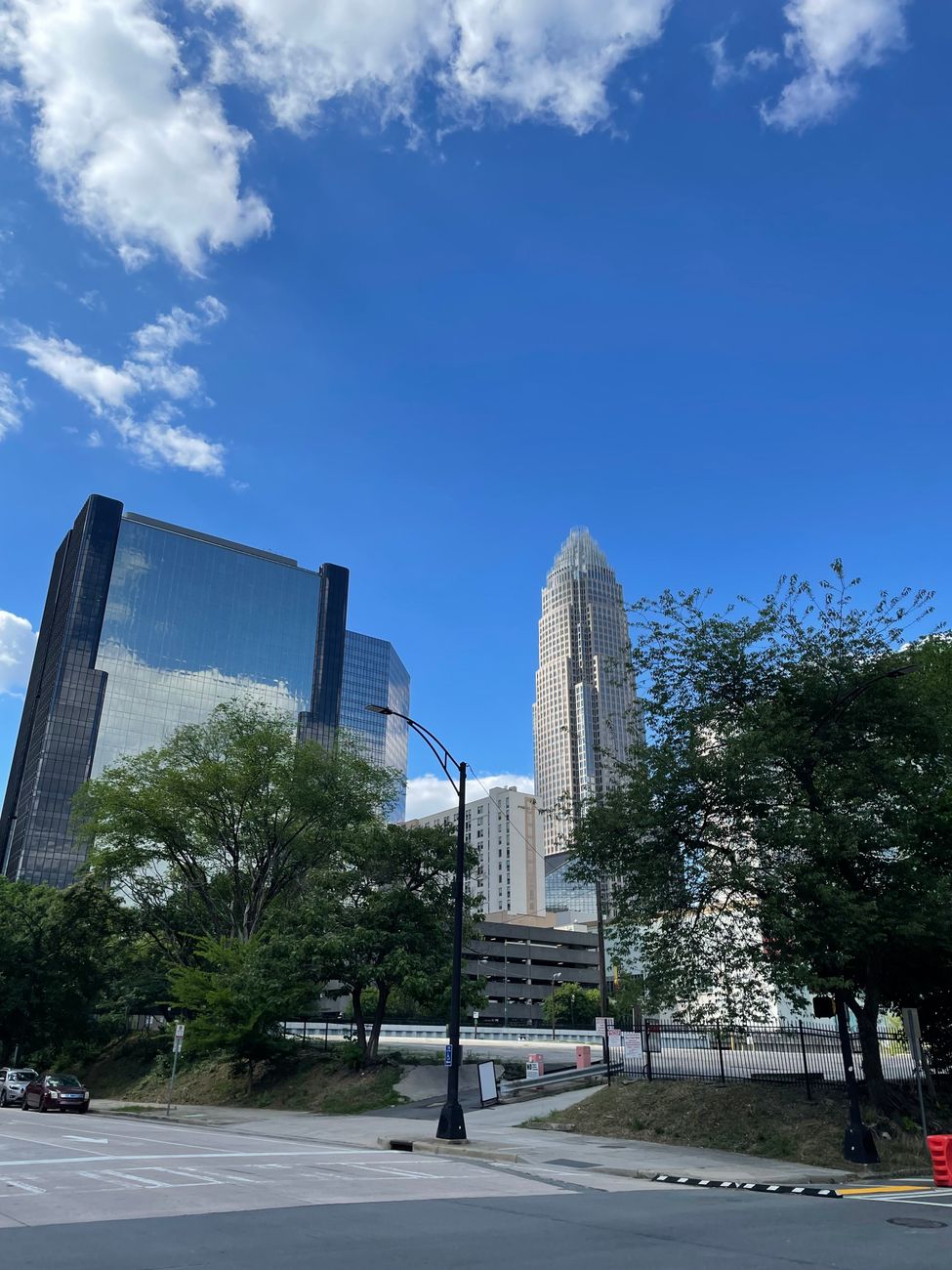
The Charlotte vs Raleigh comparison gets asked constantly by people moving to North Carolina. Both are in the top 20 fastest-growing metro areas in the country. Both have no income tax advantage (North Carolina's flat rate applies to both). Both have booming tech and finance sectors. But when you run them through WYLT's data, something interesting emerges: Charlotte is 4-for-4 "Good for now" on every neighborhood we've reviewed. Raleigh is 3-for-3 "Think twice."
That's a real signal worth understanding before you choose.
| Charlotte | Raleigh | |
|---|---|---|
| WYLT neighborhood verdicts | 4 of 4 "Good for now" | 3 of 3 "Think twice" |
| Median home price range | $375K–$532K | $425K–$838K |
| Most affordable "Good" area | NoDa/Plaza-Midwood ($375K) | N/A — all Think twice |
| Primary job market | Finance, banking, healthcare | Tech, biotech, university ecosystem |
| Airport | Charlotte Douglas (major hub) | RDU (strong regional hub) |
| College town energy | UNC Charlotte (smaller presence) | NC State, Duke, UNC nearby |
| Walkability (best area) | South End / Uptown (~70) | Downtown Raleigh (~65) |
| Professional sports | Panthers (NFL), Hornets (NBA) | Hurricanes (NHL) |
Why Charlotte's data looks better than Raleigh's
Charlotte's "Good for now" streak across every reviewed neighborhood reflects a city where rapid growth has been managed reasonably well. The South End, NoDa, and Dilworth corridors have gentrified with improving safety metrics. The banking and finance ecosystem (Bank of America, Wells Fargo, Truist are all headquartered or have major operations here) has attracted a stable professional class that reinforces neighborhood stability.
Raleigh's "Think twice" pattern is more interesting. It doesn't mean Raleigh is unsafe — the city's overall crime rates are comparable to Charlotte's. What it reflects is that Raleigh's rapid appreciation has pushed prices into ranges where the value proposition is harder to justify. At $838,600 median in North Hills (27608) and $479,300 downtown (27601) for "Think twice" verdicts, buyers are paying premium prices for neighborhoods where the value-to-risk ratio isn't as favorable as the narrative suggests.
Charlotte neighborhoods — what WYLT shows
- NoDa / Plaza-Midwood (28205) — Good for now, $375K. Charlotte's arts district — murals, craft breweries, live music, the most walkable neighborhood in the city.
- Uptown / Third Ward (28202) — Good for now, $392K. The urban core. Banks, sports venues, improving residential density.
- Ballantyne / South Charlotte (28277) — Good for now, $460K. Family-focused suburb with excellent schools and very low crime. Car-dependent.
- Dilworth / South End (28209) — Good for now, $532K. Charlotte's premium walkable neighborhood — light rail access, restaurant row, LYNX Blue Line corridor.
Raleigh neighborhoods — what WYLT shows
- Downtown Raleigh (27601) — Think twice, $479K. The urban core — good restaurant scene, improving walkability, but price vs verdict tension.
- Cameron Village / Five Points (27605) — Think twice, $425K. Raleigh's most walkable neighborhood, but "Think twice" reflects crime patterns in the corridors.
- North Hills / Midtown (27608) — Think twice, $838K. The premium Raleigh address. At $838K, a "Think twice" verdict is hard to justify against Charlotte's alternatives.

Jobs — Raleigh for tech, Charlotte for finance
This is the clearest differentiator. Raleigh sits at the heart of the Research Triangle (NC State, Duke, UNC-Chapel Hill), which has built one of the deepest tech and biotech ecosystems on the East Coast. Apple, Google, and Epic Games have made major investments in the Triangle. If you work in tech, software, or life sciences, the Raleigh job market has specific depth that Charlotte can't match.
Charlotte is the second-largest financial center in the United States after New York. Bank of America's world headquarters, Wells Fargo's East Coast hub, Truist, LendingTree, and a dense fintech ecosystem make Charlotte the obvious choice for finance, accounting, and banking professionals. The healthcare sector (Atrium Health, Novant) adds further depth.
Cost of living — Charlotte wins
This is where the data is most striking. Charlotte's most affordable "Good for now" neighborhood (NoDa, $375K) is less expensive than Raleigh's most affordable "Think twice" neighborhood (27605, $425K). At the top end, Charlotte's premium walkable neighborhood (Dilworth, $532K, Good for now) is $300K less than Raleigh's premium (North Hills, $838K, Think twice).
For buyers who don't have a specific sector pulling them to Raleigh's tech ecosystem, Charlotte's value proposition is difficult to argue against in 2026.
Who should choose Charlotte
- Finance, banking, and healthcare professionals — the job market has direct, deep access
- Buyers where price matters — Charlotte's "Good for now" neighborhoods are consistently $50K–$300K cheaper than Raleigh equivalents
- Sports fans — the Panthers and Hornets, Charlotte FC (MLS), and NASCAR proximity give Charlotte a professional sports depth Raleigh doesn't have
- Families who want suburban quality with urban access — Ballantyne and the South Charlotte suburbs are excellent and affordable
Who should choose Raleigh
- Tech, biotech, and research professionals where the Triangle ecosystem is a career asset
- University-adjacent buyers who want the energy and intellectual culture of the Research Triangle
- People who prioritize the specific lifestyle Raleigh offers — the Greenway system, the proximity to Chapel Hill and Durham's independent food and bar scene
- Buyers who accept the price premium and are buying specifically into the Triangle's long-term growth trajectory