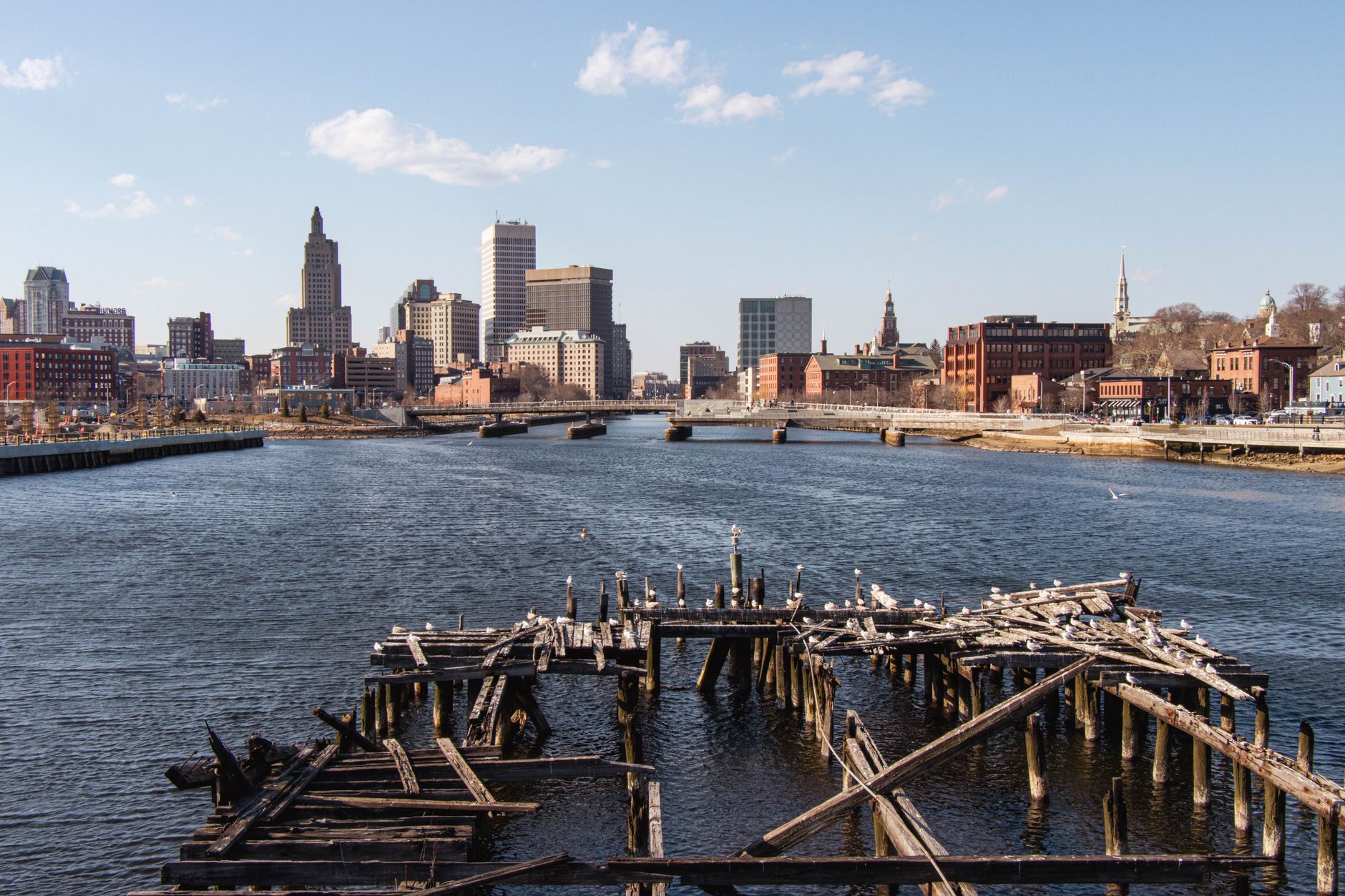
Providence is one of the most underrated cities in the Northeast. It is small enough that no part of it feels anonymous — at 180,000 residents, it is genuinely city-sized without the alienation of scale. It has two world-class universities (Brown and RISD) that pump creative energy, intellectual life, and a constantly renewing population of interesting people into its neighborhoods. The food scene is exceptional — often ranked among the best in the country relative to city size. And after decades of relative affordability, it has caught the attention of Boston and New York buyers who have done the math and realized they can get twice the house with half the commute stress.
Here is the honest guide to Providence's best neighborhoods in 2026 — who each one is right for, what things actually cost, and what the rankings don't tell you.
College Hill / The East Side — the crown jewel
College Hill is where most people picture when they imagine Providence at its best. Perched on a hill overlooking downtown and the Providence River, it is one of the best-preserved 18th and 19th century streetscapes in the country — Federal, Greek Revival, and Victorian homes lining steep, tree-canopied streets that feel genuinely historic rather than staged.
Brown University sits at the center and RISD (Rhode Island School of Design) is at its southern edge, and the presence of both institutions gives College Hill a texture that most American neighborhoods can't manufacture — galleries, experimental restaurants, bookshops, and the kind of sidewalk conversations that happen when 10,000 creative and intellectually restless people live within a few square miles.
- Thayer Street: Brown's main commercial strip. Coffee shops, independent bookstores, casual restaurants, the occasional nationally recognized food destination. The energy is young but the quality is genuine.
- Benefit Street: "The Mile of History" — a continuous stretch of 18th century colonial architecture. One of the most beautiful streets in New England.
- Wayland Square: The upscale, family-friendly pocket at the East Side's southern edge. Boutiques, wine bars, a serious cheese shop, and a local character that's relaxed without being sleepy.
Home prices: $600,000–$1.2M for single-family homes. Victorian multifamilies (classic Providence "triple-deckers") run $550,000–$850,000. Condos near Brown start around $380,000.
Who it's right for: Faculty, academics, creative professionals, families who weight walkability and cultural life. Also the most logical neighborhood for anyone moving to Providence from a Boston or New York urban neighborhood who doesn't want to trade density for space.
The honest take: College Hill is the part of Providence that will make you feel like you made a brilliant decision. The hill streets, the architecture, the proximity to two excellent universities, the food — it delivers. The only genuine caveat is price: College Hill is the most expensive neighborhood in Providence by a significant margin, and the gap between it and the next tier has grown.
→ See WYLT's Providence neighborhood reports
Federal Hill — the food neighborhood
Federal Hill is Providence's Italian-American neighborhood and one of the genuinely great food streets in New England. Atwells Avenue runs through its center — a boulevard lined with red-sauce institutions, newer Italian restaurants that have earned national attention, cannoli shops, coffee bars, and the occasional storefront that has been in the same family for fifty years.
The arch over Atwells with the hanging pine cone (la pigna, a symbol of abundance in Italian tradition) is the neighborhood's most photographed landmark — and it earns it. Federal Hill has the kind of neighborhood commercial character that most American cities tried to manufacture and mostly failed. This one is real.
Home prices: $320,000–$580,000 for single-family homes. Federal Hill is one of the most affordable walkable neighborhoods in any northeastern city of Providence's quality. Triple-deckers (multifamily investments) run $380,000–$620,000.
Dining highlights: Constantino's Venda Ravioli for pasta and provisions. Cassarino's for red-sauce institution dining. Siena for modern Italian. The Eddy for cocktails. The neighborhood has more than 80 restaurants within a few blocks.
Who it's right for: Buyers who want urban walkability at a significant discount to College Hill. Food industry workers. Young professionals. Investors — the multifamily market here has strong rental demand from Providence's large hospital, university, and arts workforce.
The honest take: Federal Hill is the best-value walkable neighborhood in Providence. You get Atwells Avenue, the Providence arts scene, and easy access to downtown at prices that would get you a studio in Boston's equivalent neighborhoods. The tradeoff is that some blocks away from the main corridor are rougher than the postcard suggests — do block-level research before you buy.

Fox Point — the artsy one
Fox Point sits at the base of College Hill where it meets the Providence River, and it has the most interesting cultural mix of any Providence neighborhood. Originally a Portuguese fishing community — the Azorean immigrant families who arrived in the late 19th and early 20th centuries gave the neighborhood its character — Fox Point has absorbed waves of artists, RISD graduates, and young professionals without losing the texture of the original community.
Wickenden Street is the neighborhood's commercial spine: a stretch of independent coffee shops, vintage furniture stores, wine bars, and small restaurants that has the energy of a neighborhood that hasn't been fully discovered yet and knows it.
Home prices: $450,000–$750,000 for single-family homes. The neighborhood has significant multifamily stock — triple-deckers run $480,000–$720,000. Condos and smaller units start around $280,000.
Who it's right for: Artists, designers, RISD faculty and alumni, buyers who want the College Hill adjacency at a modest discount. The neighborhood is increasingly popular with Brown and RISD graduates who want to stay in Providence after graduating.
The honest take: Fox Point is the most interesting neighborhood in Providence to live in right now. It has the energy of a neighborhood in transition — not from bad to good, but from good to excellent — and the prices haven't fully caught up to what it has become. That will change.
Downtown / Downcity — the urban core
Downtown Providence — known locally as Downcity — has undergone serious investment over the past decade and the results show. The arts district (centered on Westminster Street and the area around the Trinity Repertory Company) has genuine density of galleries, independent restaurants, and bars. The Providence Performing Arts Center, the Rhode Island Convention Center, and the Omni Providence give the downtown a professional infrastructure that sustains evening and weekend energy.
WaterFire — the fire sculpture installation on the Providence River that runs throughout the summer — is the city's signature event and one of the most visited attractions in New England. On WaterFire nights, downtown has an energy that surprises visitors who came expecting a small post-industrial city and got something more.
Home prices: Predominantly condos and loft conversions. Downtown units run $250,000–$550,000 depending on size and building. New construction luxury buildings have pushed the upper end higher in recent years.
Who it's right for: Young professionals, empty-nesters, buyers who want urban density and don't need yard space. Hospital workers at Rhode Island Hospital and Lifespan facilities (easily walkable). Brown Medical School students and faculty.
The honest take: Downtown Providence is a genuinely livable urban core — not just a business district that empties at 6pm. The WaterFire events, the restaurants on Aborn Street and Westminster, the proximity to the river and the arts scene give it a character that downtown residential felt like it was trending toward for twenty years and has now achieved.
Mount Hope — the family neighborhood
Mount Hope is one of the most naturally beautiful residential neighborhoods in Providence — a leafy, hilly area north of College Hill with large Victorian and Craftsman homes on wide lots, tree-lined streets, and a neighborhood pace that's closer to the well-settled Boston suburbs than to a city neighborhood.
It borders the North Burial Ground (one of New England's oldest cemeteries, peaceful and historically significant) and has easy access to the Blackstone Boulevard running path — a 1.5-mile tree-lined promenade that is one of Providence's best outdoor amenities and a legitimate argument for living on the East Side generally.
Home prices: $480,000–$850,000 for single-family homes. More house for the money than College Hill proper, with genuinely beautiful Victorian stock. The neighborhood rewards buyers willing to do renovation work — there are still underpriced homes in excellent locations.
Who it's right for: Families with children, buyers who want the East Side school quality and neighborhood character at a College Hill discount, buyers from Boston suburbs who want the same community feel at significantly lower prices.
The honest take: Mount Hope is where Providence buyers who have done their research end up. It doesn't have College Hill's architectural density or Thayer Street's energy, but it has Blackstone Boulevard, good schools, beautiful homes, and prices that remain sane by comparison. The people who buy here tend to stay.
Elmwood / West End — the value district
The West End and Elmwood neighborhoods south of downtown represent Providence's most diverse and most affordable residential areas. Significant Cape Verdean, Latino, Southeast Asian, and West African communities have built genuine neighborhood institutions here — restaurants, markets, community organizations — that give these neighborhoods an authenticity and cultural richness that's rare in more "discovered" urban areas.
The housing stock — primarily late Victorian and early 20th century triple-deckers — is in varying condition but offers the best price-per-square-foot in the city. Investors and first-time buyers who can tolerate more renovation uncertainty have found genuine value here for the past decade.
Home prices: $220,000–$420,000 for single-family homes. Multifamily triple-deckers run $280,000–$500,000. The most affordable entry points for homeownership in walkable Providence.
Who it's right for: First-time buyers, investors, buyers whose budget doesn't reach the East Side, buyers who value cultural diversity and neighborhood authenticity over polish.
The honest take: The West End and Elmwood are the parts of Providence where the honest upside story still holds. The proximity to downtown, the housing stock, and the community are real. The block-level variation is significant — spend time here before you commit, not just an afternoon.
The full comparison
| Neighborhood | Median home price | Vibe | Best for |
|---|---|---|---|
| College Hill / East Side | $600K–$1.2M | Historic, walkable, academic | Professionals, academics, walkability seekers |
| Wayland Square | $650K–$1.0M | Upscale, boutique, family | Families, established professionals |
| Federal Hill | $320K–$580K | Italian-American, food-centric | Food lovers, value buyers, investors |
| Fox Point | $450K–$750K | Artsy, eclectic, emerging | Artists, RISD/Brown community, young professionals |
| Downtown / Downcity | $250K–$550K | Urban, walkable, arts | Young professionals, hospital workers, empty-nesters |
| Mount Hope | $480K–$850K | Leafy, family, Victorian | Families, Boston suburb refugees |
| Elmwood / West End | $220K–$420K | Diverse, affordable, authentic | First-time buyers, investors, value seekers |
What makes Providence different
The honest Providence pitch is not just about price — it is about scale. Providence is small enough that you will know your neighborhood, know your butcher, know the people at your coffee shop, know which table at which restaurant to request. In a city of 180,000 people, the social fabric is accessible in a way that Boston and New York — for all their genuine greatness — cannot replicate.
The universities are the secret weapon. Brown and RISD do not just bring students — they bring visiting faculty, researchers, working artists, design professionals, and a cultural infrastructure (museums, lecture series, public events, galleries) that most cities ten times the size would envy. The RISD Museum is one of the top fine arts museums in New England. The AS220 arts complex has been incubating creative work since 1985. The dining scene has earned national attention for twenty straight years.
The commute to Boston is 50 minutes on Amtrak — genuinely usable several times a week if your employer is flexible. Providence has attracted a meaningful number of remote-work buyers from Boston and New York who are paying Providence prices and drawing New York or Boston salaries, and those buyers have pushed the East Side and Fox Point markets meaningfully higher over the past four years.
The honest bottom line
Providence rewards buyers who approach it seriously — who spend time in each neighborhood across different days and times, who understand that block-level variation is real, and who have done the research on school quality, commute logistics, and flood zone maps before they make an offer.
The buyers who thrive here chose Providence because it fit their actual life — not because they were priced out of Boston, not because they saw a viral Instagram post about Federal Hill. The city has enough genuine quality that the right reason to be here is almost always "this is where I want to be."
Explore Providence neighborhood data on WYLT. School ratings, flood risk, commute times, and price trends for every zip code in Providence and Rhode Island.