If you're looking at Manhattan apartments and trying to figure out which neighborhood is actually worth the money, you've probably been going in circles. The Upper East Side, the West Village, and the Upper West Side are three of the most searched neighborhoods in New York City — and they come up in every relocation conversation because they all sound expensive, they all are expensive, and nobody can quite explain why the prices are so different or whether any of them is actually worth it.
WYLT has reviewed all three. The verdicts are different, and the data tells a specific story that most neighborhood guides won't give you straight.
The 30-second version
Upper East Side (10021) earns WYLT's best verdict — "Settle here" — at $1,572,800 median and a walk score of 95. It's the most expensive-sounding address but actually delivers the best value of the three on the numbers: high walkability, better school ratings than the other two, and a livability profile that justifies the price.
West Village (10014) earns "Good for now" — the walk score is a perfect 100, the neighborhood is genuinely beautiful, but at $1,427,800 median it's priced at a level where the math only works if walkability and aesthetics are your primary values. For buyers, the cost-to-income ratio flags it.
Upper West Side (10024) earns "Hard pass" at $1,743,700 — the most expensive of the three and the only one where WYLT's data says the price has outrun the value proposition. The highest walk score (98) and Central Park access are real, but at this price point the numbers don't close.
Upper East Side — 10021
The UES has a reputation that lags its reality. The "stuffy old-money enclave" perception is about 20 years out of date. The 86th Street corridor on the Lexington line has been genuinely livable for decades — it's just not the neighborhood that generates Instagram content, so it doesn't get the press that the West Village or Williamsburg do.
What the data shows: a walk score of 95, which is legitimately excellent. Museum Mile on Fifth Avenue. The Q and 4/5/6 subway lines running the length of the neighborhood. School ratings of 7.0 — middle-tier for Manhattan but above average for NYC. The median home price of $1,572,800 looks high in isolation but is lower than the West Village and significantly lower than the Upper West Side. For a Manhattan buyer, the UES offers the most complete package per dollar of the three neighborhoods reviewed here.
The UES is also the least trendy of the three, which has a practical benefit: it's the most stable. Neighborhoods that generate constant buzz attract speculative investment and price volatility. The UES attracts people who want a dependable, well-serviced Manhattan neighborhood with good transit and don't need to be seen at the most fashionable address. That's a specific demographic — and a large one.
→ See the full Upper East Side report
West Village — 10014
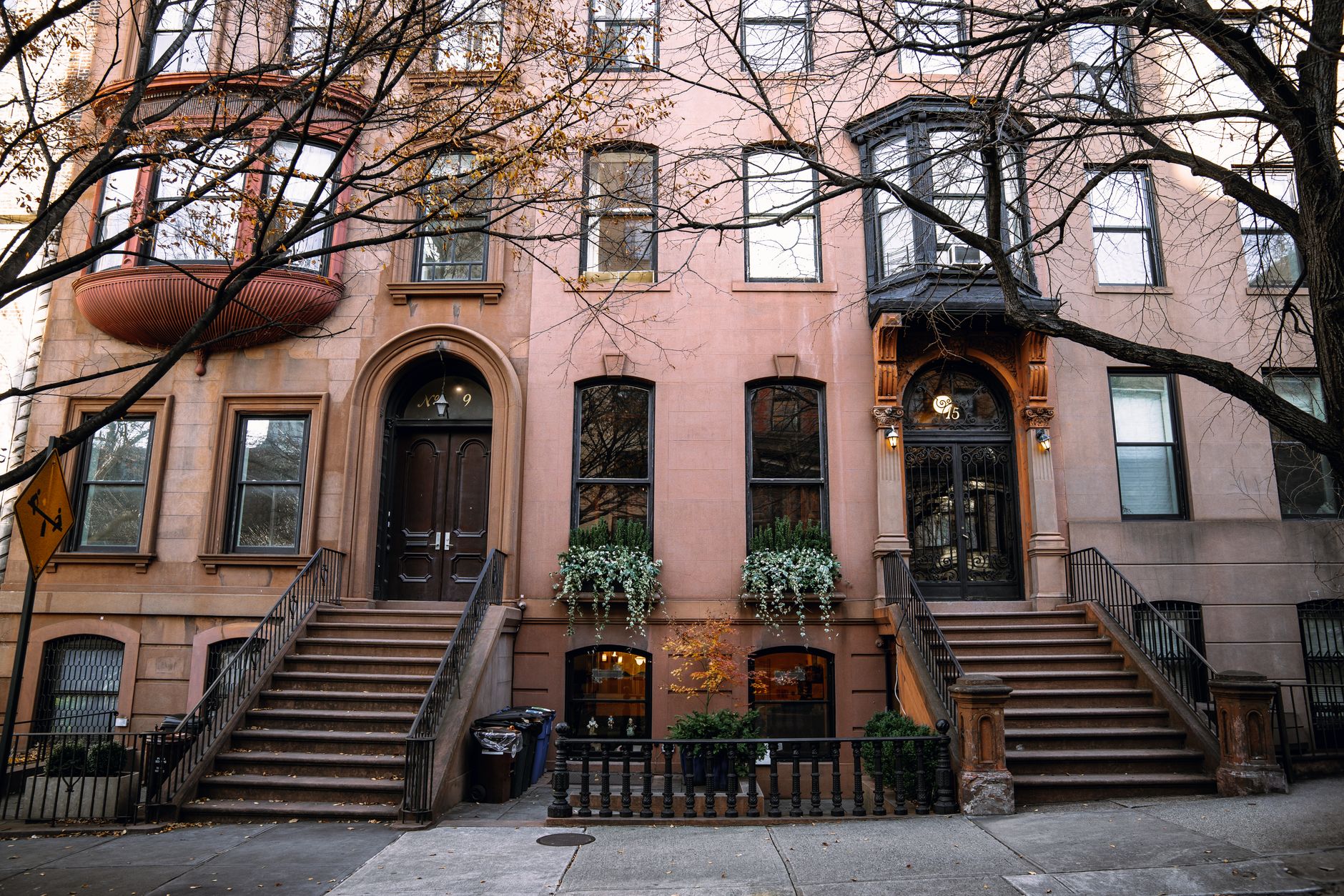
The West Village earns its reputation. A perfect walk score of 100. One of the most architecturally distinct neighborhoods in Manhattan — the pre-war brownstones, the irregular street grid that predates Manhattan's 1811 Commissioner's Plan, the cobblestoned stretches of Bleecker and Commerce Streets. Hudson River Park is a 5-minute walk. The restaurant density per block rivals anywhere in the city.
The "Good for now" verdict reflects a specific dynamic: the West Village is the neighborhood that everyone wants to live in, which means prices have been bid up to a level that doesn't quite work on a yield or cost-to-income basis even by Manhattan standards. At $1,427,800 median — lower than the Upper West Side, slightly lower than the UES — you might expect the West Village to rank similarly or higher. It doesn't, because even at that price, the cost-to-income ratio for buyers shows financial stress.
For renters, the calculus is different. The West Village as a rental neighborhood — especially for high earners who value walkability and aesthetics and are renting, not buying — functions at a different level. The "Good for now" verdict applies most directly to buyers; renters with the income to support West Village rents may find it justifies the premium.
School ratings are 7.0, identical to the UES. The distinction in verdict comes down to price-to-income math, not neighborhood quality.
→ See the full West Village report
Upper West Side — 10024
The "Hard pass" verdict on the Upper West Side is the data point that surprises people the most in this comparison. The UWS is Central Park West. It's the American Museum of Natural History, Lincoln Center, Zabar's, the Riverside Park running path. It has a walk score of 98 and access to the 1/2/3 and B/C subway lines. How does that earn "Hard pass"?
The answer is the price. At $1,743,700 median — the highest of the three neighborhoods by a significant margin — the cost-to-income ratio doesn't work for buyers at current income levels. The neighborhood's amenities are real and substantial. But the gap between what the UWS costs and what comparable income levels can sustain has widened to the point where WYLT's data flags it as a poor financial decision for buyers, even at the top of the income range where Manhattan purchases generally make sense.
The UWS also faces a subtle generational challenge: its identity is strongly tied to a specific era of Manhattan cultural life (think late-20th-century intellectual New York) that is less compelling as a lifestyle brand to today's relocators than the West Village's aesthetic or the UES's practicality. This shapes demand at the margin, which shapes prices. The result is a neighborhood where prices have inflated on historical prestige rather than current fundamentals.
For renters — particularly families who prize the park access, school zoning, and cultural institutions — the UWS can still work. The verdict specifically targets the buyer calculus.
→ See the full Upper West Side report
Head to head
| Category | Upper East Side (10021) | West Village (10014) | Upper West Side (10024) |
|---|---|---|---|
| WYLT Verdict | Settle here | Good for now | Hard pass |
| Median Home Price | $1,572,800 | $1,427,900 | $1,743,700 |
| Walk Score | 95 | 100 | 98 |
| School Rating | |||
| Subway Access | 4/5/6, Q | A/C/E, 1 | 1/2/3, B/C |
| Character | Classic, stable | Architectural, trendy | Cultural, established |
The verdict
If you're buying in Manhattan and the choice is between these three neighborhoods, the Upper East Side is the data-supported answer. It's not the neighborhood that wins the Instagram poll, but it's the one where the price-to-value ratio works — lower than the Upper West Side, better verdict than the West Village, comparable walkability to both.
The West Village is the right choice for people who have the income to support it and for whom aesthetics and walkability are the primary values — but go in knowing the cost-to-income math is stretched even by Manhattan standards.
The Upper West Side earns its reputation on amenities and historical prestige. The "Hard pass" verdict is specifically about the buyer calculus at current prices. If you're renting, or if the Central Park access and Lincoln Center proximity are worth a genuine premium to you, the verdict is less clear-cut. But for buyers doing a straightforward value analysis, the UWS price is simply too high relative to what it delivers compared to its neighbors.
Get the full data-driven report on any neighborhood at WYLT's neighborhood finder.