Park Slope has spent the better part of two decades as New York City's default answer to the question "where do people move when they have kids and need more space but aren't ready to leave Brooklyn." That reputation is both deserved and increasingly complicated.
Here's the honest picture in 2026.
What Park Slope actually is
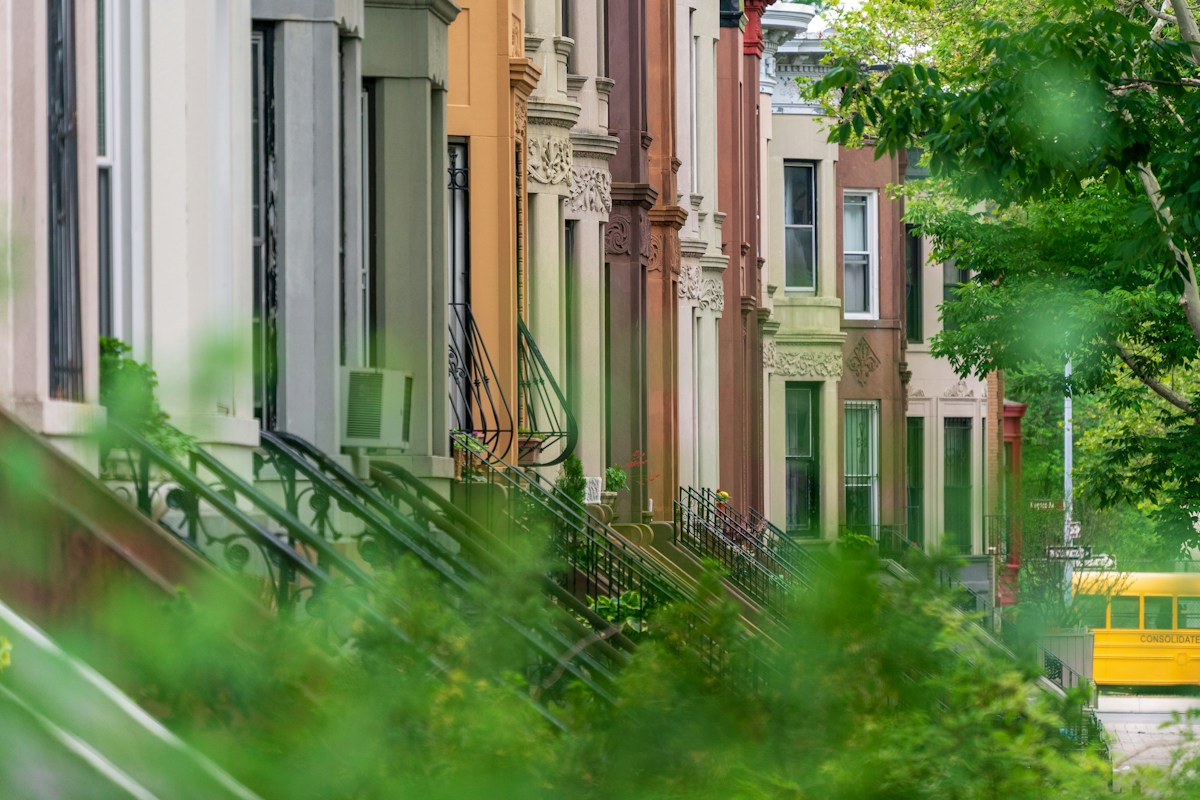
Park Slope is a neighborhood of brownstones, tree-lined streets, and Prospect Park — 585 acres of Frederick Law Olmsted designed green space that functions as a backyard for the entire neighborhood. It sits at the western edge of the park with Prospect Heights to the north, Windsor Terrace to the south, and Gowanus — rapidly developing — to the west.
It is, by almost any measure, one of the most livable urban neighborhoods in the country. The question is whether the price is worth it for your specific situation.
What the numbers say
- Median home price: approximately $1.1 to $1.4 million (co-ops and condos; brownstone townhouses significantly higher)
- Walk score: 98 — among the highest in Brooklyn
- School rating: varies significantly by specific school, average 7.1
- Subway access: F/G at 4th Ave, B/Q at 7th Ave, 2/3 at Grand Army Plaza
- Flood risk: Low — Park Slope sits on higher ground than much of Brooklyn
- Noise level: moderate — residential feel with commercial strips on 5th and 7th Avenues
The good — what actually works
Prospect Park is transformative. This is not hyperbole. Having 585 acres of designed green space walkable from your front door changes how you experience urban life. The park has a lake, a bandshell, ball fields, a skating rink, a farmers market, a dog beach, and miles of running and cycling paths. For families with kids it's genuinely irreplaceable.
The school situation is better than the reputation suggests. PS 321 on 7th Avenue is one of the most sought-after elementary schools in New York City and for good reason — it's excellent by any measure. The middle and high school picture is more complicated and requires research specific to your child's situation and interests. But for elementary aged kids Park Slope has real options that don't require going private.
7th Avenue is a legitimate neighborhood main street. Unlike many NYC commercial strips that have been hollowed out by chains, 7th Avenue in Park Slope has maintained genuine local character — independent bookstores, family-owned restaurants, a hardware store, a post office. 5th Avenue offers a slightly more eclectic, less expensive version of the same thing.
Multiple subway lines. The B/Q, F/G, and 2/3 trains all serve Park Slope from different points in the neighborhood. Manhattan commute times to Midtown run 20 to 35 minutes depending on your exact address and destination. That's genuinely competitive with many Manhattan neighborhoods.
The real talk
The price of entry is high and has kept climbing. Park Slope has been expensive for 20 years and shows no signs of becoming less so. A two-bedroom co-op starts around $900,000. A two-bedroom condo runs $1.1 million and up. A brownstone townhouse — the aspirational Park Slope purchase — typically starts around $2.5 million for anything that doesn't need a full gut renovation.
Co-op boards add complexity that buyers from outside New York often underestimate. Approval processes can take months, boards can reject buyers without explanation, and co-op rules on subletting, renovation, and financing can be restrictive.
It can feel homogeneous. This is a consistent and fair critique of Park Slope. The neighborhood is demographically skewed in ways that are noticeable. If demographic diversity in your daily environment matters to you — and for many people with kids it matters a lot — this is worth thinking about honestly rather than hoping it won't be an issue.
Gowanus is changing the western edge. The Gowanus Canal — which borders Park Slope to the west — is in the middle of a major rezoning and development push. New residential towers are going up. This will bring more density, more amenities, and more traffic to the western streets of the neighborhood over the next decade.
The hidden costs
NYC property taxes: Surprisingly manageable compared to the suburbs for primary residence owners — New York City's property tax abatement programs for owner-occupied co-ops and condos can make effective tax rates lower than you'd expect. Research the specific tax situation for any unit you're seriously considering as it varies significantly.
Co-op monthly maintenance: In addition to your mortgage, co-op owners pay monthly maintenance fees that cover the building's underlying mortgage, property taxes, and operating costs. In Park Slope these typically run $1,200 to $2,500 per month for a two-bedroom unit. This is real money that buyers sometimes underestimate.
Private school pressure: Despite the strong public school options, Park Slope has a significant private school culture. Depending on your social circle and your child's needs you may find yourself navigating private school applications earlier than anticipated. Annual tuition at independent schools in Brooklyn runs $40,000 to $55,000 per year per child.
Who Park Slope is actually for
Park Slope works exceptionally well for: families with young children who prioritize school quality and outdoor space, professionals with Manhattan office jobs who want to be out of Manhattan, people who value neighborhood character and walkability above almost everything else, buyers with meaningful financial resources who plan to stay for at least 7 to 10 years.
Park Slope is harder for: buyers on a tighter budget who might find better value in Ditmas Park, Flatbush, or Sunset Park, people who prioritize demographic diversity in their daily environment, anyone who finds the neighborhood's family-centric identity confining.
The verdict
Park Slope earns its reputation. The combination of Prospect Park, genuine walkability, improving schools, beautiful architecture, and solid transit access is hard to match anywhere in New York at any price. The price is the price — and for the right buyer at the right stage of life it's worth it.
Go in knowing the co-op complexities, the maintenance costs, the demographic homogeneity, and the Gowanus development trajectory. Eyes open, it's one of the best family neighborhoods in America.