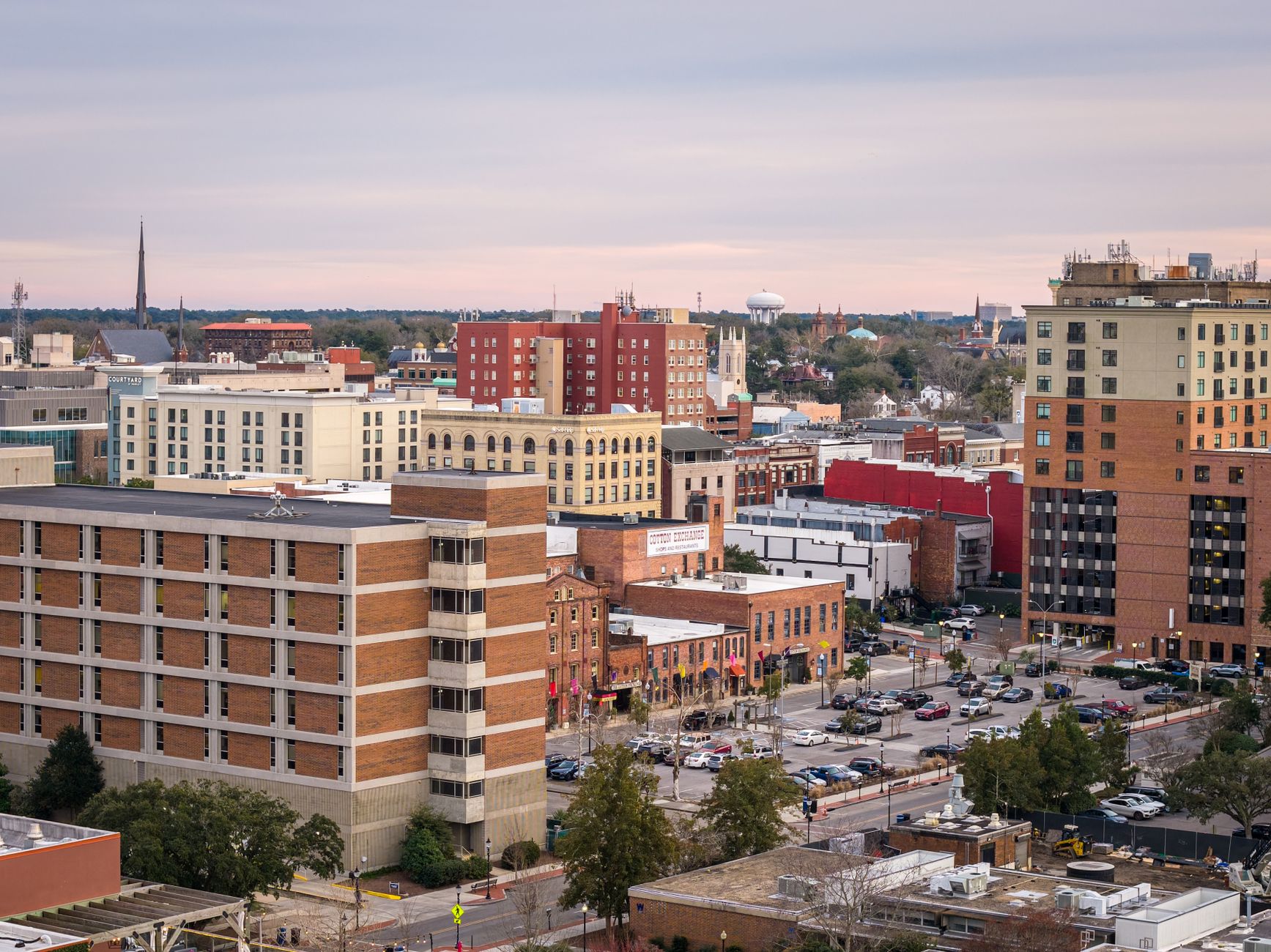
Oklahoma doesn't get the relocation attention that Texas or Tennessee do — but it should be on the list for people who want affordable Midwest living with no state income tax phase-out and genuine urban options in both of the state's major cities. Oklahoma City and Tulsa are 100 miles apart, and for people considering either one, the comparison almost always comes up.
They're more different than they look from the outside. OKC is the state capital, the larger city, and the one with the NBA team (Thunder). Tulsa is smaller, architecturally richer (Art Deco downtown, Gilcrease Museum), and — based on WYLT's neighborhood data — currently delivers better livability per dollar in its reviewed urban core. Here's the honest breakdown.
The 30-second version
Choose Oklahoma City if: You need the state capital's job market (state government, the oil and gas sector, healthcare at INTEGRIS and OU Health), you want more neighborhood variety to choose from, or you prefer a larger metro footprint. Be prepared: all four reviewed OKC ZIP codes earn "Think twice" — you'll need to research your specific neighborhood carefully.
Choose Tulsa if: You want a downtown that earns "Good for now" at $170,000 with a walk score of 70 — a combination that's genuinely rare at that price point anywhere in the country. Tulsa's arts scene, Art Deco architecture, and Arkansas River access are underrated assets. The job market is smaller, but for remote workers or healthcare/energy professionals, Tulsa delivers more city per dollar right now.
Cost of living
Both cities are among the most affordable metros in the United States. The comparison within that affordability frame is specific.
Oklahoma City's reviewed neighborhoods range from $283,600 (NW OKC/Nichols Hills corridor, 73116) to $348,100 (Paseo Arts District, 73103). Bricktown/Downtown (73102) sits at $288,600. Midtown OKC (73104) is $326,500. These are not expensive numbers by any national standard — but all four earn "Think twice" verdicts, meaning the price-to-value ratio is complicated by crime and livability issues that affect even the city's most desirable neighborhoods.
Tulsa's reviewed neighborhood — Downtown Tulsa (74103) — earns "Good for now" at $170,000 with a walk score of 70. At this price and with this verdict, Tulsa's downtown is one of the most undervalued urban neighborhoods in WYLT's entire dataset. $170K for a "Good for now" urban neighborhood with genuine walkability exists almost nowhere else in a city with a metropolitan population of 1 million+.
Oklahoma has a flat 4.75% state income tax rate (recently reduced). Neither city has a local income tax. Property taxes are low — among the lowest effective rates in the country. The total tax burden in either city is favorable compared to most of the country.
Job market
Oklahoma City has the larger and more diverse job market as the state capital.
OKC's economy is anchored by state government (a major employer in any capital city), oil and gas (Devon Energy, Chesapeake Energy, Continental Resources — all headquartered here), healthcare (INTEGRIS Health, OU Health, SSM Health), and a growing defense/aerospace sector (Tinker Air Force Base is one of the largest in the country, 10 miles southeast of downtown). The Boeing Oklahoma City maintenance facility employs thousands. For professionals in energy, healthcare, government, or defense, OKC's job market has real depth.
Tulsa's job market is smaller but surprisingly strong in specific sectors. ONEOK and Williams Companies anchor the energy sector. Saint Francis Health System and Ascension St. John are major healthcare employers. American Airlines' maintenance and engineering center at Tulsa International Airport is one of the largest in the world. The Tulsa Remote program — which paid remote workers $10,000 to move to Tulsa — drew thousands of tech workers and entrepreneurs who stayed, seeding a small but growing startup ecosystem.
For remote workers, Tulsa is the more compelling choice: the city has explicitly invested in recruiting remote talent, the infrastructure supports it, and the cost of living advantage at $170,000 for a "Good for now" downtown neighborhood is real and significant.
Safety
This is where WYLT's data tells the clearest story between the two cities.
All four reviewed Oklahoma City ZIP codes earn "Think twice." This doesn't mean OKC is uniformly dangerous — the "Think twice" verdicts reflect crime rates that are elevated across the city's urban core, not catastrophic in the way that Memphis or parts of Baltimore are. But the consistency of the pattern is notable: from the trendy Paseo Arts District to the Bricktown entertainment district to Midtown, the crime profile doesn't clear the bar for "Good for now."
Tulsa's downtown (74103) earns "Good for now" with a walk score of 70. The Arkansas River corridor, the Gathering Place park (one of the most ambitious urban park projects in American history, opened 2018), and the Blue Dome District have created a downtown environment where the safety profile has genuinely improved. For a city of Tulsa's size, a "Good for now" downtown verdict is a meaningful achievement.
Lifestyle and character

Oklahoma City's lifestyle story has improved dramatically over the past 20 years, driven by MAPS (Metropolitan Area Projects) — a series of voter-approved sales tax initiatives that funded the Chesapeake Energy Arena (now Paycom Center, home of the Thunder), the Bricktown Canal, the renovation of the Oklahoma River corridor, and dozens of other improvements. The Paseo Arts District is a genuine creative neighborhood. Automobile Alley has become a restaurant and boutique corridor. The city has made itself livable in ways that weren't true in 2000.
Tulsa's lifestyle identity rests on two underappreciated assets. First, the Art Deco architecture: Tulsa built its downtown during the oil boom of the 1920s–30s, and the result is one of the most concentrated collections of Art Deco buildings in the country. The downtown aesthetic is genuinely beautiful and unlike anything in OKC. Second, the Gathering Place: a 100-acre park on the Arkansas River that opened in 2018 with a $465 million price tag (mostly private) and has been called one of the best urban parks in America. It has transformed the river corridor and the city's livability profile.
The cultural gap between them is narrowing. OKC has the NBA (a genuine quality-of-life asset). Tulsa has Cain's Ballroom (one of the great American music venues), the Philbrook Museum, and a food scene that has outpaced expectations. Neither is a major metro by cultural volume — but both are cities where you can build a full life without missing what you don't have.
What WYLT's data shows
Oklahoma City
- Bricktown / Downtown (73102) — Think twice: Walk score 65, schools 7.0, median home $288,600. The best walk score in OKC's reviewed set and the entertainment district anchor — but crime earns the "Think twice." Best for renters in their 20s who want urban access; buyers should look at the surrounding suburban ring.
- NW OKC / Nichols Hills (73116) — Think twice: Walk score 33, schools 7.2, median home $283,600. The most affordable reviewed OKC neighborhood with the best school rating — "Think twice" driven by crime rather than price concerns. The right ZIP to watch as the city continues improving.
- Midtown (73104) — Think twice: Walk score 16, schools 7.0, median home $326,500. OKC's most rapidly improving neighborhood — restaurants, boutiques, and the 16-block Midtown district — but crime rates haven't yet caught up with the investment.
Tulsa
- Downtown Tulsa (74103) — Good for now: Walk score 70, schools 7.2, median home $170,000. The standout data point in this comparison — and one of the most undervalued urban neighborhoods in WYLT's entire reviewed dataset. A "Good for now" verdict, a walk score of 70, and a median home price of $170,000 is a combination that almost doesn't exist anywhere else in America. If you're a remote worker or early-career buyer looking for urban living at an almost incomprehensible price, Tulsa's downtown deserves serious consideration.
The verdict
Tulsa wins on the data, and it's not close. A "Good for now" downtown at $170,000 with a walk score of 70 is an almost unique combination in American cities. OKC's four reviewed neighborhoods all earn "Think twice" at prices that are higher than Tulsa's downtown. For anyone whose priority is urban livability per dollar, Tulsa is the clear answer.
OKC wins on scale and job market. The state capital has more employment options, the NBA, and a more developed urban infrastructure overall. For people who need OKC's specific industries (energy, defense, state government) or want a larger city footprint, the "Think twice" verdicts are a caution to research carefully — not a reason to rule it out entirely.
The most surprising takeaway: for remote workers choosing between the two, Tulsa's combination of explicit remote-worker recruitment, $170,000 "Good for now" urban housing, and the Gathering Place makes it one of the most overlooked relocation options in the country in 2026.
Get the full data-driven report on any neighborhood at WYLT's neighborhood finder.