People move to New York City for a lot of reasons. Career, culture, ambition, proximity to everything. But ask anyone who's actually lived here for a few years what they'll miss most if they ever leave, and the answer is almost always the same: the food. Not the restaurant scene as a concept, but the specific, daily reality of having the world's most diverse concentration of great cooking within walking distance of your front door.
The neighborhood you choose determines your food life almost entirely. A walk-score-100 block in the East Village means ramen at midnight, a slice at 2am, and Sri Lankan for lunch on a Tuesday — all within four blocks. Flushing means hand-pulled noodles, Taiwanese pork chop rice, and regional Chinese cuisines you can't find in 99% of American cities. Jackson Heights means the most internationally diverse food corridor on the planet, full stop.
This guide covers the NYC neighborhoods with the most compelling food cases for actually moving there — with real data on prices, walkability, and WYLT verdicts so you know exactly what the tradeoff is.
At a glance: food neighborhoods and the numbers
| Neighborhood | WYLT Verdict | Median Home Price | Walk Score | Food Identity |
|---|---|---|---|---|
| Flushing | Good for now | $513,300 | 77/100 | Best Chinese food in the US |
| Jackson Heights | Good for now | $428,800 | 94/100 | World's most diverse food corridor |
| Astoria | Settle here | $662,700 | High | Greek, Mediterranean, everything |
| Elmhurst | Think twice | $659,200 | 96/100 | Southeast Asian — Thai, Indonesian, Filipino |
| Williamsburg | Think twice | $1,138,900 | 100/100 | Brooklyn artisanal + Peter Luger since 1887 |
| East Village | Think twice | $714,100 | 100/100 | Most affordable Manhattan dining density |
| West Village | Good for now | $1,427,900 | 100/100 | Destination dining — Carbone, Via Carota, Buvette |
| Greenpoint | Good for now | $1,242,800 | 94/100 | Polish heritage + Brooklyn's quieter food scene |
1. Flushing — the best Chinese food in the United States
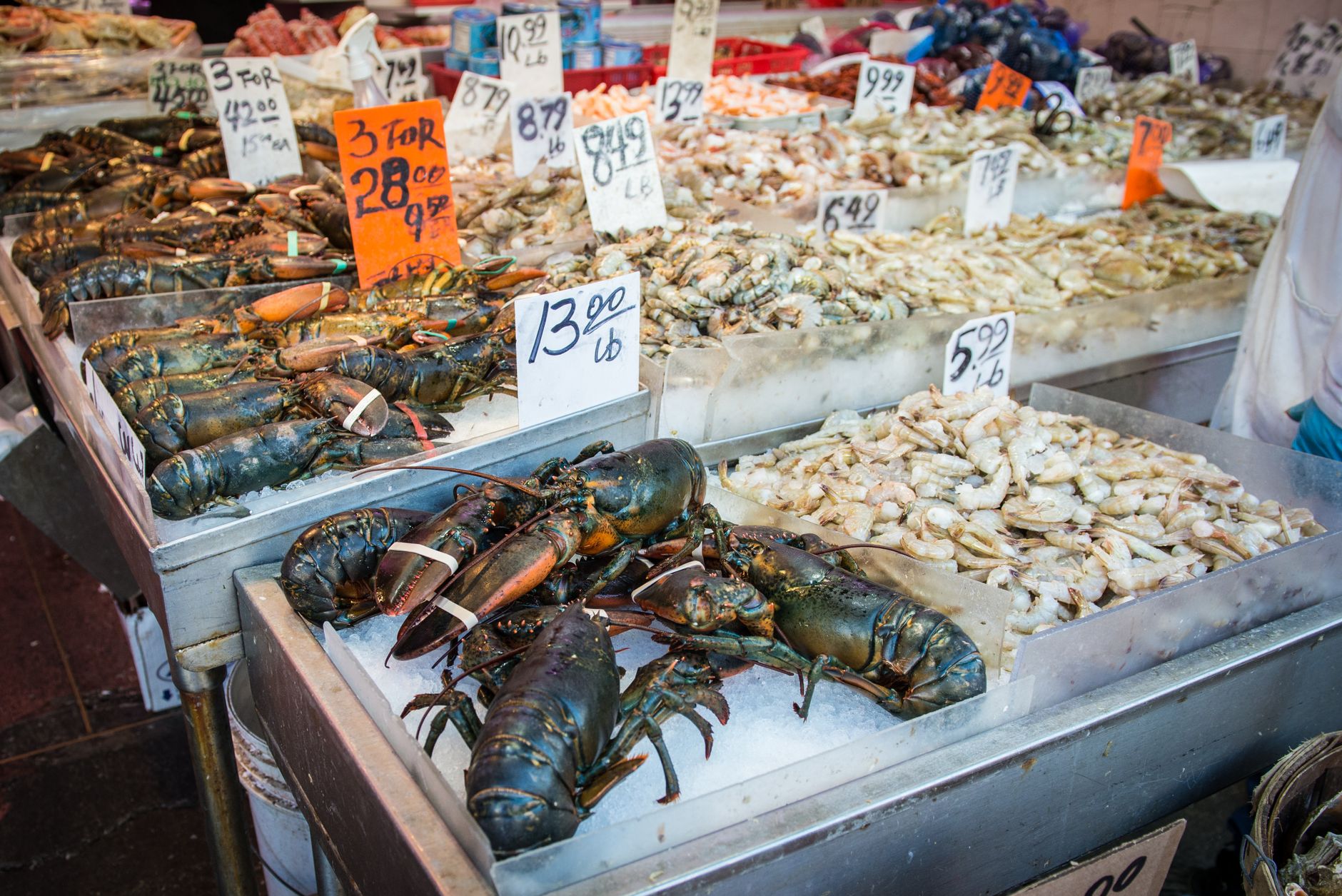
Flushing 11354 makes this list first because it is simply the most concentrated, highest-quality single-cuisine food destination in the country for Chinese food. Not just one style — Flushing's food courts and street-level restaurants serve hand-pulled Lanzhou noodles, Sichuan mapo tofu, Shanghainese soup dumplings (xiao long bao), Cantonese dim sum, Taiwanese scallion pancakes, Fujianese seafood, Hunanese braised pork belly, and dozens of regional styles that don't exist anywhere else in the Western hemisphere outside a handful of major Chinese-diaspora cities.
The food courts beneath New World Mall and Golden Shopping Mall are famous among food writers nationally — Anthony Bourdain filmed there, food critics from major publications make pilgrimages there, and yet the prices remain firmly working-class. You can eat exceptionally well in Flushing for $12. That is not a number you encounter anywhere in Manhattan.
The WYLT picture: median home price of $513,300 — cheaper than almost any comparable neighborhood in Brooklyn or Manhattan — with a "Good for now" verdict and Walk Score of 77. This is one of the strongest value cases in the entire NYC metro for buyers who want genuine food culture without $1M price tags. The Korean BBQ corridor along Northern Boulevard, the Taiwanese breakfast spots, the bubble tea shops — living in Flushing means casual daily access to food that people drive hours to reach from the suburbs.
→ Full Flushing report: schools, crime, price trends, flood risk

2. Jackson Heights — the most internationally diverse food corridor on the planet
Jackson Heights 11372 is not hyperbole when food writers call it the most ethnically diverse neighborhood on Earth — the United Nations literally cited it as such. The Roosevelt Avenue and 74th Street corridor running through Jackson Heights contains Colombian bakeries, Ecuadorian cevicherías, Bangladeshi halal restaurants, Indian chaat spots, Pakistani biryani, Nepalese momos, Mexican taquerias, Tibetan dumplings, and more within a span of roughly twelve blocks. You can eat a different national cuisine every day for a month without repeating or stretching the definition of the neighborhood.
The practical food highlight: the Indian snack food strip on 74th Street (sometimes called "Little India") rivals anything outside the subcontinent. Pani puri, chaat, fresh samosas, Mumbai-style bhel — at prices that match the original. The Colombian bakeries on Roosevelt produce arepas, empanadas, and pasteles that draw people from across the borough. The Himalayan corridor has momos that locals swear are better than what you'd find anywhere else north of Nepal.
WYLT data: median home price of $428,800 — one of the most affordable walkable neighborhoods in all of NYC — with a "Good for now" verdict and Walk Score of 94. Jackson Heights is the most compelling pure value case on this list for buyers who want food diversity, walkability, and genuine community character without the Brooklyn or Manhattan price premium.
→ Full Jackson Heights report: schools, crime, price trends, flood risk
3. Astoria — Greek food and a neighborhood that became more than one thing
Astoria 11106 built its food identity on Greek food — and the Greek food is genuinely excellent. The Greek corridor along 31st Street and Ditmars Boulevard has traditional tavernas, seafood spots, and pastry shops that have been operating for decades. Taverna Kyclades has been written up in Michelin guides. The gyro and souvlaki spots are the real thing, not approximations.
But Astoria's food scene has evolved well beyond its Greek roots. The neighborhood now has strong Egyptian and Levantine restaurants, excellent Italian, a growing craft beer and cocktail bar scene, and a Thai food contingent that rivals Queens' other corridors. The combination of reasonable prices (relative to Manhattan), N/W train access that puts you in Midtown in under 20 minutes, and a food scene that punches well above its rent level has made Astoria one of the most consistently attractive neighborhoods in the entire borough for people who want quality food culture without the Brooklyn premium.
WYLT verdict: "Settle here" — the strongest rating on this list — reflecting safe, stable, good-value fundamentals that support the lifestyle the food scene promises.
→ Full Astoria report: schools, crime, price trends, flood risk
4. Williamsburg — where Brooklyn's food reputation was built
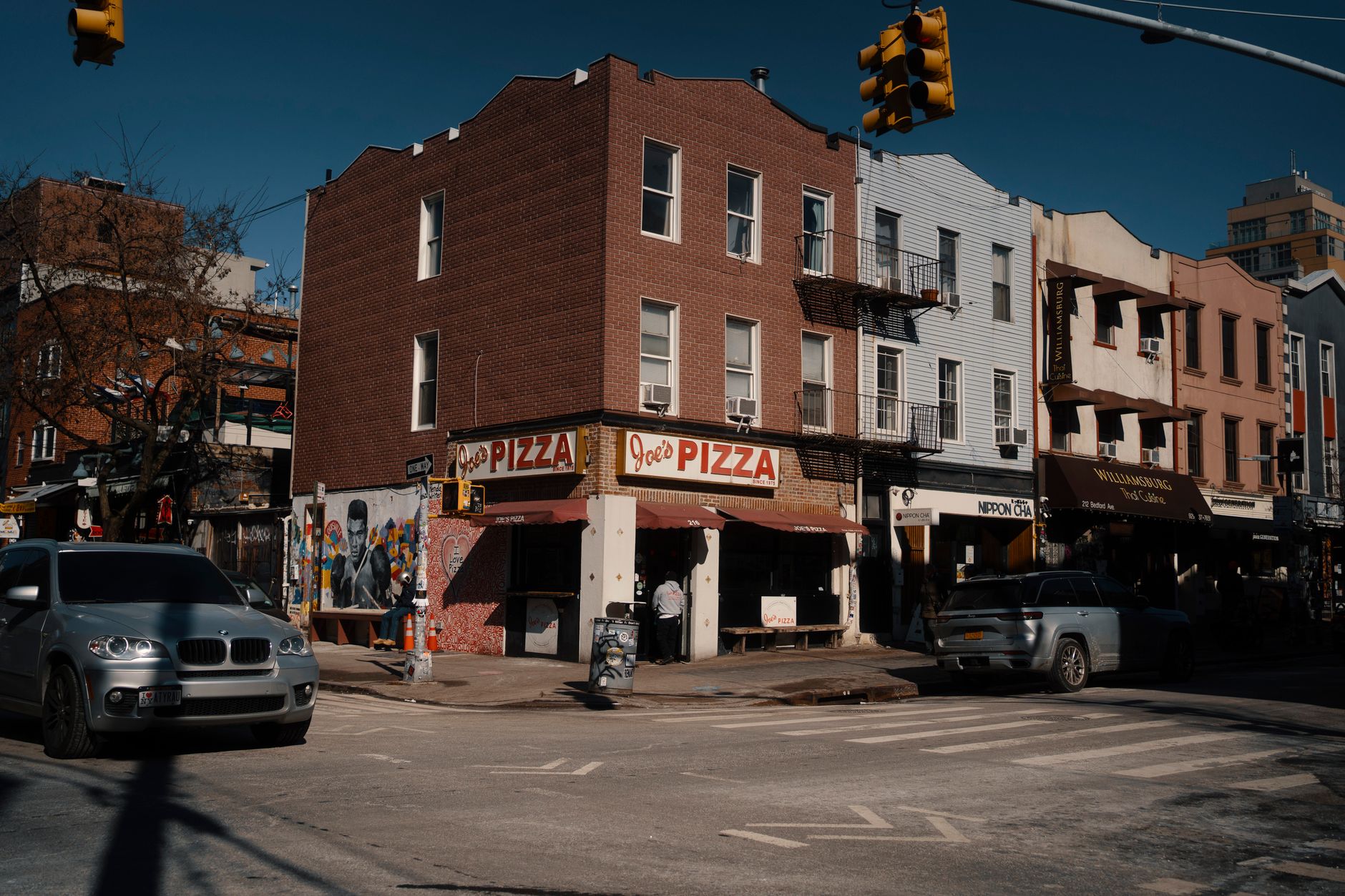
Williamsburg 11211 is the neighborhood that made "Brooklyn food" a national conversation. The dense concentration of farm-to-table restaurants, artisanal food producers, craft breweries, coffee roasters, and independent bakeries along Bedford Avenue and the surrounding blocks is legitimately impressive — and still very much real, even as the neighborhood has priced out many of the original residents who created the culture.
The single most important food landmark is Peter Luger Steak House, which has operated on Broadway in Williamsburg since 1887 and is still widely considered the best steakhouse in New York. Getting a reservation typically requires months of planning. Living in the neighborhood means being able to walk in for lunch on a Tuesday with a credit card (they take cash at dinner, cards at lunch) and eat a steak that people fly into the city specifically to try.
Beyond Luger: Marlow & Sons, Diner, Lilia (pasta that warrants the two-hour wait), the Smorgasburg outdoor food market on weekends. Williamsburg has some of the best food real estate in the entire city — it just costs $1.1M to own here and $3,500/month to rent a one-bedroom. Walk Score of 100 means you can access all of it on foot, every day.
→ Full Williamsburg report: schools, crime, price trends, flood risk
5. East Village — the most affordable walkable dining density in Manhattan
East Village 10009 is where you move when you want to live in Manhattan, eat extremely well, and not spend $1.4M on a West Village apartment. The East Village has the highest density of restaurants per residential block in Manhattan — a concentration of Japanese, Korean, Ukrainian, Indian, Mexican, and pan-American food that is still relatively affordable by Manhattan standards. St. Marks Place alone has enough variety that you could eat a different cuisine every meal for a week without walking more than two blocks.
The Japanese food scene in the East Village is legitimately exceptional — a cluster of izakayas, ramen shops, and omakase spots that rivals what you'd find in actual Japanese neighborhoods. Momofuku began here. The Ukrainian diners and Eastern European delis are holdovers from the neighborhood's earlier demographics, still operating and still excellent. The brunch culture, the late-night slice spots, the hole-in-the-wall Thai — East Village delivers food volume and quality that few neighborhoods anywhere in the country can match.
WYLT data: median home price of $714,100, Walk Score 100, "Think twice" verdict that reflects Manhattan's general challenges rather than anything specific to the food culture. The food case for East Village is among the strongest on this list. The affordability case for Manhattan is relative — $714K here versus $1.4M in the West Village is the comparison that matters.
→ Full East Village report: schools, crime, price trends, flood risk
6. West Village — destination dining you can walk to every night
West Village 10014 is where you move when the food matters so much that you're willing to pay $1.4M to be within walking distance of the city's best restaurants. The West Village has a concentration of dining institutions that is without parallel in New York: Carbone (the red-sauce Italian that became a national reservation obsession), Via Carota (the rustic Italian bistro that food writers name-drop constantly), Buvette (French bistro that was years ahead of the farm-to-table movement), Corner Bistro (the late-night burger that long-timers swear by), and dozens more lining the cobblestone streets of Bleecker, Hudson, and the surrounding blocks.
Living in the West Village means that what other people plan a special-occasion trip to New York to experience is, for you, where you might grab dinner on a Wednesday. Walk Score 100, "Good for now" WYLT verdict — the neighborhood delivers reliably on what it promises. It just requires the financial commitment to match.
→ Full West Village report: schools, crime, price trends, flood risk

The neighborhood you don't know about yet: Elmhurst and Greenpoint
Elmhurst 11373 is one of the most ethnically diverse ZIP codes in the United States — the census bureau confirmed it — and the food reflects that directly. The Southeast Asian food scene along Broadway in Elmhurst is exceptional: authentic Thai, Indonesian, Malaysian, Filipino, and Vietnamese cooking at the prices that neighborhood demographics support (meaning: very affordable). Walk Score of 96, median price of $659,200, and direct subway access make it one of the most overlooked food neighborhoods in the borough.
Greenpoint 11222, meanwhile, is where Brooklyn's Polish heritage survives intact: pierogies, kielbasa, and beet soup at old-school spots that have been feeding the neighborhood for generations alongside the newer wave of transplant-friendly restaurants. The combination of authentic Eastern European food and a quieter, less-saturated Brooklyn restaurant scene makes it a sleeper pick for buyers who want Williamsburg's proximity without Williamsburg's prices and foot traffic.
→ Full Elmhurst report | → Full Greenpoint report
What living near great food actually means day-to-day
The food argument for these neighborhoods is not just about having good options nearby. It's about what happens to your daily life when the gap between "cooking at home" and "eating something exceptional" shrinks to a four-block walk. When Flushing residents eat hand-pulled noodles on a Tuesday because it's faster and cheaper than cooking. When Jackson Heights residents have access to Indian chaat that their suburban counterparts drive 45 minutes to find. When East Village residents develop strong opinions about which ramen shop is better on which night of the week.
That texture of daily food life is one of the least quantifiable but most real reasons people move to — and stay in — New York. No other American city has it at this density or this diversity. The right neighborhood concentrates it within walking distance, which is the whole point.
Check the full WYLT data for every NYC food neighborhood — crime, schools, price trends, and walkability.
Flushing → | Jackson Heights → | Astoria → | Elmhurst → | Williamsburg → | East Village → | West Village → | Greenpoint →