San Francisco is the most expensive city in WYLT's dataset by median home price. It is also, by the data, a place where one neighborhood genuinely earns a "Settle here" verdict — SoMa/Civic Center (94103) at $1,065,000 with a walk score of 90. That number sounds impossibly high to most Americans. In the context of San Francisco, it's the best value in the city. Understanding that gap is the whole story of moving to SF.
WYLT reviewed five San Francisco ZIP codes. One earned "Settle here." Four earned "Think twice." The "Think twice" ratings are not primarily about safety or schools — SFUSD rates 5/10 across every ZIP in the dataset, and walkability is excellent everywhere. The "Think twice" comes from price-to-fundamentals: Pacific Heights at $1.7M and the Castro at $1.66M are extraordinary neighborhoods where you are paying for address and lifestyle prestige more than the underlying data supports relative to alternatives.
Is San Francisco Worth Moving to in 2026? The Honest Data
San Francisco's most famous problem — cost — is real and unresolved. The median home price across WYLT's five reviewed ZIPs runs $1.039M to $1.709M. California's income tax adds 9.3%+ on income over $66K. Property taxes in San Francisco run approximately 1.1–1.15% of assessed value annually, moderated by Prop 13 for long-term owners but full rate for new buyers.
The city's other famous problem — the Tenderloin, street conditions near Civic Center — is real and affects specific blocks rather than the city broadly. The blocks immediately around City Hall and UN Plaza have significant visible drug use and homelessness. Three blocks away in Hayes Valley or SoMa proper, the streetscape is entirely different. San Francisco requires more block-level research than almost any other American city before committing to a specific address.
San Francisco Neighborhood Breakdown — WYLT's Data
94103 — SoMa / Hayes Valley: Settle here ✅
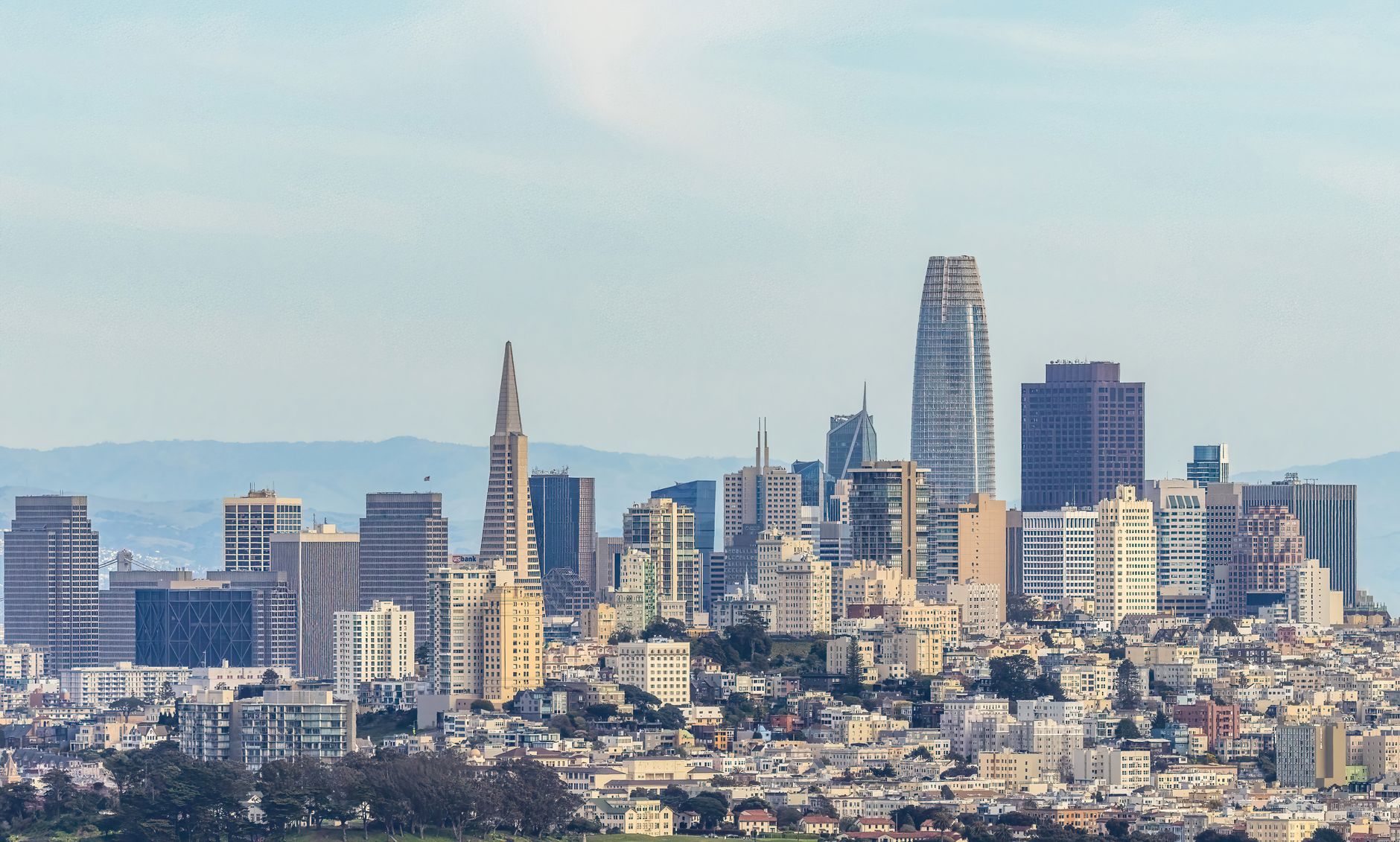
Walk score 90, schools 5, median home $1,065,000. The strongest verdict WYLT has given any San Francisco neighborhood — and notably, at the lowest price in the dataset. SoMa's transformation from warehouse district to tech office corridor to residential neighborhood has been sustained for 20+ years. Hayes Valley immediately adjacent has the city's best small-restaurant corridor and genuine walkable neighborhood character. At $1.065M it's expensive by every national standard and cheap by San Francisco standards. The walk score of 90 is real and daily. For buyers who need San Francisco and want the best fundamentals, 94103 is where the data points.
94102 — Civic Center / Tenderloin: Think twice ⚠️
Walk score 97, schools 5, median home $1,039,000. The highest walk score and lowest price in the dataset — but the "Think twice" reflects the Tenderloin reality. The immediate Civic Center blocks have the city's most concentrated visible drug crisis, and the residential experience varies enormously by specific address. For buyers who have researched the specific streets and understand the tradeoffs, 94102 offers the lowest SF entry price. For buyers who haven't done that research, the walk score will be misleading about daily quality of life.
94117 — Haight-Ashbury / Cole Valley: Think twice ⚠️
Walk score 83, schools 5, median home $1,571,000. The Haight has the cultural identity and the Victorian architecture. At $1.57M it earns "Think twice" because the price doesn't justify itself against 94103 on the fundamentals. Cole Valley adjacent has a quieter residential character and is one of the most genuinely livable San Francisco neighborhoods — but the premium over SoMa is hard to justify on the data alone. Best for buyers who specifically want the Haight character and have the budget.
94114 — Castro / Noe Valley: Think twice ⚠️
Walk score 93, schools 5, median home $1,658,000. The Castro has walk score 93 and genuine neighborhood identity — the LGBTQ+ community anchor, the Noe Valley stroller set, the 24th Street commercial corridor. At $1.66M the "Think twice" is purely about price relative to 94103. If the Castro is where you need to be, the data says you're paying $593K more than the "Settle here" ZIP for comparable or lower walkability. A lifestyle choice more than a fundamentals choice.
94115 — Pacific Heights / Western Addition: Think twice ⚠️
Walk score 95, schools 5, median home $1,709,000. The most expensive ZIP in the dataset — Pacific Heights Victorian mansions, Fillmore Street, the Japan Center. At $1.71M this is the prestige address premium at full strength. Walk score 95 is genuine. Schools are 5/10 like everywhere in SFUSD. The "Think twice" is straightforward: you are paying $644K more than the "Settle here" ZIP for the same school rating and comparable walkability. That premium is buying the address, the neighbors, and the views — things real people value, but things WYLT's fundamentals scoring doesn't reward.
San Francisco vs Los Angeles vs San Diego — California's Cost Ladder
Within California, WYLT's data creates a clear hierarchy by value:
San Diego (92103) earns "Settle here" at $912K with walk score 82. San Francisco (94103) earns "Settle here" at $1.065M with walk score 90. Los Angeles earns no "Settle here" verdict anywhere in the dataset. San Diego offers the best California fundamentals-to-price ratio. San Francisco offers the most urban density and tech job market depth. Los Angeles offers the entertainment industry and the largest economy, at the highest cost with the weakest data scores.
For remote workers, the choice is clear: San Diego or San Francisco SoMa depending on how much you value walkability vs price. LA doesn't compete on the data for remote workers unless your lifestyle specifically requires it.
San Francisco Job Market
San Francisco and the broader Bay Area remain the deepest technology job market in the world. Despite post-2022 tech layoffs and the remote work migration, the concentration of AI companies (Anthropic, OpenAI, Scale AI, many others), established tech giants (Salesforce, Twitter/X, Airbnb, Lyft), and the venture capital infrastructure that funds them is unmatched globally. For software engineers, product managers, and tech-adjacent roles, the Bay Area still offers the highest compensation floors of any market.
The financial services sector (Wells Fargo HQ, Visa HQ, Charles Schwab, Levi Strauss, Gap) provides non-tech anchors. Healthcare (UCSF Medical Center, Dignity Health) is a significant employer. For remote workers bringing outside income into the Bay Area, the math is brutal: California income tax eats into the savings, and Bay Area prices eliminate most of the rest. Remote work in San Francisco only makes financial sense with high income and careful neighborhood selection.
The Honest Verdict on Moving to San Francisco
San Francisco makes sense in 2026 for people whose career or lifestyle has a specific San Francisco requirement — tech employment at compensation levels that justify Bay Area pricing, or a life that is genuinely centered on what San Francisco offers that nowhere else does. SoMa/Hayes Valley (94103) at $1.065M is the data-backed entry point. Everything above that price is paying for prestige.
For remote workers evaluating California, the comparison that matters is San Diego: $912K vs $1.065M, both with strong walkability, both with warm weather. San Diego wins on weather, price, and military/biotech job market. San Francisco wins on tech employment density and urban intensity. The choice depends entirely on your relationship to the tech industry.
Also in the WYLT moving guides: San Diego CA, Los Angeles CA, Seattle WA.