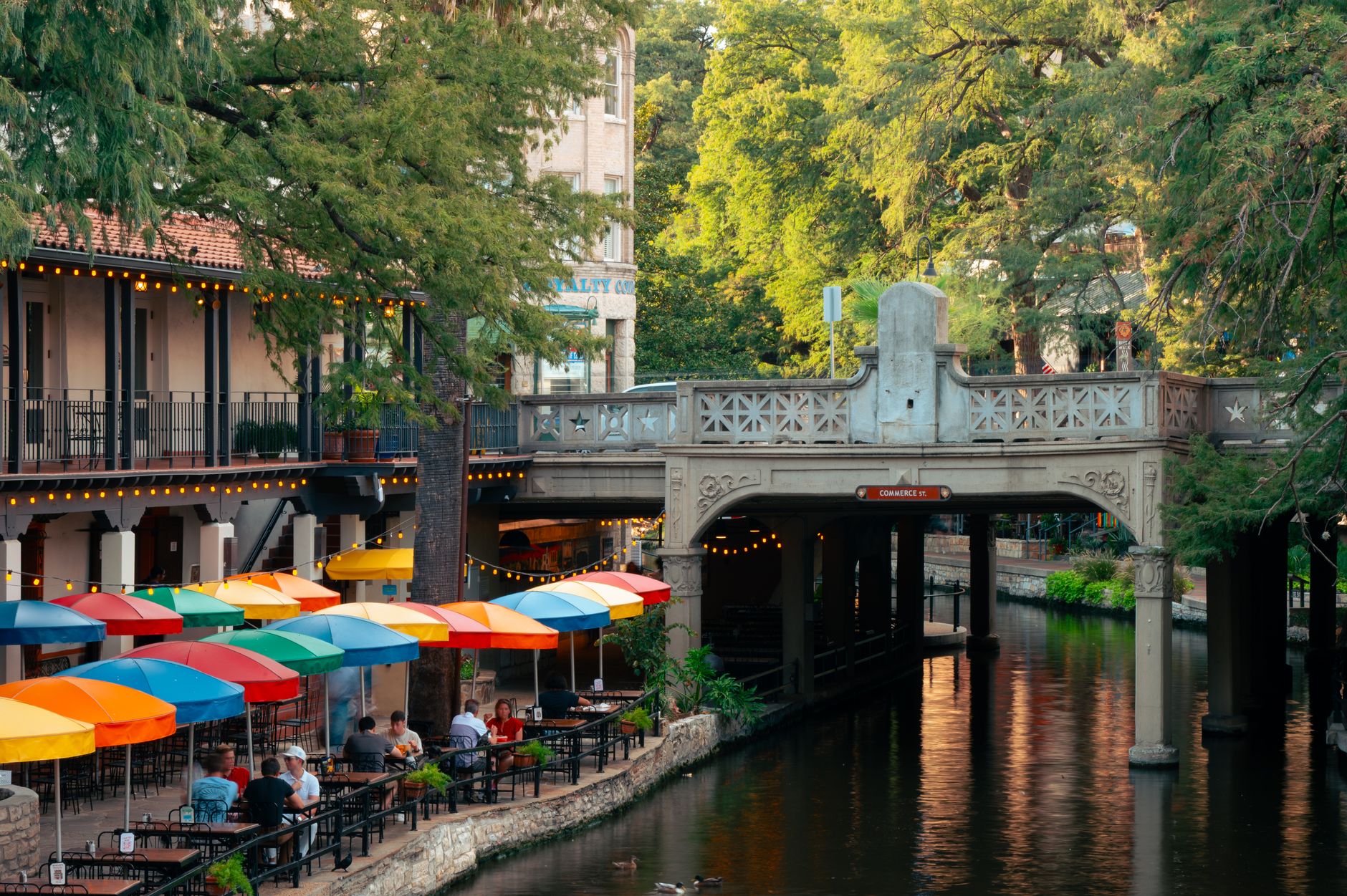
When considering a move to Texas, San Antonio and Houston frequently pop up on the radar. Both are major metropolitan areas with distinct personalities, offering very different experiences for residents. This comparison cuts through the marketing to give you an honest look at what it's like to live in each city, helping you decide which Texas titan aligns better with your lifestyle and financial goals.
San Antonio, rich in history and culture, offers a charming, somewhat slower pace with a strong emphasis on its unique heritage. Houston, on the other hand, is a sprawling, modern economic powerhouse with a diverse international population and a fast-paced, opportunity-driven environment. We'll dive into everything from housing costs and job markets to neighborhood vibes and school quality to give you a clear picture of what to expect in 2026.

Cost of Living
When it comes to housing, the numbers present an interesting story. San Antonio has a higher median home price at $604,600, significantly more than Houston's median home price of $488,150. This might seem counterintuitive given Houston's larger economy, but it reflects different market dynamics and housing stock, especially in core urban areas. However, for renters, San Antonio is more affordable, with a median rent of $1,276/month compared to Houston's median rent of $1,655/month.
Delving deeper into affordability, median household income tells a crucial part of the story. Houston boasts a median household income of $100,959, which is dramatically higher than San Antonio's $38,964. This substantial income difference in Houston helps offset its higher rent costs, making housing more attainable for its workforce despite the higher monthly outlay. Utilities and general cost of living outside of housing are relatively comparable between the two cities, with Texas's state-level sales tax applying equally to both, and property taxes being a notable expense in both metros.
| Metric | San Antonio, TX | Houston, TX |
|---|---|---|
| Median Home Price | $604,600 | $488,150 |
| Median Rent | $1,276/mo | $1,655/mo |
| Median Household Income | $38,964 | $100,959 |
Job Market & Economy
Houston's economy is a colossus, known globally for its energy sector, particularly oil and gas. Major employers include ExxonMobil, Chevron, and Phillips 66. Beyond energy, Houston is a world leader in healthcare, anchored by the vast Texas Medical Center, which includes institutions like MD Anderson Cancer Center and Houston Methodist Hospital. The city also has a significant presence in aerospace (NASA's Johnson Space Center) and shipping (Port of Houston). This diversification contributes to Houston's robust job market and its considerably higher median household income.
San Antonio's job market, while growing, is structured differently. Its economy leans heavily on military installations like Joint Base San Antonio (Lackland AFB, Fort Sam Houston, Randolph AFB), which are major employers. Healthcare and education, with institutions like UT Health San Antonio and local universities, also play significant roles. Tourism, driven by the Alamo and River Walk, is another cornerstone industry. While San Antonio's job growth is steady, the average wages, as reflected by the median household income, are substantially lower than in Houston, offering fewer high-paying opportunities across the board.
Neighborhoods
San Antonio offers a blend of historic charm and growing suburban developments. For those seeking history and walkability, the King William Historic District provides stunning Victorian-era homes within walking distance of downtown and the River Walk, though prices here are on the higher end of the city's median. Alamo Heights is an established, affluent neighborhood known for its upscale homes, good schools, and boutique shopping, offering a suburban feel close to the city center. For newer, master-planned communities with family-friendly amenities, areas like Stone Oak in the northern part of the city are popular, typically featuring more modern homes that can range from mid-market to luxury.
Houston's neighborhoods reflect its vast, diverse nature, with options ranging from urban core living to expansive suburban master plans. Montrose is a vibrant, eclectic, and artsy neighborhood known for its diverse population, independent boutiques, galleries, and an extensive restaurant scene, with a mix of historic bungalows and modern townhomes often above the city's median price. For established affluence, River Oaks is one of the most exclusive neighborhoods in the country, featuring grand estates. For a popular, gentrified area with historic charm and growing desirability, The Heights offers beautiful Victorian homes and Craftsman bungalows, often renovated, alongside new construction, with prices typically well above the city's median.
Safety
When evaluating safety, it's important to understand that larger metropolitan areas inherently present more varied crime landscapes. Generally, San Antonio is perceived as having a more moderate violent crime rate compared to Houston. While property crime is a concern, particularly in tourist-heavy areas and certain commercial districts, many residential neighborhoods across San Antonio maintain a sense of community safety. Residents should still research specific areas, but overall, it presents a somewhat lower-risk environment than its larger counterpart.
Houston, as a significantly larger and more densely populated city, experiences a higher overall crime rate, particularly regarding violent crime. Like any major city, safety can vary dramatically by neighborhood. Inner-city areas and certain commercial corridors can have elevated crime levels. However, many of Houston's vast suburban developments and affluent neighborhoods boast low crime rates and are considered very safe. Prospective residents in Houston should be diligent in researching specific neighborhoods and understand that a strong urban core often comes with higher crime statistics.
Schools
San Antonio's schools generally perform well, with a WYLT composite rating of 8.1 out of 10. The city is served by several large public school districts, with North East Independent School District (NEISD) and Northside Independent School District (NISD) being among the largest and offering a wide range of educational programs and varying school performance. Additionally, smaller, more affluent districts like Alamo Heights Independent School District are consistently recognized for their high academic achievement and strong community support, providing excellent options for families prioritizing top-tier public education.
Houston's school system is extensive, reflected in its WYLT composite rating of 7.6 out of 10. The largest district, Houston Independent School District (HISD), encompasses a vast area and serves a highly diverse student population. Performance within HISD can be quite varied, with some schools achieving high marks and others facing significant challenges. Many families in the Houston metro area who prioritize top-rated public schools often look to the numerous excellent independent school districts in the surrounding suburbs, such as Katy ISD, Fort Bend ISD, or Conroe ISD, which consistently rank among the best in the state.
Lifestyle & Things to Do
San Antonio offers a lifestyle steeped in history and culture, centered around its iconic attractions. The River Walk provides a unique pedestrian paradise with dining, shopping, and entertainment, while The Alamo stands as a testament to Texas's rich past. The city's food scene is famous for its authentic Tex-Mex and BBQ, complemented by a growing number of innovative restaurants, especially in the Pearl District. With a Walk Score of 94/100 and a Transit Score of 100/100, its core is remarkably pedestrian and transit-friendly for a Texas city. Summers are hot, and winters are mild, making outdoor activities like exploring city parks or the Missions National Historical Park enjoyable for much of the year.
Houston provides a truly global, dynamic lifestyle. Its vastness means a diverse array of experiences, from world-class museums in the Museum District and performing arts in the Theater District to professional sports and an incredibly varied international culinary scene—you can find almost any cuisine here, from Vietnamese to West African. Houston's nightlife is vibrant and spread across different districts, offering everything from live music venues to upscale lounges. While its Walk Score (78/100) and Transit Score (88/100) are lower, indicating a more car-dependent culture, Houston compensates with expansive green spaces like Hermann Park and Buffalo Bayou Park. The climate is notoriously hot and humid in summer, with mild winters, and the city is more susceptible to tropical weather events.
The Verdict
Choosing between San Antonio and Houston truly comes down to your priorities. If you're an individual or a family seeking a city with a lower median rent, a strong sense of history and culture, and a more walkable urban core with slightly better overall school performance, San Antonio is the clear winner. It offers a more relaxed pace of life, a unique charm that's deeply rooted in its heritage, and a strong community feel, particularly for those working in the military or tourism sectors.
However, if you are a career-driven professional, especially in energy, healthcare, or aerospace, who prioritizes higher earning potential and a vast, diverse job market, Houston is the superior choice. Its significantly higher median household income can offset its higher rent and make its comparatively lower median home prices more attainable for many. Houston offers world-class amenities, an incredibly diverse culinary scene, and a vibrant, modern, international atmosphere, even if it requires a more car-dependent lifestyle and navigating a higher general crime rate typical of larger metros.
Explore neighborhood-by-neighborhood data on WYLT: San Antonio, TX (San Antonio) · Houston, TX (Houston).
Get the full data-driven report on any neighborhood at WYLT's neighborhood finder.