Orlando has an identity problem that works in your favor if you're researching it seriously.
The theme park capital of the world. Tourists in Mickey ears. I-4 traffic next to the convention center. That is the Orlando that most of America pictures and it is real — but it is one dimension of a metro area of three million people that has grown into something considerably more substantial than its postcard image suggests.
Want the bottom-line verdict first? Read our breakdown: Is Orlando, FL a Good Place to Live? The Honest 2026 Answer.
The people who move to Orlando and stay are not the people who confused the city with the resort corridor. They are the people who found the other Orlando — the neighborhoods, the lakes, the food scene, the job market, and the genuine community that exists outside the tourist infrastructure. Here is that story.
Why Orlando's growth story is bigger than Disney
Orlando's economy was historically dependent on tourism and hospitality in ways that made it vulnerable to exactly the kind of shock the pandemic delivered. The response to that vulnerability has been an accelerated diversification that has permanently changed the city's employment profile.
Lockheed Martin, Northrop Grumman, L3Harris, and a growing defense and aerospace supply chain have made Orlando one of the most significant defense technology centers in the country. The technology sector has grown substantially with EA's simulation division, Verizon, and a growing startup ecosystem anchored by the University of Central Florida — the largest university in the United States by enrollment. The healthcare sector anchored by AdventHealth and Orlando Health provides institutional employment stability.
Florida's tax environment applies fully to Orlando residents — no state income tax, property taxes in Orange County running approximately 0.9% to 1.1% effective. For high earners moving from New York or California the annual tax relief is transformative.
The neighborhoods — the ones that matter for residents
Winter Park
The answer that Orlando insiders give when someone asks where to actually live. Winter Park is a separate municipality within the Orlando metro — it has its own school system, its own downtown, its own character — and it is the most consistently livable and desirable address in the broader metro area.
Park Avenue is one of the finest neighborhood commercial streets in Florida — tree-canopied, independently owned, with restaurants and boutiques that have maintained their quality and character through decades of surrounding development pressure. The Winter Park chain of lakes provides waterfront access from residential neighborhoods that adds genuine quality of life in ways that typical Orlando addresses cannot match.
Prices run $600,000 to $1.5 million for most single-family homes. Condos and smaller properties start around $400,000.
Best for: families who want the best the Orlando metro offers, buyers who want genuine walkability and neighborhood character, professionals who want maximum quality without maximum commute.
College Park and Edgewater
The in-town neighborhoods that offer the best value for buyers who want Orlando proper with genuine character at prices below Winter Park. Edgewater Drive through College Park has an independent restaurant and coffee scene that functions as a genuine neighborhood main street. The Lake Ivanhoe and Lake Adair frontage gives College Park the water access that defines the best Orlando addresses at prices that still represent value.
Prices run $400,000 to $700,000 for most single-family homes.
Best for: young families, buyers who want in-town Orlando character at below-Winter Park prices.
Thornton Park
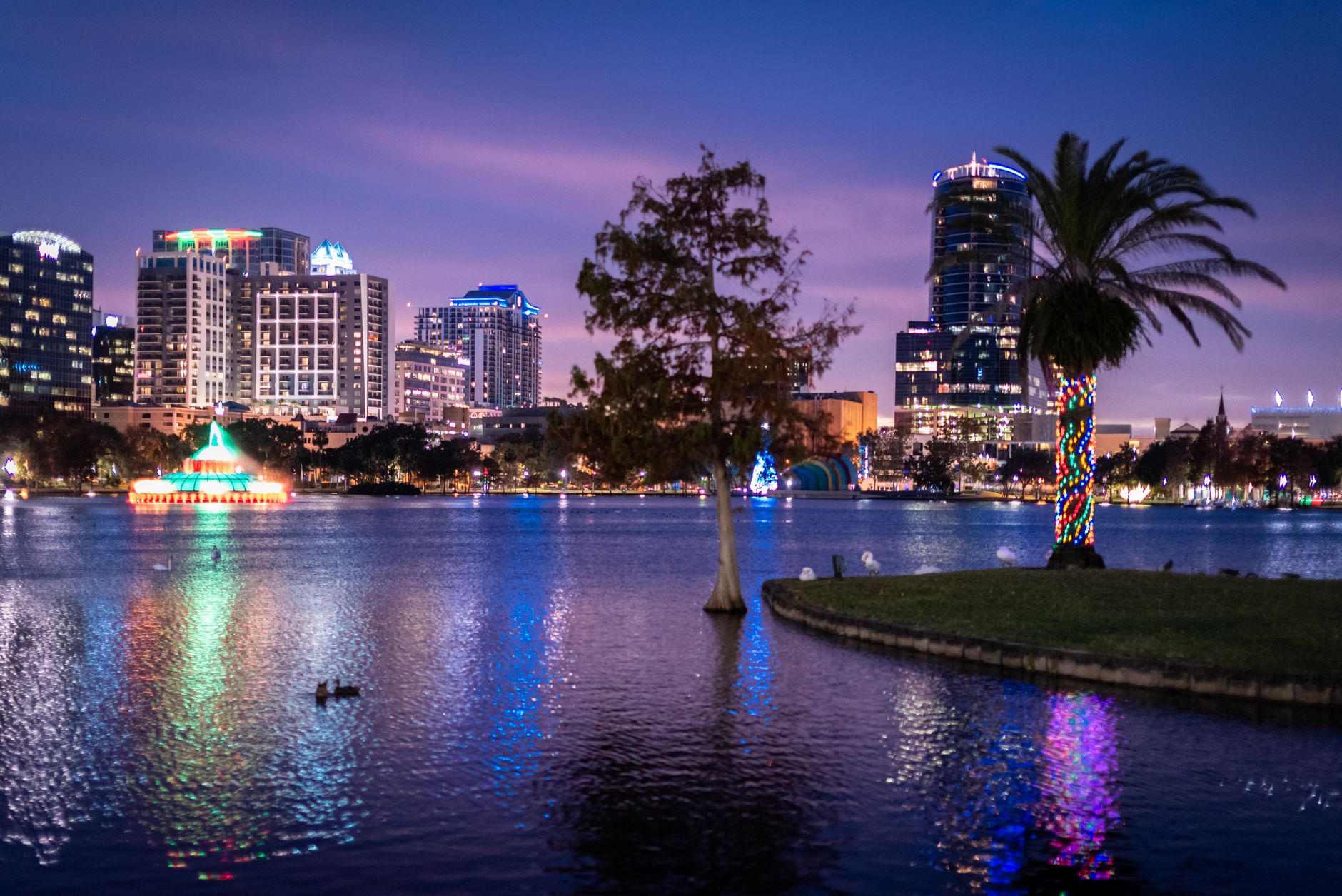
The walkable urban neighborhood immediately east of downtown Orlando. The Washington Street and Summerlin Avenue corridor has a density of restaurants and bars that functions as a genuine urban entertainment district within a residential neighborhood context. Lake Eola — Orlando's most prominent public park with a waterfront promenade and weekly farmers market — provides green space access that is unusual for Florida urban neighborhoods.
Prices run $400,000 to $700,000 for condos and smaller single-family homes.
Best for: young professionals, buyers who want maximum walkability within Orlando proper.
Lake Nona — Medical City
The master-planned community in southeast Orlando that has become the destination for healthcare professionals and families who want newer construction, strong schools, and community infrastructure at prices below Winter Park. Lake Nona Medical City — the cluster of hospitals, research facilities, and healthcare companies — makes this the obvious address for anyone in the healthcare or life sciences sector.
Prices run $450,000 to $750,000 for most family-sized homes.
Best for: healthcare and life sciences professionals, families who want newer construction and good schools.
Windermere and Dr. Phillips
The premium family suburbs on the western edge of the metro. The Butler Chain of Lakes — thirteen connected lakes covering thousands of acres — gives Windermere a waterfront character that is genuinely exceptional and among the most sought-after residential addresses in Florida. Dr. Phillips has excellent schools, strong commercial infrastructure along Sand Lake Road, and a well-maintained community feel.
Prices run $550,000 to $1.5 million and above — the western suburbs' premium is driven by the lake access that few Florida addresses at any price point can match.
Best for: families who want lake access and top schools, high-net-worth buyers who want premium Florida residential quality outside the coastal markets.
What the Orlando relocation guides miss
The tourist corridor is not where you live — but it affects your life.
The I-4 corridor from downtown to the convention center carries traffic loads that affect the entire metro. The residential neighborhoods in this guide are specifically chosen to be separated from the tourist infrastructure. That separation requires deliberate neighborhood selection — it is not automatic.
The insurance picture is Florida's.
Orlando is not coastal but it is in Florida and the statewide insurance crisis applies. Annual homeowners insurance for a typical Orlando single-family home runs $3,000 to $6,000 depending on age, construction, and specific location. Meaningfully lower than Miami or Tampa — the inland location matters — but higher than comparable southeastern markets in Georgia or North Carolina. Get quotes before you make any offer.
The summer is subtropical.
Central Florida summer runs from May through October with daily high temperatures in the 90s and afternoon thunderstorms that are among the most intense and frequent in the country. Lightning strike density in the I-4 corridor is among the highest in the United States — a meteorological fact that affects outdoor activity planning in ways that newcomers find surprising.
The school picture requires navigation.
Orange County Public Schools is a large district with significant variation by specific school. Winter Park's separate school system is the cleanest option for families who want simplicity. For families in Orlando proper the magnet program system provides excellent options for families who navigate it. Research the specific school assignment at the specific address.
The full cost model
| Line item | Monthly estimate |
|---|---|
| Mortgage (6.75%, 20% down, $490K) | $2,841 |
| Property taxes (~1.0%) | $408 |
| Homeowners insurance | $250–500 |
| Total monthly carrying cost | $3,499–$3,749 |
The honest verdict
Orlando in 2026 is a significantly more compelling city than its theme park identity suggests and it rewards buyers who look past the postcard image to understand what the metro actually offers.
The economic foundation is real and diversifying. The right neighborhoods — Winter Park above all, College Park, Thornton Park, Lake Nona, Windermere — are genuinely excellent. The insurance costs are more manageable than coastal Florida. The tax relief is real.
The tourist corridor requires deliberate avoidance. The summer requires honest adjustment. The school navigation requires effort. Arrive prepared and Orlando delivers.
Research Orlando neighborhoods on WYLT before you decide. Free data on Winter Park, College Park, Thornton Park, Lake Nona, Windermere, and every Orlando metro zip code.
Search Orlando neighborhoods →
Also in the WYLT moving guides: Tampa FL, Miami FL, Is Orlando Safe?.