Affordability is the word that has defined American housing for the past four years. Mortgage rates that doubled in eighteen months. Home prices that never corrected the way the models predicted. Rent that absorbed the salary increases that were supposed to make people feel better.
The conversation about where affordability still genuinely exists has never been more relevant and the answer is more specific — and more nuanced — than a simple state ranking captures.
Here are the 10 most affordable states to live in 2026 with honest assessments of what the affordability actually gets you.
How we ranked them
True affordability is not just home prices. It is the full picture: median home price relative to median household income, effective property tax rate, state income tax burden, cost of living index, and insurance costs that have become a material variable in coastal and storm-prone markets.
A state that has low home prices but punishing property taxes, high income taxes, and elevated insurance costs is not actually affordable. The ranking accounts for all of it.
#1 — Mississippi
Mississippi is the most affordable state in America on pure price-to-income metrics and it is not particularly close.
Median home prices run $160,000 to $195,000. Property taxes are among the lowest in the country — effective rates typically 0.6% to 0.8%. The cost of living index runs approximately 15% below the national average.
The honest assessment: Mississippi's affordability reflects real economic challenges. The job market outside of healthcare, education, and manufacturing is limited. The public school system has faced significant challenges. Infrastructure in rural areas is limited. The affordability is genuine — the economic opportunity to support it is more constrained than in higher-ranking states.
Best for: retirees on fixed incomes, remote workers who have income from elsewhere, healthcare and education professionals.
Median home price: $160K–$195K | Property tax: 0.6%–0.8% | Income tax: 4.7% flat
#2 — West Virginia
West Virginia offers some of the most affordable home prices in the eastern United States — median prices run $165,000 to $220,000 — in a state with genuine natural beauty in the Appalachian mountain landscape.
The state has been actively courting remote workers with incentive programs and the Corridor H highway improvements have reduced the isolation that historically limited West Virginia's appeal for out-of-state buyers.
The honest assessment: West Virginia's economy has been in structural transition for decades as the coal industry has declined. The job market for professional careers is limited outside healthcare and education. The state's remote work appeal is genuine for fully location-independent workers.
Best for: remote workers, outdoor enthusiasts, retirees who want Appalachian natural beauty.
Median home price: $165K–$220K | Property tax: 0.5%–0.7% | Income tax: 3.0%–6.5% graduated
#3 — Arkansas
Arkansas offers the combination of genuine affordability, a lower cost of living, and more economic diversity than the two states above it. The Northwest Arkansas corridor — Fayetteville, Bentonville, Rogers, Springdale — has become one of the most interesting regional economies in the country anchored by Walmart's headquarters and the supplier ecosystem that has grown around it.
Bentonville specifically has been transformed by Walmart investment into a city with world-class cycling infrastructure, the Crystal Bridges Museum of American Art, and a quality of life that genuinely surprises visitors expecting rural Arkansas.
Median home prices statewide run $185,000 to $250,000. In Northwest Arkansas — the growth corridor — prices run $280,000 to $400,000 but still represent exceptional value relative to comparable quality markets nationally.
Median home price: $185K–$250K | Property tax: 0.6%–0.8% | Income tax: 4.4% flat (declining)
#4 — Oklahoma
Oklahoma sits in the middle of the country and offers a combination of genuine affordability and more economic diversity than its neighbors to the east.
Tulsa has been one of the most discussed secondary cities in America for the past several years — the arts district, the Gathering Place park on the Arkansas River, and the remote worker incentive program that paid people $10,000 to move there have given it a national profile that its size alone would not produce.
Oklahoma City has a strong energy and healthcare employment base and home prices that run $210,000 to $310,000 in desirable neighborhoods.
Median home price: $200K–$290K | Property tax: 0.8%–1.0% | Income tax: 4.75% flat
#5 — Indiana
Indiana offers the best combination of affordability and economic infrastructure of any state in this ranking. Indianapolis has a genuine major city's amenity base — professional sports, a growing restaurant scene, museums, a university ecosystem — at prices that make it one of the best values in American urban real estate.
Median home prices in Indianapolis proper run $210,000 to $290,000. In the northern suburbs — Carmel, Fishers, Zionsville — prices run $350,000 to $520,000 for homes with top-rated schools that would cost $700,000 to $1 million in comparable northeastern suburbs.
Indiana's flat income tax of 3.05% is among the lowest of any state with an income tax. Property taxes run 0.8% to 1.1% effective.
Median home price: $210K–$350K | Property tax: 0.8%–1.1% | Income tax: 3.05% flat
#6 — Iowa
Iowa is the state that consistently scores well on quality of life surveys and consistently gets ignored in national relocation conversations. Des Moines has a genuine mid-sized city infrastructure — a growing insurance and financial services sector, a food and arts scene that has developed substantially — at prices that feel anachronistic by 2026 standards.
Median home prices in Des Moines run $210,000 to $290,000. Property taxes run approximately 1.4% to 1.7% effective — higher than some competitors in this list but offset by low home values.
Median home price: $200K–$280K | Property tax: 1.4%–1.7% | Income tax: 3.8%–5.7% graduated
#7 — Missouri
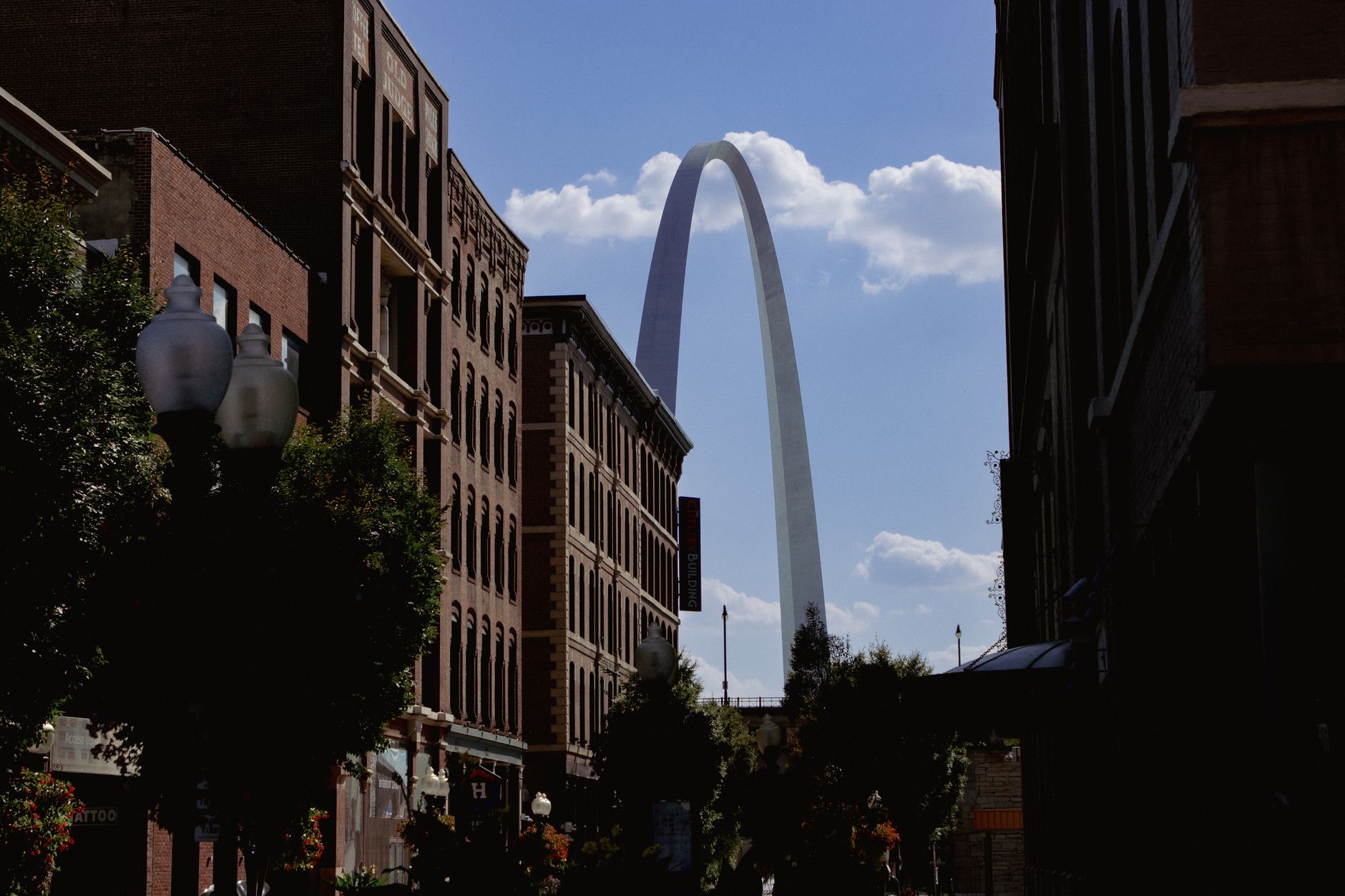
Missouri offers the combination of two genuinely interesting major cities — St. Louis and Kansas City — at prices that make their quality of life infrastructure almost inexplicably cheap by coastal standards.
Kansas City has one of the best barbecue cultures in America, a genuinely excellent arts district in the Crossroads neighborhood, professional sports, and home prices in desirable neighborhoods running $220,000 to $380,000.
St. Louis has one of the most underrated urban cores in the country — the Central West End, the Shaw neighborhood, and the Lafayette Square historic district offer genuine architectural character and neighborhood quality at prices that are almost impossible to comprehend for buyers from coastal markets.
Median home price: $215K–$320K | Property tax: 0.9%–1.2% | Income tax: 4.7%–5.3% graduated
#8 — Tennessee
Tennessee earns its position in this ranking not through low home prices — the Nashville metro has appreciated significantly — but through the combination of no state income tax, low property taxes, and a cost of living that runs below the national average outside of the premium Nashville neighborhoods.
Chattanooga and Knoxville represent Tennessee's best pure affordability story in 2026. Both cities offer genuine urban infrastructure — restaurants, arts, outdoor access — at median home prices of $270,000 to $380,000 with no state income tax and property taxes running 0.6% to 0.8% effective.
Median home price: $270K–$550K (varies dramatically by city) | Property tax: 0.6%–0.9% | Income tax: None
#9 — Alabama
Alabama has been quietly building an economic story that its affordability numbers alone don't capture.
Huntsville has become the fastest-growing city in the state anchored by NASA's Marshall Space Flight Center, Redstone Arsenal, and a defense contractor ecosystem that employs tens of thousands of professional workers. Home prices in Huntsville run $260,000 to $380,000 for desirable neighborhoods — extraordinary value for the professional employment base the city provides.
Birmingham has a growing medical and research sector anchored by UAB. The Homewood and Mountain Brook suburbs provide genuine quality of life at prices $400,000 to $600,000 below comparable northeastern markets.
Median home price: $220K–$350K | Property tax: 0.4%–0.6% | Income tax: 2%–5% graduated
#10 — South Carolina
South Carolina closes the list on the strength of its legal residence property tax exemption — the lowest effective primary residence property tax rate of any state in the eastern United States — combined with genuine quality of life in its best markets.
The effective property tax rate for primary residences in South Carolina runs 0.4% to 0.6% — genuinely exceptional. On a $400,000 home that is $1,600 to $2,400 per year in property taxes. The equivalent home in New Jersey carries a $8,400 to $10,000 bill.
Greenville, Summerville, and the suburbs of Charleston provide the specific markets where the South Carolina affordability story plays out most compellingly for buyers from higher-cost states.
Median home price: $280K–$450K | Property tax: 0.4%–0.6% | Income tax: 6.4% (declining)
The complete affordability comparison
| State | Median price | Property tax | Income tax | COL index |
|---|---|---|---|---|
| Mississippi | $160K–$195K | 0.6%–0.8% | 4.7% | 85 |
| West Virginia | $165K–$220K | 0.5%–0.7% | 3%–6.5% | 88 |
| Arkansas | $185K–$250K | 0.6%–0.8% | 4.4% | 88 |
| Oklahoma | $200K–$290K | 0.8%–1.0% | 4.75% | 90 |
| Indiana | $210K–$350K | 0.8%–1.1% | 3.05% | 91 |
| Iowa | $200K–$280K | 1.4%–1.7% | 3.8%–5.7% | 91 |
| Missouri | $215K–$320K | 0.9%–1.2% | 4.7%–5.3% | 92 |
| Tennessee | $270K–$550K | 0.6%–0.9% | None | 93 |
| Alabama | $220K–$350K | 0.4%–0.6% | 2%–5% | 88 |
| South Carolina | $280K–$450K | 0.4%–0.6% | 6.4% | 94 |
Research any affordable market on WYLT before you decide. Free neighborhood-level reports on schools, commute, crime, flood risk, and price trends — for every state in this guide.