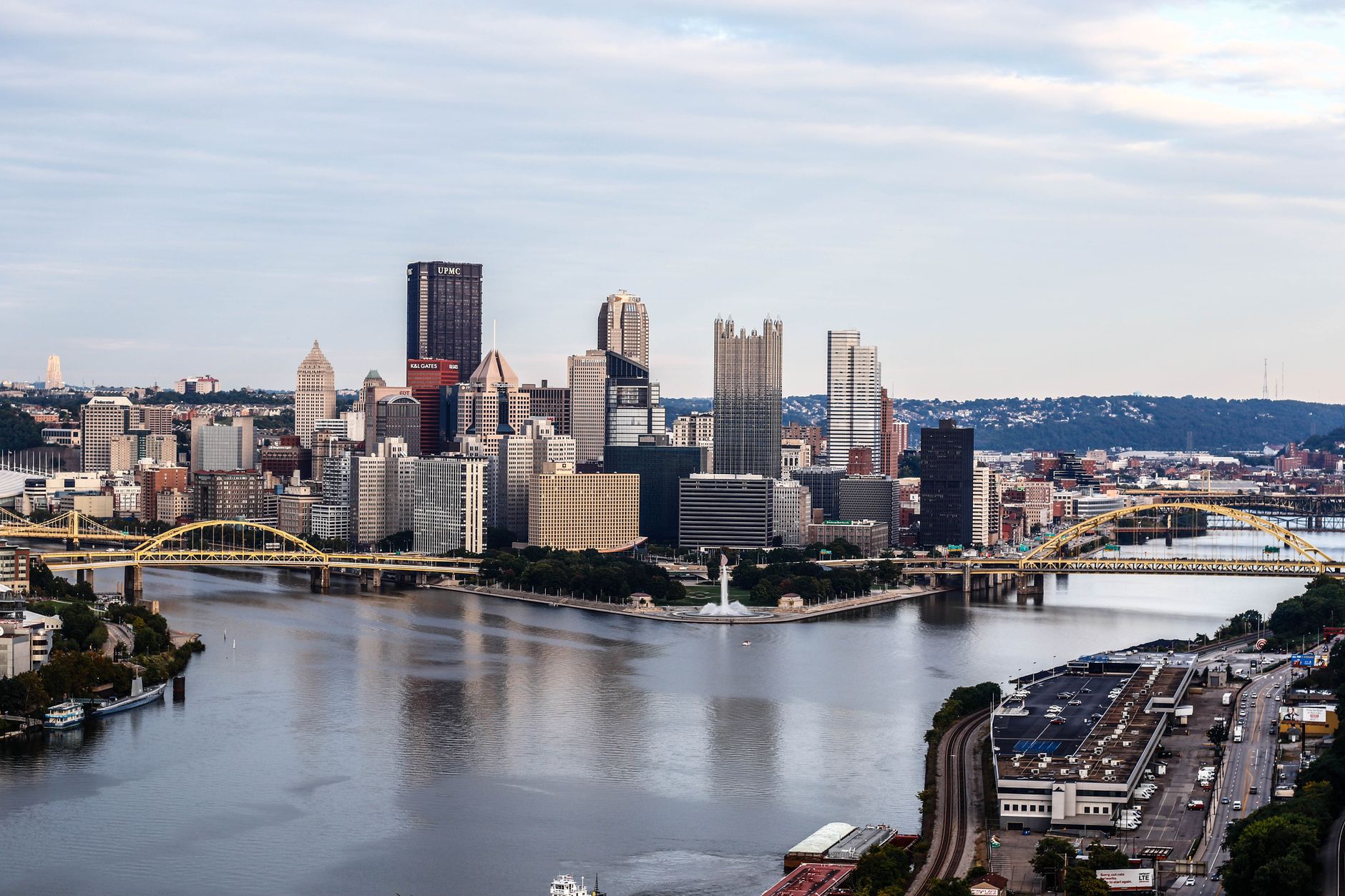
Pittsburgh spent thirty years being called a comeback city and has now actually done it. Carnegie Mellon University and the University of Pittsburgh anchor one of the strongest AI and robotics research ecosystems in the world. Google, Uber, Apple, and Amazon all have significant Pittsburgh offices. UPMC — the University of Pittsburgh Medical Center — is the largest employer in Pennsylvania and one of the largest health systems in the country. The city that steel built has rebuilt itself around brains, and the housing market hasn't caught up with that story yet.
At $234,500 to $472,800 for neighborhoods with "Good for now" verdicts, Pittsburgh is offering something increasingly rare: an architecturally interesting, geographically dramatic American city with genuine economic momentum at prices that coastal transplants find almost incomprehensible.

Pittsburgh neighborhoods — what the data shows
| Neighborhood | Verdict | Median Home Price | Walk Score | School Rating |
|---|---|---|---|---|
| Lawrenceville | Good for now | $234,500 | 37/100 | 6.4/10 |
| East Liberty / Highland Park | Good for now | $281,500 | 25/100 | 6.6/10 |
| Downtown / Strip District | Good for now | $472,800 | 77/100 | 6.0/10 |
| Squirrel Hill | Think twice | $403,500 | 76/100 | 6.3/10 |
| Shadyside | Think twice | $445,800 | 58/100 | 6.3/10 |
| Mount Lebanon | Think twice | $347,900 | 34/100 | 5.8/10 |
The neighborhoods worth knowing
Lawrenceville — the most talked-about neighborhood in Pittsburgh
Lawrenceville (15201) is where Pittsburgh's restaurant and arts scene has concentrated over the last decade. Butler Street is the commercial spine: independent restaurants, craft breweries (Arsenal Cider, Allegheny City Brewing), boutiques, and the kind of neighborhood energy that cities pay consultants to manufacture. Median price of $234,500 — for a neighborhood this characterful, with this employment proximity — is genuinely remarkable. The Walk Score of 37 understates actual walkability on Butler Street itself; most residents find the neighborhood quite livable on foot in the core blocks.
Squirrel Hill and Shadyside — the East End at its most livable
Squirrel Hill (15217) is Pittsburgh's most established residential neighborhood — a dense, walkable Jewish community with deep roots, Forbes Avenue as a commercial corridor, and proximity to both CMU and Pitt. Walk Score 76. The "Think twice" verdict reflects certain crime patterns in adjacent areas; the core of Squirrel Hill is among the most consistently safe and stable parts of the city. Shadyside (15232) next door has Walnut Street's shops and restaurants and similar walkability — both are the Pittsburgh East End neighborhoods that CMU and Pitt faculty gravitating toward.
The Strip District — food market culture and the most walkable ZIP
The Strip District (15222) anchors downtown Pittsburgh with the highest Walk Score on this list (77) and the Pittsburgh Public Market, Saturday farmers market, and the wholesale food district that gives the neighborhood its name. At $472,800 median it's the priciest on the list — but for people who want the most urban Pittsburgh experience with direct proximity to the employment corridor, it delivers.
The honest tradeoffs
The school system is the primary caveat
Pittsburgh Public Schools have documented performance and funding challenges that show up in WYLT's school ratings — most neighborhoods score in the 6.0–6.6 range. Families with school-age children should research specific school assignments carefully, factor in Pittsburgh's strong private school options (including several excellent Catholic schools), or target the suburbs with better district ratings. This is the honest caveat that the city's otherwise strong data doesn't erase.
The topography is dramatic — and a daily reality
Pittsburgh's hills are steep, the streets are irregular, and getting between neighborhoods often requires commitment. This is part of what makes the city visually distinctive and part of what makes car-free living genuinely challenging outside the walkable East End corridors. Most residents embrace it. Some find it exhausting.
The winters are real
Pittsburgh averages 28 inches of snow and significant cloud cover from November through March. The climate is more challenging than the Mid-Atlantic cities to the south, though milder than Cleveland or Buffalo. The flip side: summers are genuinely beautiful — warm without the humidity that plagues cities further south.
Who Pittsburgh is right for
- Tech and AI professionals — CMU's robotics program is the best in the world; the employer ecosystem around it is deep and growing
- Healthcare professionals — UPMC is a $26 billion system with thousands of positions across dozens of specialties
- Buyers who want urban character at genuinely affordable prices — Lawrenceville at $234K is the strongest argument in this category in any major East Coast metro
- People who will do school research first — the families who thrive here work the school system carefully rather than assuming neighborhood quality equals school quality
See the full WYLT data for every Pittsburgh neighborhood — crime, schools, price trends, and flood risk.
Lawrenceville → | East Liberty → | Strip District → | Squirrel Hill → | Shadyside →