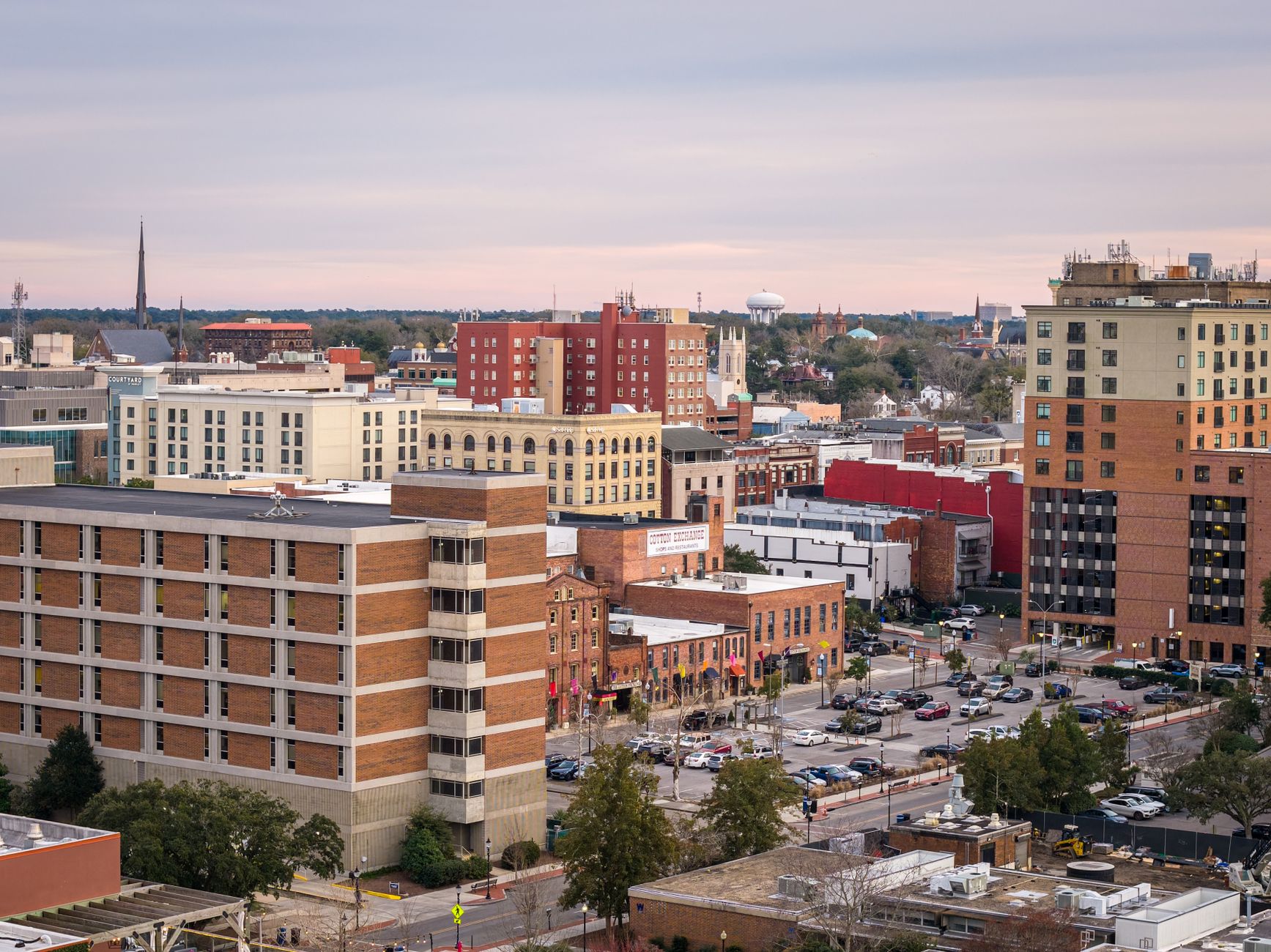
Fayetteville and Raleigh are both North Carolina — but they're separated by more than the 90 miles between them on I-95. Raleigh is the Research Triangle's government and tech hub, drawing transplants with $90K+ median incomes and home prices that have risen sharply over the past five years. Fayetteville is anchored by Fort Liberty (formerly Fort Bragg), runs on a military-dependent economy, and has some of the lowest home prices of any mid-size city WYLT has reviewed in the Southeast.
The search query "Fayetteville vs Raleigh" shows up consistently in relocation research because these are the two most common landing spots for people moving to central North Carolina — whether they're following the tech job market, following military orders, or trying to figure out which city gives them more for their money. Here's what the data actually shows.
The 30-second version
Choose Fayetteville if: You're military, you're already stationed at Fort Liberty, you're remote-friendly and want to stretch your budget in a city with real affordability — or you're a buyer who wants to get into North Carolina without Raleigh's price premium.
Choose Raleigh if: You're working in the Research Triangle's tech, biotech, or government sector — or you want a walkable, amenity-rich city with strong long-term appreciation, better schools, and one of the most in-demand job markets in the South.
Cost of living
Fayetteville's reviewed ZIP (28301) has a median home price of $189,400 — among the lowest WYLT has recorded for a city with 200,000+ residents. Median rent runs $987/month. Median household income is $44,218, reflecting the military and service-sector economy that underpins the city.
Raleigh's reviewed ZIPs range from $389,200 to $562,800 in median home price, with rent running $1,384 to $1,871/month. Median household incomes run $71,046 to $118,432. The cost gap between the two cities is real and significant — but so is the income gap. Raleigh earns more, but it also costs considerably more to live there.
Verdicts
Fayetteville's 28301 earns a "Good for now" verdict — a realistic assessment of a city with genuine affordability and a stable institutional base (the federal payroll from Fort Liberty is recession-resistant), alongside trade-offs: moderate-to-high crime in some areas, limited walkability, and a job market that doesn't diversify well beyond military and healthcare.
Raleigh's results are mixed but trending positive. Its best ZIPs earn "Good for now" verdicts — 27601 (downtown), 27609 (North Raleigh) — while some outer ZIPs carry "Think twice" ratings driven by price-to-value concerns. Raleigh rewards neighborhood selection: downtown and North Raleigh are different propositions than the generic sprawl on the city's edges.
Job market and economy

This is the most important variable in this comparison, and the gap is significant. Raleigh anchors the Research Triangle alongside Durham and Chapel Hill — home to NC State, Duke, and UNC, with major employers including Red Hat, SAS Institute, Cisco, Lenovo's U.S. headquarters, and a growing biotech cluster. Remote-work applicants, tech workers priced out of Austin and the Bay Area, and East Coast transplants have all converged here, driving both job growth and home prices upward.
Fayetteville's economy is structurally different. Fort Liberty is one of the largest military installations in the world, and the city's economy — retail, healthcare, food service, real estate — largely exists to serve the base. That creates stability (the federal government doesn't lay off a military base during a recession) but limited upward mobility for civilians who aren't connected to the military ecosystem. Remote workers are an exception: Fayetteville's low cost of living combined with a laptop income is a real value proposition that didn't exist ten years ago.
Schools
Raleigh has a meaningful edge here. Its reviewed ZIPs rate 7.2 to 8.1 on WYLT's school quality metric — above average nationally, with North Raleigh (27609) scoring highest at 8.1. Fayetteville's reviewed ZIP rates 5.8 — below average. For families with school-age children, this gap matters and is one of the clearer reasons to absorb Raleigh's price premium if school quality is a priority.
Crime
This is where Fayetteville shows its most significant trade-off. Its reviewed ZIP carries high violent crime and moderate property crime ratings — consistent with what you'd expect from a city with significant economic inequality and a transient military population. Not every Fayetteville neighborhood has the same profile, but the city-wide numbers are elevated relative to Raleigh.
Raleigh's downtown and North Raleigh ZIPs carry moderate violent crime and moderate property crime — better than Fayetteville, though not crime-free. The Research Triangle's growth has brought urban amenities alongside the typical urban crime patterns in denser areas.
What WYLT's data shows
- 28301 (Fayetteville) — Good for now: Median home $189,400, rent $987, income $44,218, walk score 28, schools 5.8, commute 22 minutes, high violent crime, moderate property crime.
- 27601 (Downtown Raleigh) — Good for now: Median home $389,200, rent $1,871, income $71,046, walk score 68, schools 7.2, commute 9 minutes, moderate violent and property crime.
- 27609 (N. Raleigh) — Good for now: Median home $512,600, rent $1,384, income $118,432, walk score 31, schools 8.1, commute 16 minutes, low violent crime, moderate property crime — best schools in this comparison.
- 27608 (Midtown Raleigh) — Think twice: Median home $562,800, rent $1,647, income $104,819, schools 7.8 — strong schools but price-to-value has stretched thin at this price point.
The verdict
The right answer depends almost entirely on what you're optimizing for.
Fayetteville is the clearest affordable entry point into central North Carolina. $189,400 median home price with a "Good for now" verdict means you're getting real value — even factoring in the higher crime profile and weaker schools. For military families, remote workers, or buyers who simply can't absorb Raleigh's prices, Fayetteville is a legitimate answer, not a consolation prize.
Raleigh is worth the premium if the job market is the point. The Research Triangle's growth story is real, the job market is deep, and downtown Raleigh at $389,200 with a walk score of 68 and a 9-minute commute is a reasonable deal for a city of its caliber. North Raleigh at $512,600 has the best schools in this comparison (8.1) and the lowest violent crime — if family-focused living is the priority, that ZIP earns its price.
The cities share a state and not much else. Match the city to what you actually need from it.