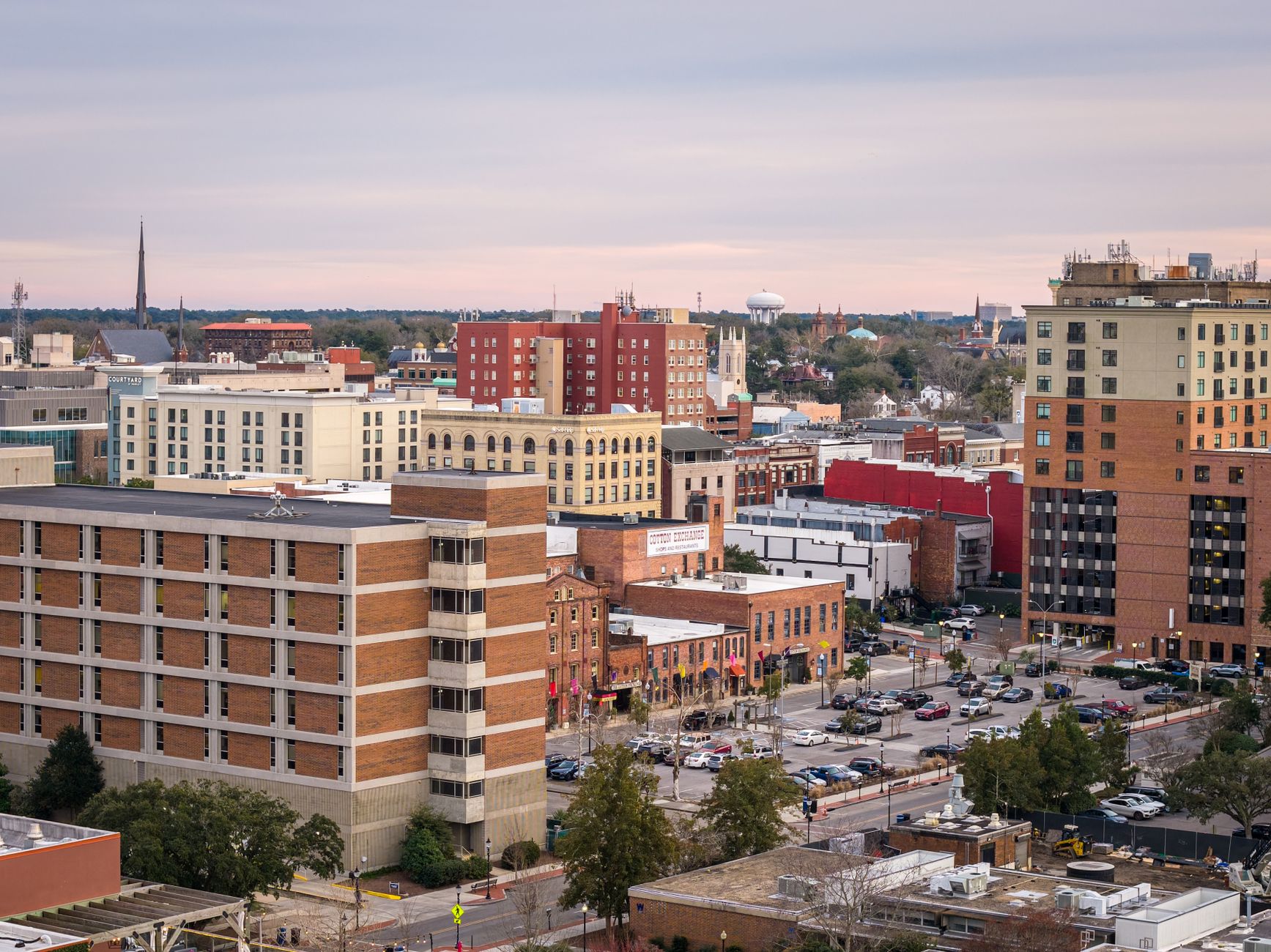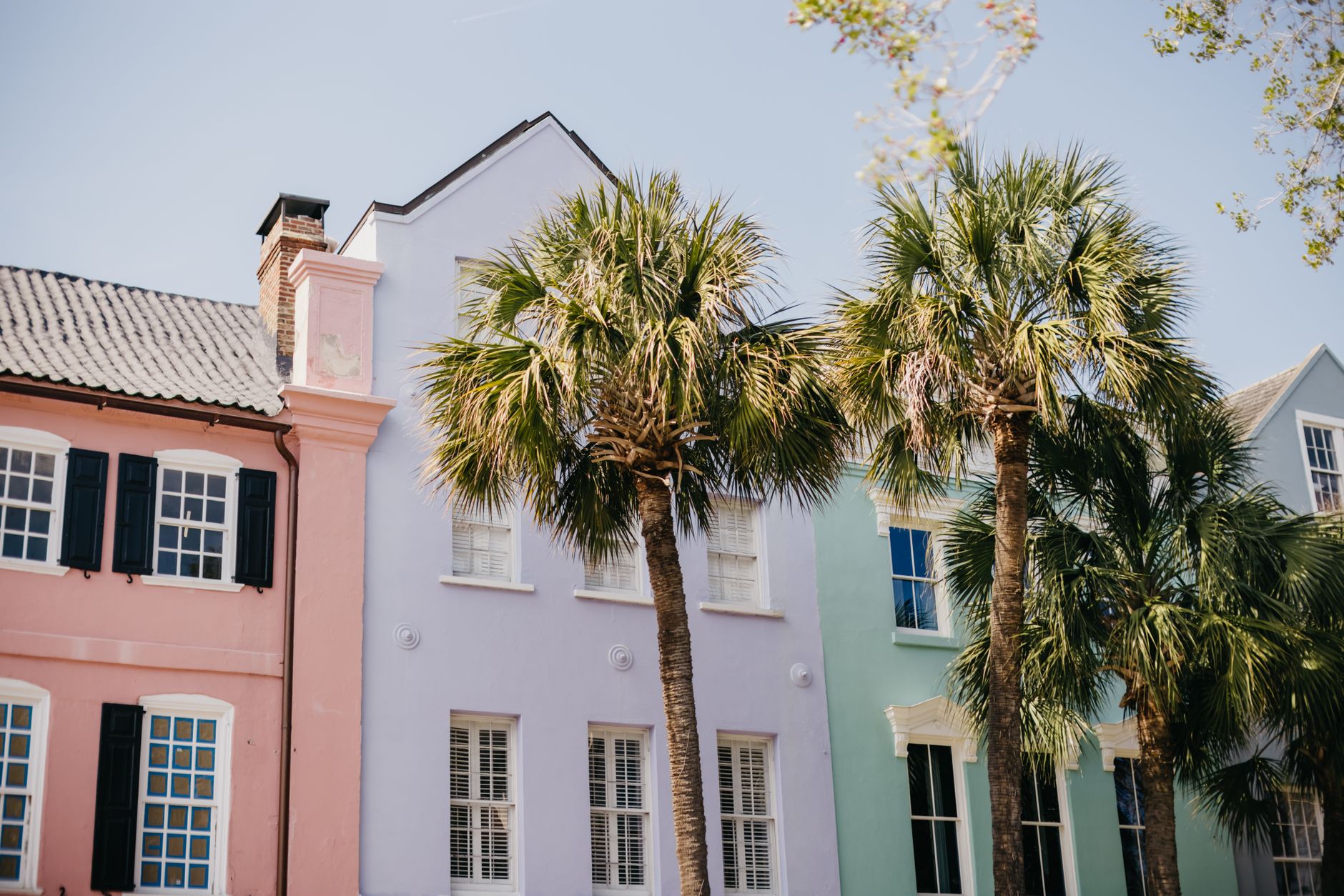
South Carolina's two biggest relocation draws couldn't feel more different. Charleston is coastal, historic, and increasingly expensive — a city that's been "discovered" so thoroughly that its housing market now behaves more like a coastal resort town than a Southern city. Greenville is inland, walkable, and still riding the momentum of a downtown revival that turned a former textile town into one of the most livable small cities in the Southeast.
Both show up constantly in "best places to move in the South" lists. Both are genuinely good. But they're good in different ways, for different people — and the price gap between them is bigger than most people expect.
Here's the honest comparison, built on WYLT's neighborhood-level data for both cities.
The 30-second version
Choose Charleston if: Coastal living, historic architecture, and a tourism-driven economy are worth a significant price premium to you — and you're prepared for a hot, humid climate and a housing market that's priced more like a vacation destination than a mid-size Southern city.
Choose Greenville if: You want a walkable downtown, mountain access (the Blue Ridge foothills start less than an hour away), a lower cost of entry, and an economy with a strong manufacturing and corporate base — and you can live without the beach being a daily option.
Cost of living
This is the headline number, and it's not close. Charleston's reviewed downtown ZIP (29403) has a median home price of $615,300 and earns a "Think twice" verdict. Just across the harbor, Mount Pleasant (29464) — Charleston's most popular suburb — comes in even higher at $617,700, though it earns a "Good for now" rating thanks to strong schools and family-friendly amenities.
Greenville's reviewed downtown ZIP (29601) comes in at $493,700 — about $120,000 less than downtown Charleston, and roughly $124,000 less than Mount Pleasant. It also earns a "Think twice" verdict, for the same underlying reason as Charleston: prices have risen faster than the surrounding fundamentals in the last several years. But the gap matters. On a 30-year mortgage, that $120,000 difference is the equivalent of several hundred dollars a month — money that goes a long way in either city.
Rent follows the same pattern. Charleston's median rent is $1,590/month, while Greenville comes in at $1,309/month. Mount Pleasant, reflecting its higher-income suburban profile, runs highest at $1,859/month.
Job market
Charleston's economy is anchored by tourism (the historic district draws millions of visitors a year), the Port of Charleston (one of the busiest container ports on the East Coast), and a growing aerospace and advanced manufacturing presence — Boeing operates a major 787 assembly plant just outside the city. The tech sector has grown too, with companies like Blackbaud and Benefitfocus headquartered in the area. But the tourism economy that makes Charleston such a pleasant place to visit also means a large share of local jobs are in hospitality and service — sectors that don't always pay enough to keep up with the city's home prices.
Greenville's economy is built on a different foundation: manufacturing and corporate headquarters. Michelin's North American headquarters is here, along with major operations from BMW (the Spartanburg plant is 20 minutes away), GE, and a dense cluster of automotive suppliers along the I-85 corridor sometimes called the "Iron Belt." Downtown Greenville itself has become a magnet for younger professionals and remote workers, drawn by a walkable core that punches well above its size. Median household income in Greenville's reviewed ZIP ($70,580) is notably higher than Charleston's downtown ZIP ($62,281) — a reflection of Greenville's corporate and engineering job base versus Charleston's tourism-heavy mix. Mount Pleasant, unsurprisingly, has the highest income of the three at $104,366, reflecting its status as Charleston's professional-class suburb.
What WYLT's data shows

Charleston area
- 29403 (Downtown Charleston) — Think twice: Median home $615,300, walk score 49, schools 8.3, median rent $1,590, violent crime rated "Moderate," low flood risk. A genuinely walkable historic core with strong schools — the verdict reflects price relative to value, not a quality problem.
- 29464 (Mount Pleasant) — Good for now: Median home $617,700, schools 8.9 — the highest school rating in this entire comparison — median rent $1,859, median household income $104,366. The classic Charleston-area family suburb: excellent schools and amenities, at a price that matches downtown Charleston almost exactly.
Greenville
- 29601 (Downtown Greenville) — Think twice: Median home $493,700, walk score 68 — the highest walkability score in this comparison — schools 8.4, median rent $1,309, violent crime rated "Moderate," commute averaging just 15 minutes. The best combination of walkability and short commutes in either city, at a meaningfully lower price than any Charleston-area ZIP reviewed.
Safety
All three reviewed ZIPs — downtown Charleston, Mount Pleasant, and downtown Greenville — carry a "Moderate" violent crime rating, so there's no clear winner on crime alone. The more useful distinction is flood risk: Charleston's downtown ZIP carries low flood risk according to WYLT's data, but Charleston as a region is far more exposed to storm surge and tidal flooding than Greenville, which sits well inland in the Piedmont. Hurricane season is a real planning consideration in Charleston in a way it simply isn't in Greenville.
Schools
This is one of the closer categories, and all three ZIPs score well. Mount Pleasant leads with an 8.9 — the highest rating anywhere in this comparison — followed closely by Greenville's downtown ZIP at 8.4 and Charleston's downtown ZIP at 8.3. For families prioritizing schools above all else, Mount Pleasant has a slight edge, but the difference between an 8.3 and an 8.9 is much smaller than the roughly $120,000 home price gap between Mount Pleasant and downtown Greenville.
Lifestyle and things to do
Charleston's lifestyle case is obvious and well-documented: cobblestone streets, antebellum architecture, a James Beard Award-studded restaurant scene, and beaches (Folly Beach, Sullivan's Island, Isle of Palms) all within a short drive. It's a city built around its history and its harbor, and that's exactly what draws both tourists and new residents. The trade-off is that Charleston's popularity is part of what's driving its prices — the same historic charm that makes it special is also why downtown costs $615,300.
Greenville's case is less obvious but increasingly compelling. Falls Park on the Reedy — a genuinely striking urban waterfall park with a suspension bridge — anchors a downtown that's walkable in a way few Southern cities of its size can match (that 68 walk score is the best in this comparison). Beyond downtown, the Blue Ridge foothills and the Blue Ridge Parkway are less than an hour away, putting hiking, waterfalls, and mountain towns like Asheville within easy weekend-trip range. What Greenville doesn't have is the ocean — the closest beaches are a 3.5-hour drive to Charleston or Myrtle Beach.
The verdict
If coastal living and historic character are non-negotiable, Charleston (or Mount Pleasant, if you want the suburban family version) delivers something Greenville simply can't replicate — but go in clear-eyed about the price. Both Charleston-area ZIPs reviewed here sit above $615,000, and the "Think twice" verdict on downtown Charleston reflects a market that's priced for its popularity, not just its fundamentals.
If you're flexible on the ocean and want the better value, Greenville is the stronger pick on the numbers: a $493,700 median home price, the highest walk score in the comparison, an 8.4 school rating, and a 15-minute average commute — all while sitting an hour from genuine mountain recreation. The "Think twice" verdict here, too, reflects a city whose prices have run ahead of where they were five years ago, but the gap to Charleston's pricing gives Greenville more room to be a good deal even with that caveat.
The honest summary: Charleston sells a feeling, and that feeling currently costs about $120,000 more than Greenville's version of the same "walkable Southern downtown" experience. Whether that's worth it depends entirely on how much the coast matters to you.