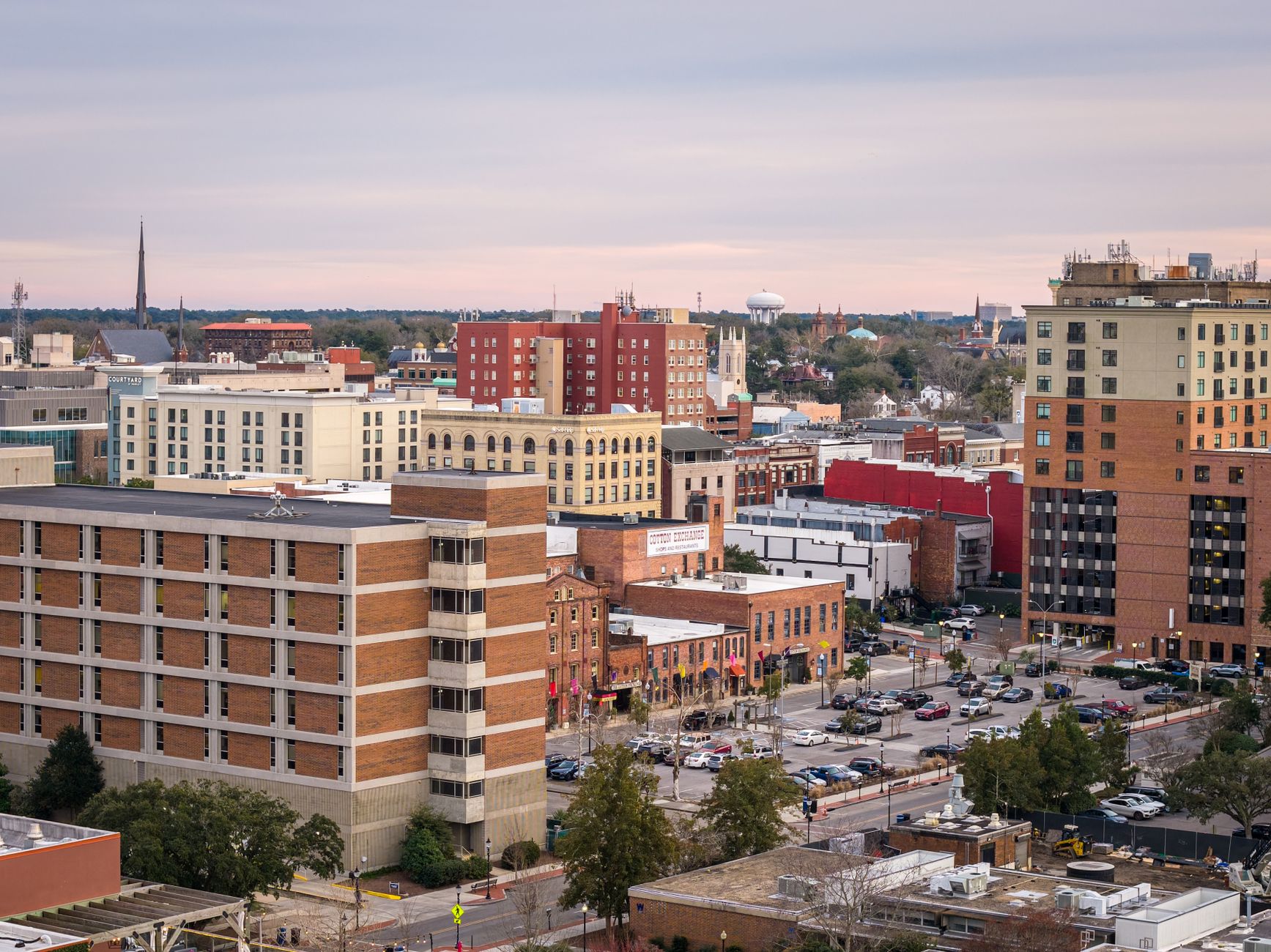
If you're looking for an affordable Mid-Atlantic city within driving distance of DC — one with a real downtown, a distinct character, and a housing market that doesn't require six figures just to get in the door — the conversation almost always comes down to Baltimore or Richmond. They're two hours apart on I-95. They have similar price ranges, similar cultural legacies, and very different reputations.
Baltimore's reputation is the problem. HBO's The Wire came out twenty years ago. The city it depicted was real in certain ZIP codes and is still real in certain ZIP codes — but it is not the city you'd be moving into in Canton, Hampden, or Roland Park. Richmond's reputation is almost the inverse: underestimated, overlooked, and increasingly discovered. WYLT's data shows something specific about both cities that the reputations miss. Here's the honest comparison.
The 30-second version
Choose Baltimore if: You want proximity to DC (40 minutes on MARC commuter rail), a larger and more established urban core, more neighborhood variety including some of the most walkable blocks on the East Coast, and you're willing to do the ZIP code research. Hampden, Charles Village, and Roland Park consistently earn "Good for now" verdicts at prices Richmond can't match for the level of urban character.
Choose Richmond if: You want a cleaner slate — a city where most neighborhoods WYLT has reviewed earn "Good for now" without the complicated research, a downtown with an 80/100 walk score at $242,000 median home price, a James River trail system that's genuinely special, and a food scene that's outperformed its size for a decade. Richmond delivers more consistent quality of life with less due diligence required.
Cost of living
Both cities are cheap by coastal standards. Richmond is slightly cheaper on a like-for-like basis — but the more important factor is what you get for the money.
Baltimore's reviewed neighborhoods range from $220,900 (Charles Village, 21218) to $479,800 (Roland Park, 21210). Richmond's reviewed neighborhoods range from $217,000 (Church Hill, 23223) to $515,500 (The Fan/Carytown, 23221). The median prices are remarkably similar — but the verdict distributions differ.
In Baltimore, four of seven reviewed city ZIP codes earn "Good for now"; two earn "Think twice." In Richmond, six of seven reviewed ZIP codes earn "Good for now." Same price range, notably different livability outcomes.
State taxes favor Virginia slightly. Virginia's income tax tops out at 5.75%. Maryland's tops out at 5.75% at the state level but adds a local county/city income tax of 2.25–3.2% on top — Baltimore City residents pay an additional 3.2%, making the effective Maryland rate among the highest in the Mid-Atlantic. Virginia has no local income tax add-on.
The commute-to-DC factor shifts the math for remote workers with DC connections: Baltimore is 40 minutes on MARC rail (a deal at $10–15/day); Richmond is 2 hours by Amtrak and generally requires a car or flight. For DC-connected workers, Baltimore's location has genuine financial value.
Safety
Baltimore's crime problem is real and requires honest discussion. The city's aggregate violent crime statistics are severe — among the highest per capita in America — driven by specific West and East Baltimore ZIP codes with concentrated poverty and long-standing violence. These statistics are not fabricated, and dismissing them is not responsible.
But they don't describe Canton, Hampden, Remington, Charles Village, or Roland Park — the neighborhoods where most transplants and young professionals actually live. WYLT's reviewed ZIP codes in these corridors earn "Good for now" verdicts with walk scores in the 60–79 range and school ratings of 7.0–7.3. The neighborhoods work. The key is that the line between a "Good for now" neighborhood and a "Think twice" neighborhood can be as narrow as a few blocks, and knowing that line matters more in Baltimore than in almost any other city we've reviewed.
Richmond's crime is lower and more geographically dispersed. Six of seven reviewed ZIP codes earn "Good for now" — the exception is Church Hill East (23223), which at $217,000 reflects the risk premium. Richmond's most walkable downtown (23219) earns "Good for now" at a walk score of 80 and a price of $242,300. This is rare: a downtown ZIP code with genuine walkability, an affordable price, and a "Good for now" verdict. Baltimore's comparable downtown ZIP (21201) earns "Think twice" at $251,900.
Job market
Baltimore has a larger and more diverse job market, anchored by the region's proximity to the federal government, defense, and research institutions.
Johns Hopkins University and the Johns Hopkins Health System are the largest employers in Baltimore and among the most significant research and healthcare institutions in the world. The University of Maryland Medical Center, Mercy Medical Center, and GBMC add to a healthcare employment base that's proportionally enormous for a city Baltimore's size. The defense and intelligence corridor (NSA headquarters is in Fort Meade, 20 minutes away; Northrop Grumman's Maryland operations are significant) creates government-adjacent employment that doesn't exist in Richmond. For healthcare professionals and defense/intelligence workers, Baltimore's job market has specific depth.
Richmond is the capital of Virginia and has a solid professional services economy: state government, law, finance (Capital One's headquarters are in nearby McLean, but Virginia's financial services sector is real), and a growing healthcare system anchored by VCU Health. The Philip Morris / Altria historical presence is fading but the corporate infrastructure remains. For remote workers and professionals not tied to a specific sector, Richmond functions well — it's a state capital with government stability and improving private sector options.
Lifestyle and character

Baltimore's urban character is older, rougher, and richer in a specific way. The row house stock in Hampden and Remington has architectural character that Richmond's newer development can't match. Fells Point and Canton on the waterfront are genuinely excellent urban neighborhoods — independent restaurants, bars, boutiques, and a crab cake culture that's not a tourist trap if you know where to go. The Inner Harbor itself has declined since its heyday, but the surrounding neighborhoods have more than compensated.
Richmond has the James River, and the James River is extraordinary. The Class IV whitewater section runs through the middle of the city. Belle Isle and Pony Pasture are accessible by bike from downtown. The Virginia Capital Trail — a 52-mile off-road bike path to Williamsburg — starts at Rockets Landing. No comparable American city has this level of outdoor access inside its city limits. For people who want the urban-to-outdoor transition to be a 10-minute bike ride rather than a 45-minute drive, Richmond is legitimately unique.
The food scene favors Richmond, and strongly. Richmond has produced more James Beard Award nominees and winners per capita than almost any comparable American city. The Scott's Addition neighborhood has a brewery and restaurant density that surprises first-time visitors. Jackson Ward, the Museum District, and Carytown are genuine dining destinations with national recognition. Baltimore's food scene is solid and has excellent specific categories (steamed crabs, historic Jewish delis, Federal Hill brunch spots) but Richmond's culinary identity has been on a different trajectory for the last decade.
What WYLT's data shows
Baltimore — selected neighborhoods
- Hampden (21211) — Good for now: Walk score 76, schools 7.2, median home $262,300. One of Baltimore's most consistent performers — artistic character, authentic neighborhoods, strong walkability at an affordable price. The 36th Street "Avenue" is a genuine neighborhood commercial corridor.
- Charles Village (21218) — Good for now: Walk score 69, schools 7.2, median home $220,900. The most affordable "Good for now" neighborhood in Baltimore's reviewed set — proximity to Hopkins and a walkable row house corridor at a price that's hard to find anywhere else in the Mid-Atlantic.
- Roland Park (21210) — Good for now: Walk score 39, schools 7.3, median home $479,800. Baltimore's most established family neighborhood — quieter, tree-lined, with a school rating that outperforms the city average. Car-dependent but genuinely livable.
- Downtown Baltimore (21201) — Think twice: Walk score 70, schools 7.1, median home $251,900. Walkable and affordable — but elevated crime earns the "Think twice" verdict that distinguishes downtown Baltimore from the neighborhoods a mile north.
Richmond — selected neighborhoods
- Downtown Richmond (23219) — Good for now: Walk score 80, schools 7.9, median home $242,300. The rare downtown ZIP that earns "Good for now" — walkable, affordable, and anchored by the improved Shockoe Bottom and Main Street Station corridors.
- The Fan / Carytown (23221) — Good for now: Walk score 74, schools 8.0, median home $515,500. Richmond's most prestigious city neighborhood — Victorian architecture, Carytown's restaurant corridor, and Monument Avenue (minus the monuments). Earns "Good for now" at the top of the Richmond price range.
- Museum District (23220) — Good for now: Walk score 72, schools 7.9, median home $426,000. Adjacent to The Fan and the Virginia Museum of Fine Arts — strong walkability, good schools for an urban ZIP, and a consistent "Good for now" verdict.
- West End (23226) — Good for now: Walk score 20, schools 8.2, median home $476,600. Car-dependent but with the highest school rating in Richmond's reviewed set — a family-oriented alternative to the more urban Fan neighborhood.
The verdict
Richmond wins on consistency and livability per dollar. Six of seven reviewed neighborhoods earn "Good for now," the downtown is genuinely walkable at $242,300, the food scene is nationally recognized, and the James River is an outdoor amenity that no comparable city can touch. It's the easier choice — less research required, fewer neighborhoods to avoid, and a trajectory that's still improving.
Baltimore wins on specific use cases: DC commuters, healthcare and defense workers, people who want a larger and more culturally diverse city, and buyers who are willing to do the neighborhood research for Charles Village at $220,900 or Hampden at $262,300. The value in Baltimore's "Good for now" neighborhoods is exceptional — you just have to know which ones they are.
The Wire is not a documentary about where you'd live. But Baltimore does require homework in a way Richmond doesn't. For people who want to move, get settled, and not spend months learning ZIP code lines, Richmond is the lower-friction choice — and the data supports it.