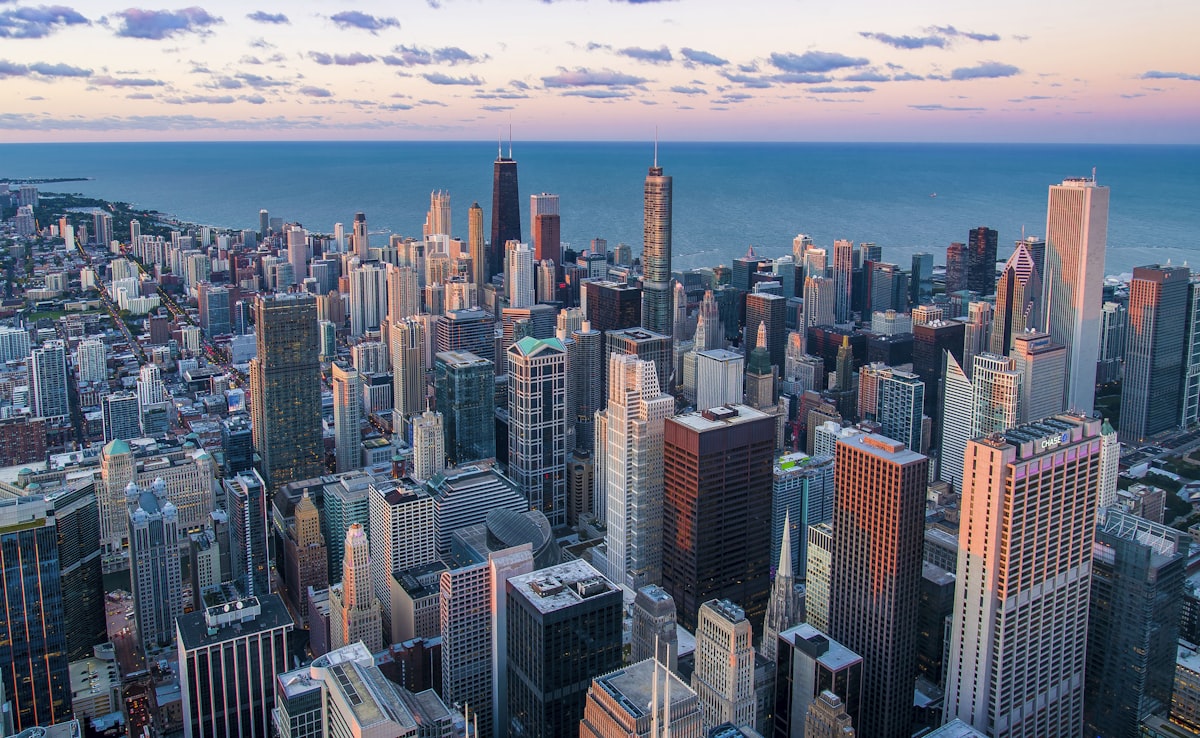
Chicago is one of the few American cities where you can genuinely live without a car. But not all of it. Walk scores vary wildly by neighborhood — and so do home prices. Here are the most walkable neighborhoods in Chicago right now, what they'll cost you, and what you're actually getting for the money.
| Neighborhood | Walk Score | Median Home Price | Median Rent (1BR) | Transit Score | Best For |
|---|---|---|---|---|---|
| The Loop / West Loop | 98 | ~$420K | ~$2,800 | 100 | Young professionals, remote workers |
| Wicker Park | 94 | ~$560K | ~$2,100 | 86 | Artists, young professionals |
| Lincoln Park | 92 | ~$680K | ~$2,300 | 78 | Families, established professionals |
| Lakeview / Wrigleyville | 91 | ~$480K | ~$1,950 | 80 | Cubs fans, LGBTQ+ community |
| Logan Square | 88 | ~$430K | ~$1,750 | 74 | First-time buyers, value seekers |
| Andersonville | 87 | ~$420K | ~$1,700 | 68 | Families, LGBTQ+ community |
| Pilsen | 85 | ~$310K | ~$1,550 | 62 | Budget buyers, artists |
1. The Loop / West Loop — Walk Score: 98
The heart of Chicago is as walkable as it gets. The Loop scores a 98 — nearly every errand is on foot. Transit is exceptional, with multiple L lines converging here. The West Loop has exploded with restaurant density on Randolph Street (Restaurant Row) and has become one of the city's most desirable ZIP codes.
Median home price: ~$420K (condos dominate). Median rent: ~$2,800/mo. Best for: Young professionals, remote workers who want to be near co-working, anyone who prioritizes nightlife and dining.
Trade-off: Noise. You're in downtown Chicago. It's loud, it's busy, and the weekends bring crowds. Also watch out for the "River North premium" — same walkability, higher price. The West Loop specifically has seen some of the sharpest condo appreciation in the city, so value is harder to find than it was five years ago.
2. Wicker Park / Ukrainian Village — Walk Score: 94
Wicker Park has been cool for two decades and isn't cooling off. The Milwaukee Avenue corridor is dense with coffee shops, vintage stores, bars, and restaurants. Ukrainian Village next door is calmer, with more residential blocks and slightly lower prices. Both are served by the Blue Line (Damen and Division stops) with 20-minute rides to the Loop.
Median home price: ~$560K. Median rent: ~$2,100/mo. Best for: Artists, young professionals, anyone who wants urban energy with slightly less density than downtown.
Trade-off: Property crime — particularly car break-ins — runs above average. Don't leave anything visible in your car. Violent crime is below the city average, but property crime is a documented pattern on certain blocks.
3. Lincoln Park — Walk Score: 92
Lincoln Park pairs great walkability with one of Chicago's best public green spaces. The park itself is an enormous asset — running trails, the free zoo, lakefront access. The neighborhood has excellent schools, making it popular with families who don't want to sacrifice the urban lifestyle. The Red and Brown lines both serve the neighborhood, and bus service is dense.
Median home price: ~$680K. Median rent: ~$2,300/mo. Best for: Families, established professionals, anyone who values green space alongside density.
Trade-off: It's expensive. This is one of Chicago's priciest neighborhoods and the gap from Wicker Park is significant. The school quality is excellent if you're in the right attendance zone — check specific addresses before assuming your kids are enrolled at the top-rated schools.
4. Lakeview / Wrigleyville — Walk Score: 91
Lakeview is enormous and varied — Wrigleyville on the south end (loud on game days, great bars), Boystown in the middle (vibrant, inclusive community), and Southport Corridor on the west (independent boutiques, quieter). Walk score is high across all of it. The Red Line runs the length of the neighborhood, and the Brown Line serves the western sections.
Median home price: ~$480K. Median rent: ~$1,950/mo. Best for: Cubs fans, LGBTQ+ community, people who want Lincoln Park's amenities at a slightly lower price point.
Trade-off: Game day congestion in Wrigleyville is genuinely disruptive if you live near the ballpark — 81 home games per season. And Wrigleyville has a bar-heavy character that's polarizing depending on what you're looking for.
5. Logan Square — Walk Score: 88
Logan Square has been the "it's getting there" neighborhood for years — and it's mostly gotten there. The boulevard is gorgeous, the restaurant scene on Milwaukee Avenue is serious, and prices remain lower than the neighborhoods to the east. Transit (Blue Line) connects you downtown in 25 minutes. The neighborhood also has genuine cultural character — the Logan Square Farmers Market is one of the city's best.
Median home price: ~$430K. Median rent: ~$1,750/mo. Best for: First-time buyers, renters who want the most neighborhood for their money, anyone priced out of Wicker Park.
Trade-off: Violent crime is higher than the neighborhoods above. Research specific blocks before committing — it varies significantly street to street. The western side of Logan Square, particularly near Humboldt Park, requires more due diligence.
Two honorable mentions: Andersonville and Pilsen
Andersonville — Walk Score: 87
Andersonville sits at the top of the Northside and is chronically underrated. Clark Street between Foster and Bryn Mawr is one of the best commercial strips in the city — independent restaurants, bookstores, a genuine neighborhood feel without the tourist overlay. Median home prices hover around $420K with rents around $1,700, making it significantly cheaper than Lincoln Park or Wicker Park with comparable walkability. It's farther from downtown (Red Line to Berwyn or Bryn Mawr, 30–35 minutes to the Loop), but for remote workers or those working in the northern neighborhoods, the trade-off is favorable.
Pilsen — Walk Score: 85
Pilsen is Chicago's best-kept value story. Median home prices are still around $310K — far below comparable walkable neighborhoods — and the neighborhood has genuine cultural depth: the Mexican Fine Arts Center Museum, the 18th Street restaurant corridor, and murals that make it one of the most visually distinct places in the city. The Pink Line connects you downtown in about 20 minutes. Crime requires block-level research, but the neighborhood's trajectory is clearly upward and buyers who can handle the research have been rewarded.

Which neighborhood fits your life?
- Maximum walkability, don't care about price: The Loop or West Loop. Walk Score 98, everything on foot, best transit in the city.
- Best value for walkability: Logan Square (88) or Andersonville (87) — both offer strong walkability at prices $100K–$250K below Lincoln Park.
- Best for families: Lincoln Park for the school quality and the park. Andersonville is a quieter family alternative at lower prices.
- Most affordable entry point: Pilsen (~$310K median) with a Walk Score of 85 and improving trajectory.
- Best nightlife and dining access: West Loop (Restaurant Row) or Wicker Park (Milwaukee Ave corridor).
- Best LGBTQ+ community: Boystown in Lakeview, with Andersonville as a second option.
The bottom line
Chicago rewards walkability-seekers who do their homework. The most walkable neighborhoods sit in a band along the lakefront and the Milwaukee corridor. Prices follow walkability closely — every 10-point improvement in walk score adds roughly $50K–$80K to median home prices. The sweet spots are Logan Square and Andersonville: both score above 85, both come in meaningfully below the premium neighborhoods, and both have legitimate neighborhood character that you're not fabricating.
Before you commit to any of these, run the specific ZIP code through WYLT to get the full picture — crime, schools, flood risk, and a straight verdict.