Denver gets more relocation inquiries than almost any other city in the country. The pitch writes itself: 300 days of sunshine, the Rocky Mountains an hour away, a booming tech and aerospace economy, legal cannabis, and a food scene that's grown from afterthought to genuinely competitive over the last decade. People move here expecting to love it. Most of them do. Some of them are surprised by the parts nobody mentioned.
This guide covers all of it — the neighborhoods, the prices, the commute reality, the altitude, the housing market — with real WYLT data so you can make the decision based on facts instead of the Denver Chamber of Commerce version.

Denver neighborhoods — what WYLT's data actually shows
Here's the honest picture: most Denver ZIP codes earn a "Think twice" verdict from WYLT. That's not a reason not to move here — it reflects Denver's rapid appreciation making value harder to find, combined with crime patterns in certain corridors. The neighborhoods that earn "Good for now" are the ones worth targeting.
| Neighborhood | WYLT Verdict | Median Home Price | Walk Score | School Rating |
|---|---|---|---|---|
| Washington Park | Good for now | $812,600 | 53/100 | 8.1/10 |
| Congress Park | Good for now | $565,300 | 59/100 | 7.8/10 |
| Highland | Good for now | $692,700 | 55/100 | 8.0/10 |
| Capitol Hill / Baker | Think twice | $461,800 | 89/100 | 7.8/10 |
| Berkeley / Tennyson | Think twice | $661,700 | 73/100 | 8.1/10 |
| RiNo / Five Points | Think twice | $600,400 | 46/100 | 7.8/10 |
| Arvada | Good for now | $486,600 | 4/100 | 7.9/10 |
| Lakewood | Good for now | $478,000 | 44/100 | 8.1/10 |
| Brighton | Settle here | $430,700 | — | 8.8/10 |
| Aurora | Think twice | $360,800 | 43/100 | 8.0/10 |
The neighborhoods worth knowing
Washington Park — Denver's most coveted address
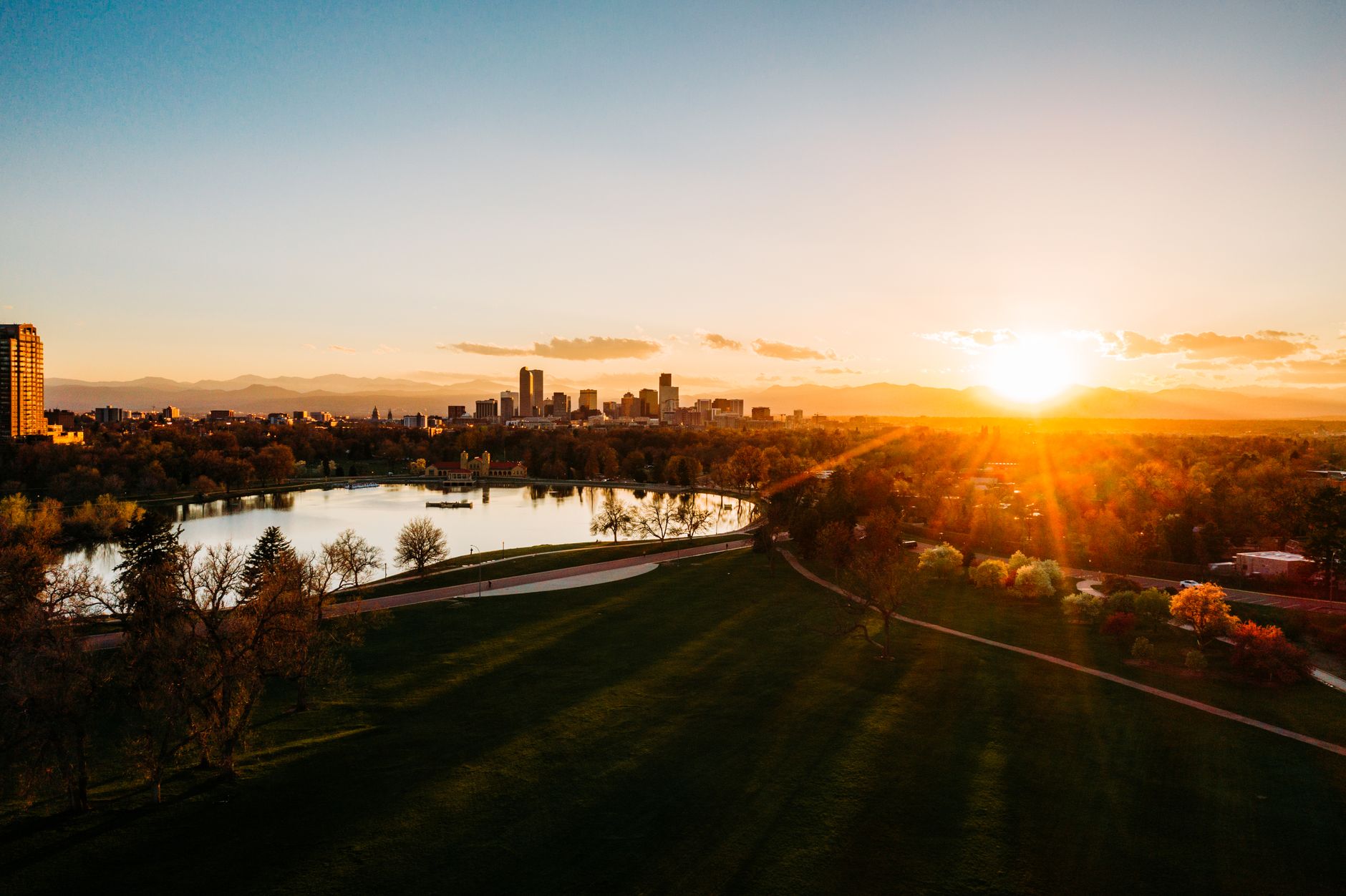
Washington Park (80210) is the neighborhood everyone wants to be in, and the prices reflect it: $812,600 median. The park itself — 165 acres with two lakes, jogging paths, and weekend farmer's market energy — is legitimately excellent. The surrounding streets have bungalows and craftsman homes with mature trees that give it a character the newer developments can't replicate. If you can afford it, the WYLT "Good for now" verdict is earned. If you can't, the neighborhoods below offer strong alternatives.
Congress Park & Capitol Hill — the walkable middle ground
Congress Park (80218) sits between the city's parks and the 17th Avenue restaurant corridor, with a Walk Score of 59 and a median price of $565,300 that's significantly more attainable than Wash Park. It's a "Good for now" neighborhood that delivers consistent livability without the premium. Capitol Hill (80203) is the city's most walkable area at Walk Score 89 — the best in Denver — at a median of $461,800. The tradeoff is a "Think twice" verdict that reflects higher crime in certain corridors; research blocks carefully rather than buying the ZIP code blindly.
Highland — the food and bar neighborhood
Highland (80211) is where Denver's restaurant and bar culture is most concentrated. The 32nd Avenue strip, the pedestrian bridge to downtown, Linger, Avanti, the independent shops along Tejon — Highland is where people who want a genuine urban neighborhood experience in Denver end up. Walk Score 55, median $692,700, "Good for now." Expensive for what it is, but with the best social infrastructure in the city.
Suburbs worth considering: Brighton, Arvada, Lakewood
Brighton (80601) is the standout suburban pick — the only Denver-area location to earn a "Settle here" verdict, with a school rating of 8.8/10 and a median of $430,700. It's about 30 miles northeast of downtown, which is a real commute, but for families prioritizing school quality and stability over urban proximity, the data is compelling. Arvada ($486,600, school 7.9) and Lakewood ($478,000, school 8.1) are both "Good for now" and much closer to the city — a reasonable compromise between Denver prices and suburban stability.
The honest tradeoffs
The price appreciation has been severe
Denver's median home price rose roughly 80% between 2016 and 2024. The most livable neighborhoods — Wash Park, Highland, Congress Park — are genuinely expensive for what you get compared to equivalent neighborhoods in other cities. The value proposition that made Denver a relocation favorite a decade ago has narrowed. You're not getting a deal compared to coastal cities; you're getting a different lifestyle at a similar price point.
The altitude is real
Denver sits at 5,280 feet. Newcomers typically spend two to four weeks adjusting — headaches, fatigue, dehydration, and reduced alcohol tolerance are all common in the first month. Most people adapt fully. A small percentage find it genuinely difficult long-term, particularly with exercise. If you have existing respiratory or cardiovascular conditions, get a medical opinion before committing.
You will need a car
Despite ongoing light rail expansion, Denver remains a car city for the vast majority of residents. Only Capitol Hill and a few walkable corridors allow genuine car-free living. Budget for a vehicle, and budget for parking — downtown parking rates approach Manhattan levels in certain areas.
The tech job market is real but concentrated
Denver and Boulder together form a genuine tech corridor — Lockheed Martin, Raytheon, Arrow Electronics, and a growing cluster of startups and mid-size tech companies have made it one of the stronger non-coastal tech markets. The defense and aerospace sector specifically is as strong here as anywhere in the country. Outside of tech, the job market is solid but not exceptional.
The outdoor access is genuinely transformative
This is the part that the data can't capture but that residents cite most often. Being 60 minutes from Breckenridge, 90 minutes from Vail, and within weekend driving distance of Moab, the Tetons, and the desert Southwest changes how people spend their time. People who move to Denver for the outdoor lifestyle and actually use it tend to stay for decades. People who move for the job and don't build that outdoor life into their routine sometimes find Denver expensive and overhyped.
What $500K–$700K gets you in Denver in 2026
The honest answer: a 3-bedroom house in a "Good for now" neighborhood (Congress Park, Arvada, Lakewood) or a 2-bedroom in a premium location (Highland, the edge of Wash Park). You won't get the best block in the best neighborhood at $600K — that's $800K+ territory. But you can get a genuinely good home in a genuinely livable part of the city, which is the deal Denver has to offer compared to the coasts.
Who Denver is right for
- Outdoor-oriented people who will actually use the mountains — this is the core case and it's a strong one
- Tech, aerospace, and defense professionals — the employment ecosystem is deep and growing
- People who want urban character without coastal prices — Highland and Congress Park deliver this, if not cheaply
- Families who can get into the suburbs — Brighton's school rating of 8.8/10 is exceptional
It's not right for buyers expecting 2018 Denver prices, people who need car-free daily life in most neighborhoods, or anyone who won't genuinely embrace the outdoor culture that defines the city's identity.
See the full WYLT data for every Denver neighborhood — crime, schools, price trends, and flood risk.
Washington Park → | Congress Park → | Highland → | Capitol Hill → | Berkeley → | Brighton → | Arvada → | Lakewood →